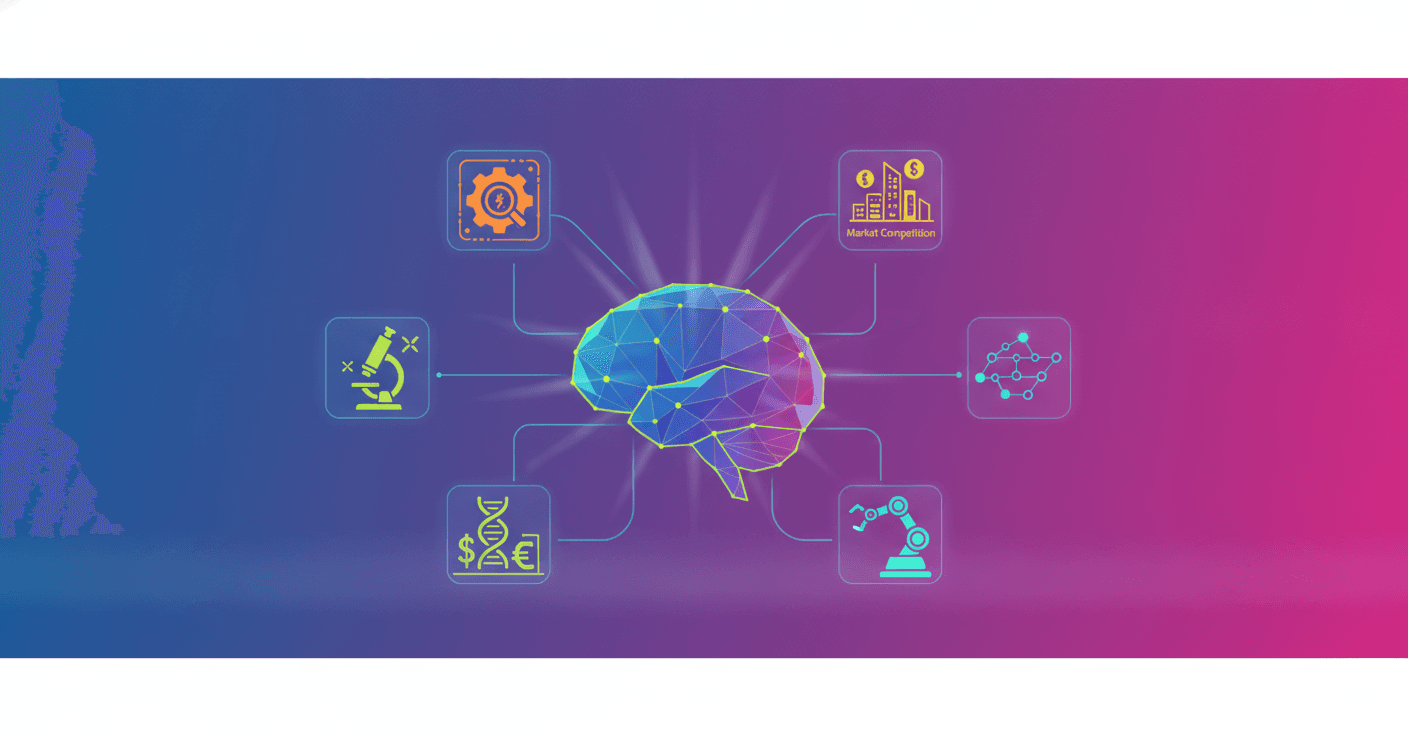
The idea sounds counterintuitive: if we keep increasing data and compute, shouldn't models become more and more general? The answer Goldfeder, Wyder, LeCun and Shwartz-Ziv proposed in 2026 is more forceful: under real-world constraints, specialization isn't a strategic choice — it's a mathematical and empirical consequence.
The mathematical prediction: No Free Lunch and finite resources
The No Free Lunch theorem says something simple and hard to swallow: there is no algorithm that wins on every possible problem. Averaged over all conceivable problems, all algorithms tie. What does that mean in practice? Improving on one set of tasks implies giving up performance on others.
Add finiteness: compute, data and time are limited. If you split resources among a hundred tasks, the slice per task shrinks. The arithmetic is straightforward: more coverage means less depth per task. That's why the strategy that maximizes performance under real conditions is usually to concentrate resources on a well-defined objective.
Three mirrors that show the same law
Why trust a theoretical result? Because the same conclusion appears across very different domains.
-
Biology: generalist species survive in many environments, but they don't dominate any. Selection favors traits adapted to specific niches. This isn't just a metaphor: it's the same resource constraints applied to organisms.
-
Markets: companies and products that try to hug everything often lose to competitors that meet clear performance thresholds. Competition acts as a selective filter.
-
Machine learning: here we see technical evidence. The effect called negative transfer happens when training multiple tasks together worsens performance on each, because they compete for the same representational capacity and produce conflicting gradients. Also, architectures like mixture-of-experts (for example Switch Transformer) achieve breadth by activating different experts per input — in other words, they get generality through internal specialization and conditional routing.
A very clear example: AlphaFold. It wasn't a generic system that accidentally solved protein folding. It was designed and trained for that problem; concentrating on the task enabled the performance leap.
Sutton and the bitter lesson: don't confuse different concepts
Sutton's so-called Bitter Lesson reminds us that domain-engineered methods tend to lose to simple scaling. But watch out: there's a difference between hand-crafted domain knowledge and scope specialization. The first refers to rules or features designed by humans; the second is the strategic decision to focus architecture, data and training on a limited set of tasks.
Scaling changes how models learn, but it doesn't remove the tension between depth and breadth. You might learn less from manual knowledge and more from massive data, but you'll still get better results if you aim resources at what you actually need to solve.
What does this mean for engineering teams and businesses? (technical and strategic implications)
Are you buying AI for your company or designing architecture? Here are the practical implications:
-
Objective-based evaluation: define metrics that measure performance in the real domain, not just general benchmarks. Monitor failure modes like textual degeneration when the model operates outside its domain.
-
Modularity and specialization: use modular models or adapters for critical functions. A system with specialized modules is often cheaper, more reliable and easier to audit than a generalist monolith.
-
Conditional architectures: consider Mixture-of-Experts or conditional routing if you need breadth without wasting capacity. Technically, this activates subsets of parameters according to the input, mitigating the problem of spreading capacity uniformly.
-
Fine-tuning and specialized pretrain: large-scale pretraining remains useful, but the best practical performance usually comes from adapting models to domain-specific data or training from architectures designed for the task.
-
Costs and sovereignty: specializing reduces inference costs and makes regulatory compliance and data control easier. If your application requires low latency, explainability or version control, specialization helps.
-
Aim for robustness and adaptability: specialization shouldn't be a rigid wall. Design pipelines to update modules, mix experts and reevaluate domain boundaries as requirements change.
Quick tactical recommendations
-
Prioritize a specialized prototype for the critical function that will have the biggest impact, instead of trying a single model for everything.
-
Implement negative transfer tests: if multitask training worsens a subobjective, separate or reconfigure.
-
Use cost-benefit evaluations: compare price-per-performance between a general model and a set of specialists.
-
Monitor domain boundaries: define signals that indicate when a request is outside a specialized module's scope.
Conclusion
Specialization in AI is not a fad or a cultural limitation: it's a prediction that repeats in mathematics, biology, markets and engineering practice. If you want performance, predictability and control with real resources, aiming is more effective than spreading thin. So what should you build tomorrow? A model that does everything a little, or a system of specialists that does the essential things very well?
Original source
https://huggingface.co/blog/Dharma-AI/why-specialization-is-inevitable