Univé, one of the largest cooperative insurers in the Netherlands, didn't treat artificial intelligence as a shiny new gadget. It saw AI as an organizational transformation: it wanted every employee, not just the IT department, to learn to use and build with AI responsibly.
An organizational change, not just a tech rollout
What if, instead of deploying tools, you trained your people to reinvent their work? That's what Univé did. Rather than relegating AI to a technical team, they ran leadership sessions where the main question wasn't which product to use, but how work changes and what role leaders have in driving that change.
The result was clear: they didn't try to scale solutions, they aimed to scale builders. What does that mean? More employees were given permission, time, and structure to experiment and create practical solutions from their own roles.
Governance designed from day one
Trust appeared because governance wasn't an afterthought. It was built from the start: enterprise authentication, permissions tied to existing systems, privacy assessments, security reviews, and principles for responsible AI. Rules weren't there to block innovation but to enable it safely.
Permissions that follow the same authorization the employee already has prevent AI from seeing data that person shouldn't access. That simple rule reduces risk and increases willingness to experiment.
Practical cases: claims and underwriting
An example that anyone can understand: preparing a pet insurance claim used to take hours. Now, a Workspace Agent assembles the file, reviews veterinary invoices, checks the policy, identifies missing information, flags anomalies, and prepares a traceable recommendation in minutes.
Who makes the final decision? The person trained in claims. The AI prepares the work; the person decides and takes responsibility for the resolution. The same happens in underwriting: agents organize the inbox, point out missing documents, and mark priority cases so the underwriter can focus professional judgment where it matters.
Concrete results and metrics that matter
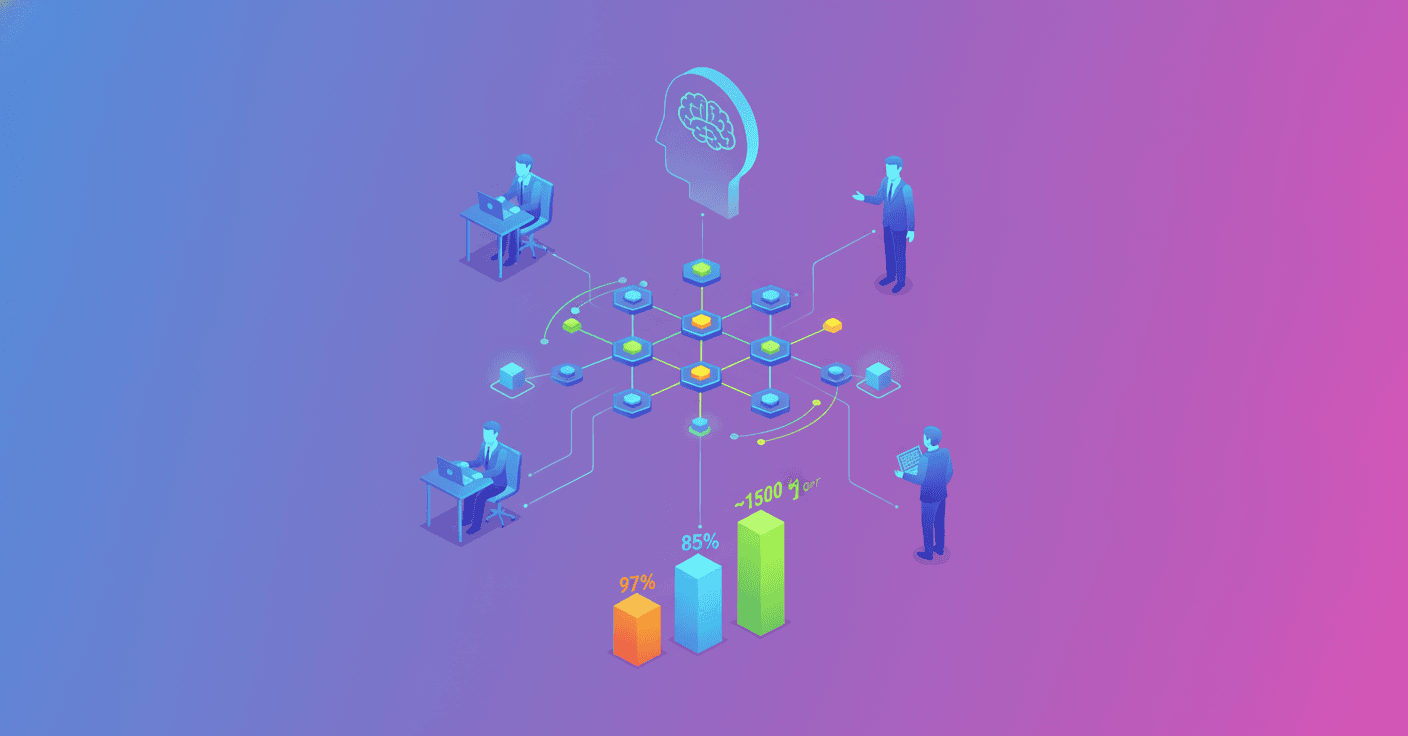
- 97% of ChatGPT Enterprise licenses activated.
- 85% of licensed users active weekly.
- About 1,500 custom GPTs created by employees.
- 40 prompts per active user each week on average.
- Processes that used to take hours are now ready in minutes in cases like pet claims.
These numbers don't just show adoption; they show that AI is already part of the daily workflow across almost every area: claims, underwriting, finance, HR, legal, IT, and customer service.
Practical lessons for other organizations
- Treat AI as an organizational capability, not just another IT rollout.
- Design governance from day one. Clear guardrails let people experiment safely.
- Invest in leadership: managers must create conditions for responsible innovation.
- Give permission and time to experiment, not just technical access.
- Measure success by sustained adoption and employees ability to build solutions, not just one-off productivity bumps.
Toward agents that prepare the workday
Univé already envisions the next step: agentic workflows that prepare recurring work by integrating with authorized systems. The idea is that before you start the day, you'll have contexts and proofs ready to review, not things to hunt for. That model shifts the human role: less assembling information, more expert judgment and personalized attention.
What's the ultimate goal? Not to have AI replace employees. It's to have people who learn to build with AI redefine what the organization can do for its members.
Univé shows that with leadership, governance, and permission to experiment, AI adoption can be broad, responsible, and directly focused on improving service. Doesn't that sound like a practical roadmap for any company that wants to move from curiosity to capability?