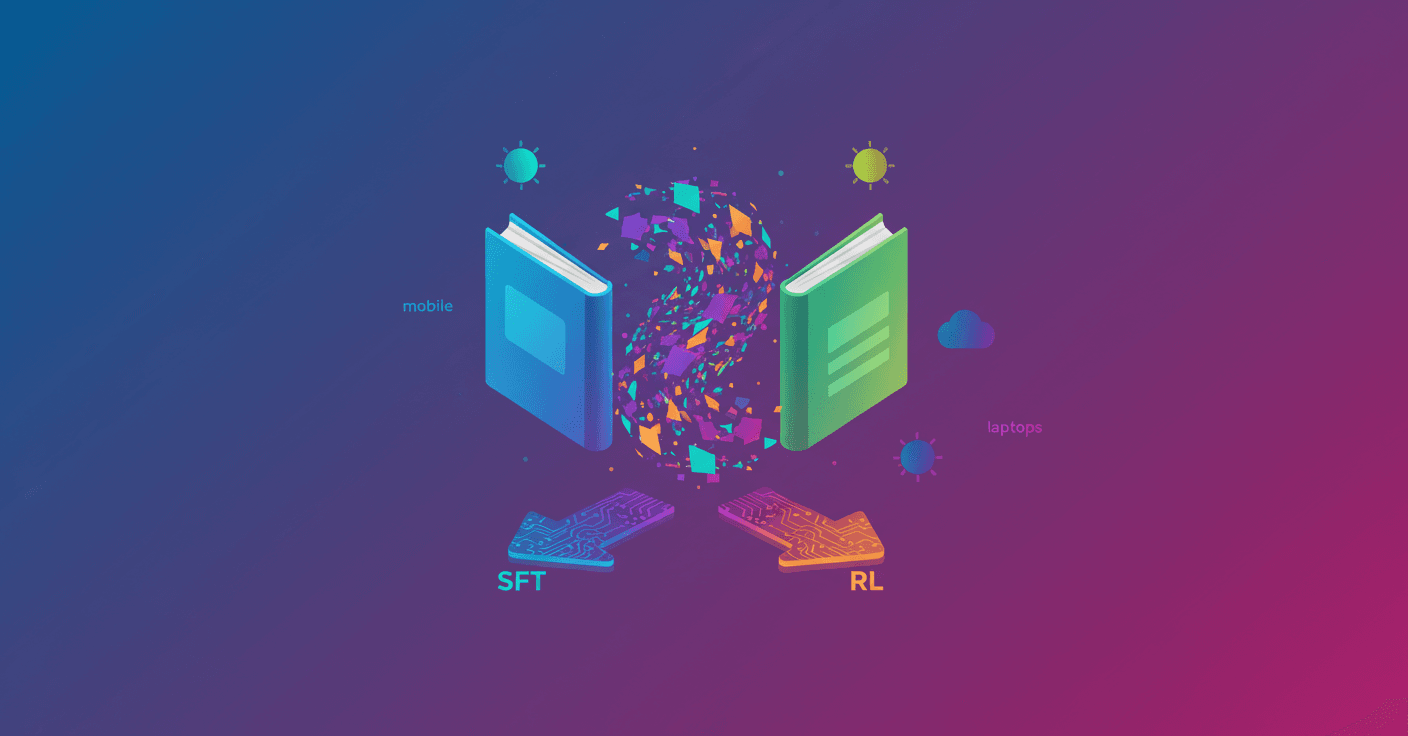
TranslateGemma arrives as a collection of open translation models built on Gemma 3, in sizes of 4B, 12B and 27B parameters. What does this mean in practice? That Google has distilled the power of their large models into compact versions without sacrificing quality, designed to run from mobile to the cloud and cover 55 languages with very good fidelity.
Qué es TranslateGemma y por qué importa
TranslateGemma is a suite of open translation models that aims to balance accuracy and efficiency. The available sizes (4B, 12B and 27B) let you deploy the same family of models in very different scenarios: mobile apps, laptops for local research, and cloud environments.
What's striking from the technical side: the 12B model outperforms Gemma 3 27B measured with MetricX on the WMT24++ benchmark. Why does that matter to you? Because it means that, with less than half the parameters, you can get better quality and save on latency and inference cost.
Rendimiento y benchmarks
- Main evaluation:
WMT24++, a broad set covering 55 languages with variation in linguistic resources. - Key metric:
MetricX(and variants) used to compare automatic quality; metrics focused on contextual translation quality were also used.
Practical results:
- The 12B model outperforms the Gemma 3 27B baseline according to
MetricXonWMT24++. - The 4B model competes with a 12B baseline, making it attractive for inference on resource-limited devices.
Key result: smaller size does not mean worse translation. Thanks to distillation and specialized fine-tuning, TranslateGemma reduces the error rate across all evaluated languages.
Arquitectura y proceso de entrenamiento (técnico)
The technical recipe consists of a distillation stage and a two-stage fine-tuning process:
-
SFT(Supervised Fine-Tuning): theGemma 3base model is fine-tuned with a diverse parallel corpus. That set combines high-quality human translations and synthetic translations generated by state-of-the-art Gemini models. The goal: wide linguistic coverage and fidelity for low-resource pairs. -
RL(Reinforcement Learning): a reinforcement learning phase using an ensemble of reward models. Among those models are advanced metrics likeMetricX-QEandAutoMQM, which optimize the model toward more natural and contextually correct translations.
In plain terms: first the model is taught with parallel examples, then it’s refined to prefer contextual quality using automated reward signals.
Cobertura de idiomas y adaptación
TranslateGemma was validated on 55 official language pairs (including Spanish, French, Chinese, Hindi and many low-resource languages). In addition, the team trained with nearly 500 additional pairs as a base for future adaptations.
Important: for those extended pairs there are not yet final confirmed metrics, but the technical report contains the full list and data so the community can continue evaluation and adaptation.
Multimodalidad
The models keep multimodal capabilities inherited from Gemma 3. On the Vistra benchmark (translation of text inside images) TranslateGemma showed gains derived from its text improvements, even without explicit multimodal fine-tuning during training.
Cómo desplegar y optimizar (consejos técnicos)
Options by size:
- 4B: ideal for mobile and edge. Look for quantization to
int8or techniques like QAT (quantization-aware training) to reduce memory and latency. - 12B: meant for consumer laptops and local development. You can use
ONNX,TorchScriptor optimized runtimes to improve throughput. - 27B: designed for maximum fidelity in the cloud; it runs well on a single H100 GPU or TPU with sharding and/or model parallelism.
Practical suggestions:
- Consider quantization and compilers (TensorRT, ONNX Runtime, TFLite) for mobile production.
- For 27B, use parallelism and sharded checkpoints; for critical deployments, evaluate latency in the inference path and batching behavior.
Casos de uso y recomendaciones para desarrolladores
- Mobile applications that need local and offline translation: 4B.
- Reproducible prototypes and experiments on a laptop: 12B.
- Cloud translation services with maximum quality: 27B.
Remember to validate in your domain: general benchmarks are useful, but quality can vary with technical, legal or medical jargon. Are you going to use it in health or legal content? Keep human review or post-editing workflows.
Riesgos, límites y buenas prácticas éticas
- Even if metrics improve, translations can introduce biases or domain-specific errors.
- The extended pairs (the ~500) still require public evaluation; don’t assume they’re equivalent to the 55 evaluated.
- Implement observability: automated tests, human sampling and production error monitoring.
Tip: treat TranslateGemma as a powerful base for research and production, but keep a human in the loop where accuracy has real impact.
Conclusión
TranslateGemma shows that efficiency and quality are not mutually exclusive: with distillation techniques and an SFT + RL pipeline you can bring research-level performance to real devices. For developers and research teams this opens doors: lower inference costs, more ability to experiment locally and better starting points to improve translation for low-resource languages.
Fuente original
https://blog.google/innovation-and-ai/technology/developers-tools/translategemma