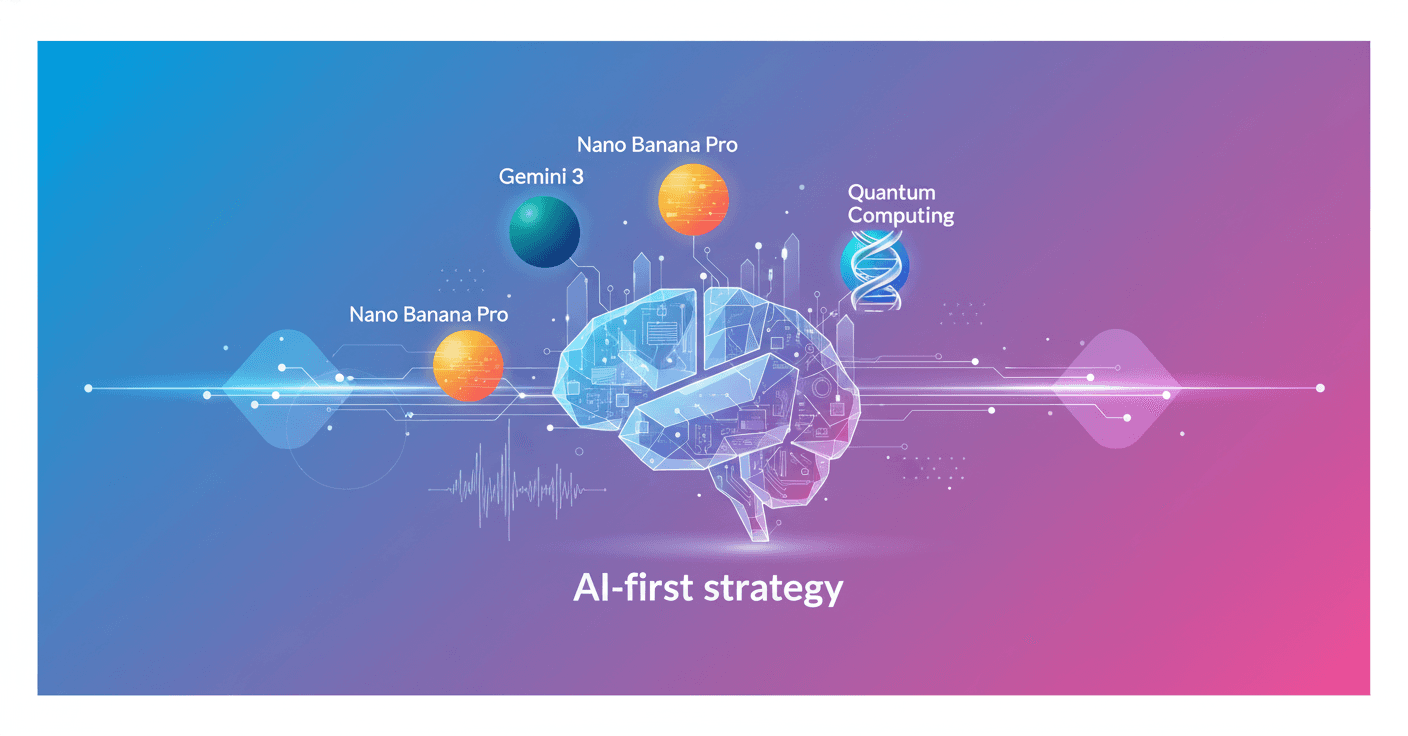
Sundar Pichai sat down with Logan Kilpatrick on the latest episode of the podcast Google AI: Release Notes to do something that sometimes feels a bit odd: speak plainly about where AI at Google is headed and why past decisions matter today. Want to know why Gemini 3 is on every headline and what role quantum computing plays in all this? This conversation, published on November 25, 2025, sums it up.
Qué dijo Sundar sobre la estrategia "AI-first"
Pichai recalled the 2016 decision to go "AI-first" as a strategic bet: it wasn’t a fad, but the foundation for sustained investments in models, infrastructure, and talent. That seed is what lets Google release things like Gemini 3 and Nano Banana Pro without them being last-minute improvisations.
Why does that matter for you? Because long-term decisions shape which tools reach users and how stable they are. If you’re a creator, entrepreneur, or just a curious user, this explains why some products work better today: there’s infrastructure and a team behind them.
"I think in about five years we'll be having breathless excitement about quantum, hopefully, like we are having with AI today."
That quote sums up two things: technological ambition and a time horizon. It’s not an immediate promise; it’s a strategic bet.
Novedades clave: Gemini 3 y Nano Banana Pro
The conversation mentioned recent releases that symbolize progress. Gemini 3 comes up as the most visible example: a model that reflects investments in multimodal capabilities and in making AI more useful for real tasks.
Nano Banana Pro sounds less flashy and more technical, but the idea is the same: diversify offerings for different uses and deployment sizes. Put simply, Google is testing different ways to bring powerful AI both to large platforms and to devices or lighter use cases.
Mirada al futuro: apuestas a largo plazo y computación cuántica
Pichai doesn’t stop at immediate news. He talks about the coming decade and how technologies like quantum computing could trigger another wave of change. Can quantum computing drive more powerful models or speed up discoveries? That’s the bet, and the expectation is that in a few years the excitement could mirror what AI generates today.
For people working in tech, this is an invitation to think long-term: not just about the next model, but about the infrastructure, ethics, and research that will enable the next wave.
Qué puedes hacer ahora
- If you want to understand the changes: listen to the full episode to catch nuances and concrete examples.
- If you work on products: evaluate how to incorporate more capable models without losing focus on safety and user experience.
- If you’re a curious user: watch how these decisions affect privacy, accessibility, and usefulness in your daily tools.
Sound ambitious? Yes. Out of reach? Not necessarily. The conversation shows that today’s AI is the product of accumulated decisions and that big bets take time.
Dónde ver y escuchar
You can watch the full conversation on the episode page or listen to the podcast on YouTube, Apple Podcasts, or Spotify. It’s a good way to hear priorities and tone directly from the CEO.
Think of this as an X-ray: a headline isn’t enough, it’s worth listening to the pulse and the doubts that came up in the talk. In the end, big companies announce technologies; the interesting part is how those decisions translate into tools you’ll use tomorrow.
Fuente original
https://blog.google/technology/ai/sundar-pichai-ai-release-notes-podcast