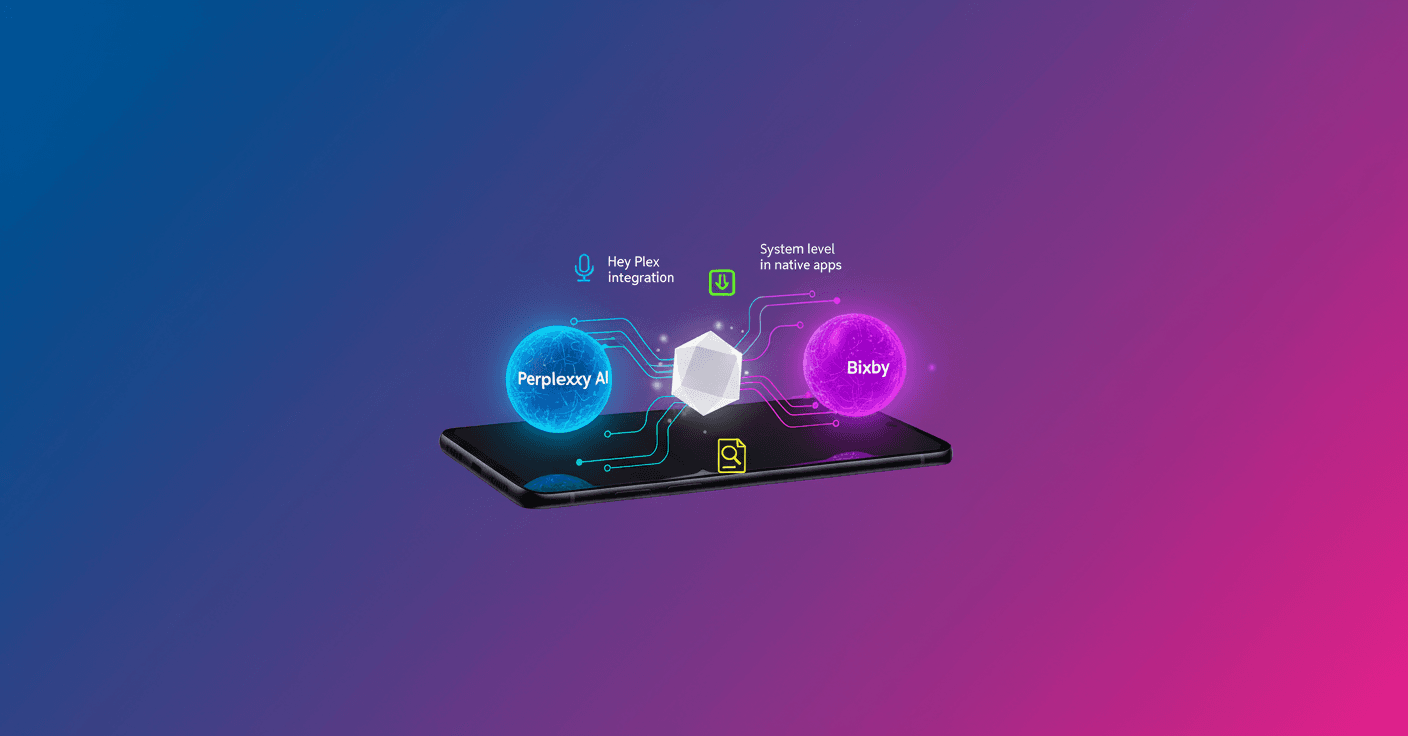
Perplexity arrives at the heart of the Galaxy S26: it’s integrated at the system level and powers both Perplexity’s assistant and Bixby. This makes Perplexity the AI behind two of the device’s three assistants, with direct access to native apps and physical controls.
What does this mean for you, someone who uses a phone every day? More contextual answers, quick actions without extra apps, and real-time search across the system.
What Perplexity announced
Samsung and Perplexity worked together to integrate the Perplexity API at the Galaxy S26 operating system level. Perplexity gets a dedicated wake word, Hey Plex, access to physical controls, and the ability to read and write in native apps like Notes, Calendar, Gallery, Clock, and Reminders.
A key detail: Perplexity is the first non-Google company with system-level access on a Samsung phone. Samsung used to reserve that level of access only for first-party assistants. The choice responds to Perplexity’s focus on precise answers and on orchestrating search, reasoning, and on-device actions.
How this translates to daily experience
-
You can say
Hey Plexor long-press the side button to trigger the assistant. You don’t need to open an app or download anything: the Perplexity app comes preinstalled on every S26. -
Questions with referenced answers without going through the browser: Perplexity combines real-time web search with reasoning to give you grounded responses.
-
Direct actions: save text to Samsung Notes from a response, create reminders, or add events to your calendar within the same conversation. Imagine asking for a recipe, saving the shopping list to Notes, and setting a reminder — all in one interaction.
-
Contextual search inside the app where you started the conversation: you can stay on the screen you’re using while exploring related topics.
Perplexity behind Bixby and the browser
Samsung uses Perplexity’s APIs in Bixby’s backend to improve real-time answers. That means Bixby no longer depends only on static training data; it can combine fresh web results with reasoning to deliver more current and verifiable responses.
Samsung also plans to integrate the APIs into Samsung Browser, with agent capabilities Perplexity and its Comet browser have been refining. Perplexity could be offered as an optional default search engine.
A multi-agent approach and why it matters
Samsung designed the S26 thinking about multiple AI agents: their internal data show that 8 out of 10 users already use more than two AI agents per day. The trend Perplexity sees with enterprise customers in 2025 is clear: no single AI dominated more than 23% of queries, because people pick models depending on the task.
That's why Galaxy AI’s strategy is to coordinate between different agents instead of imposing just one. In practice, that can give you the best tool for each task without forcing you to rely on a single source.
Practical implications and points to watch
The benefits are obvious: fast access, integrated actions, and more up-to-date answers at scale (Samsung expects to ship hundreds of millions of devices this year with Perplexity inside). But there are also legitimate questions about privacy, data control, and security when a third-party AI gets system-level access.
-
How are permissions handled to read and write in your apps? — You should review the phone’s privacy settings and app permissions.
-
What guarantees exist about biases or errors in answers? — Perplexity says it prioritizes grounded responses, but it’s always wise to verify sensitive information.
-
Will there be vendor lock-in? — The multi-agent approach reduces provider lock-in, but sharing system-level integration with a third party introduces new commercial and competitive dynamics.
Final thought
This integration is a meaningful step: bringing real-time search and reasoning into native phone functions with flows designed to be more natural and useful. For you, it means the assistant can stop being a drawer of isolated answers and start executing concrete tasks in your daily life.
At the same time, it’s a reminder that convenience comes with responsibilities: know your permissions, understand sources, and keep control of your data. AI isn’t magic — it’s a new layer in the system that can make many things easier if you use it wisely.