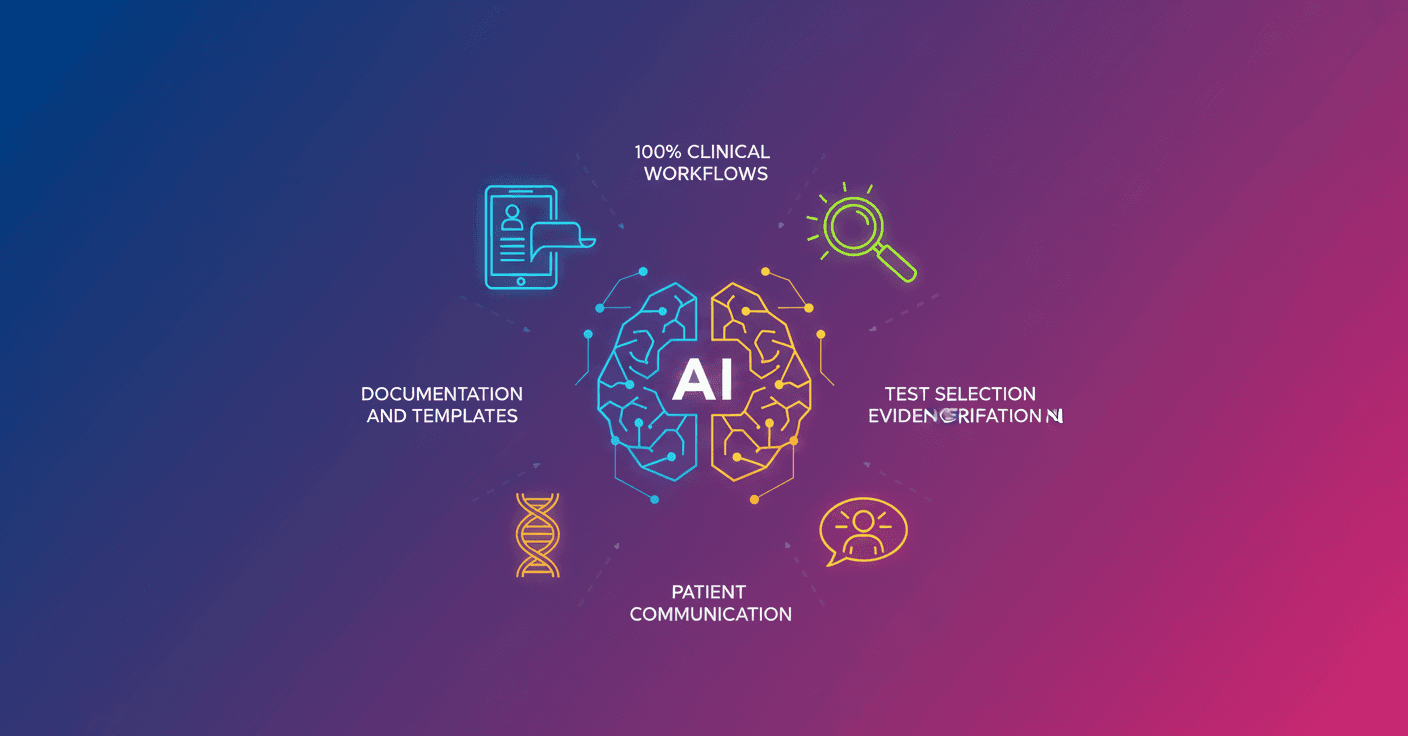
OpenAI released a practical guide for using AI in day-to-day clinical work, published on 2026-04-10. The page gathers concrete examples and prompt templates designed to help clinical teams integrate ChatGPT for Healthcare into tasks like documentation, test selection, and guideline reconciliation.
What the page includes
The section presents a secure space aimed at hospitals and providers, with an emphasis on use compatible with HIPAA. This isn't a futuristic promise: these are ready-made templates and examples for real cases, from clinicians on shift to high-complexity teams.
- Support for administrative tasks: drafting clinical notes, preparing prior authorizations, summarizing patient information.
- Clinical workflows: suggestions for selecting diagnostic tests, building differentials, and creating problem-based plans.
- Communication: patient-friendly instructions, discharge summaries, and handoff templates.
- Evidence checking: how to request recommendations based on guidelines and cited sources.
The practical part? Each case comes with a sample prompt and a template you can adapt to your role and context. That makes it easier to turn theory into action in just a few queries.
How it helps in practice
How much time do you spend hunting for evidence, reconciling guidelines, or writing notes? A lot, probably. These templates are meant to reduce that administrative burden and give you back time for what matters: the patient.
Concrete examples: a hospitalist can ask for a workup strategy for suspected sepsis; a pediatrician can generate a complete clinical note for bronchiolitis; a transition-of-care team can create a clear summary for home-based care.
Important: the AI supports, it doesn't replace clinical decision-making. The tool can provide cited answers from reliable sources, but human judgment, local protocol review, and specialist validation remain essential.
Best practices when using AI in clinical environments
- Always verify the references and guidelines cited. AI can summarize, but you must confirm local applicability.
- Keep records and traceability of interactions: who queried, when, and with what prompt.
- Integrate with secure systems and access controls. If you're going to use
ChatGPT for Healthcare, check compatibility with privacy policies and local regulations. - Train the team: familiarize physicians, nursing staff, and administrative personnel with templates and the tool's limits.
- Pilot before scaling: start in one service or a small use case and measure impact on time and documentation quality.
Short example prompt (ready to adapt)
I am a [clinical role, e.g., hospitalist] caring for a [age]-year-old [gender] patient with [key past medical conditions] who presents with [chief complaint] and [key acute symptoms]. Based on this presentation, provide a focused diagnostic workup and test selection using [labs, imaging, microbiology] to evaluate for [suspected condition], and explain how the results would guide initial management in a [clinical setting].
Copy this prompt, adapt it to your patient, and you'll get a structured plan you can review and adjust according to your resources and local protocols.
Risks and limitations you should consider
The tool can be accurate and useful, but it has limits: biases in training data, guideline updates that change quickly, and possible discrepancies with local protocols. That's why constant clinical supervision, periodic audits, and a clear plan to handle discrepancies are key.
I've seen teams that start enthusiastically and then stall because governance was missing. Technology speeds processes up, but real change comes with clear procedures, training, and continuous evaluation.
Final thoughts
This collection of resources turns AI into a tangible help for daily clinical work: it reduces administrative tasks, standardizes processes, and improves quick access to evidence. The takeaway? Use it as a smart assistant, keep clinical control, and always verify recommendations before applying them to the patient.