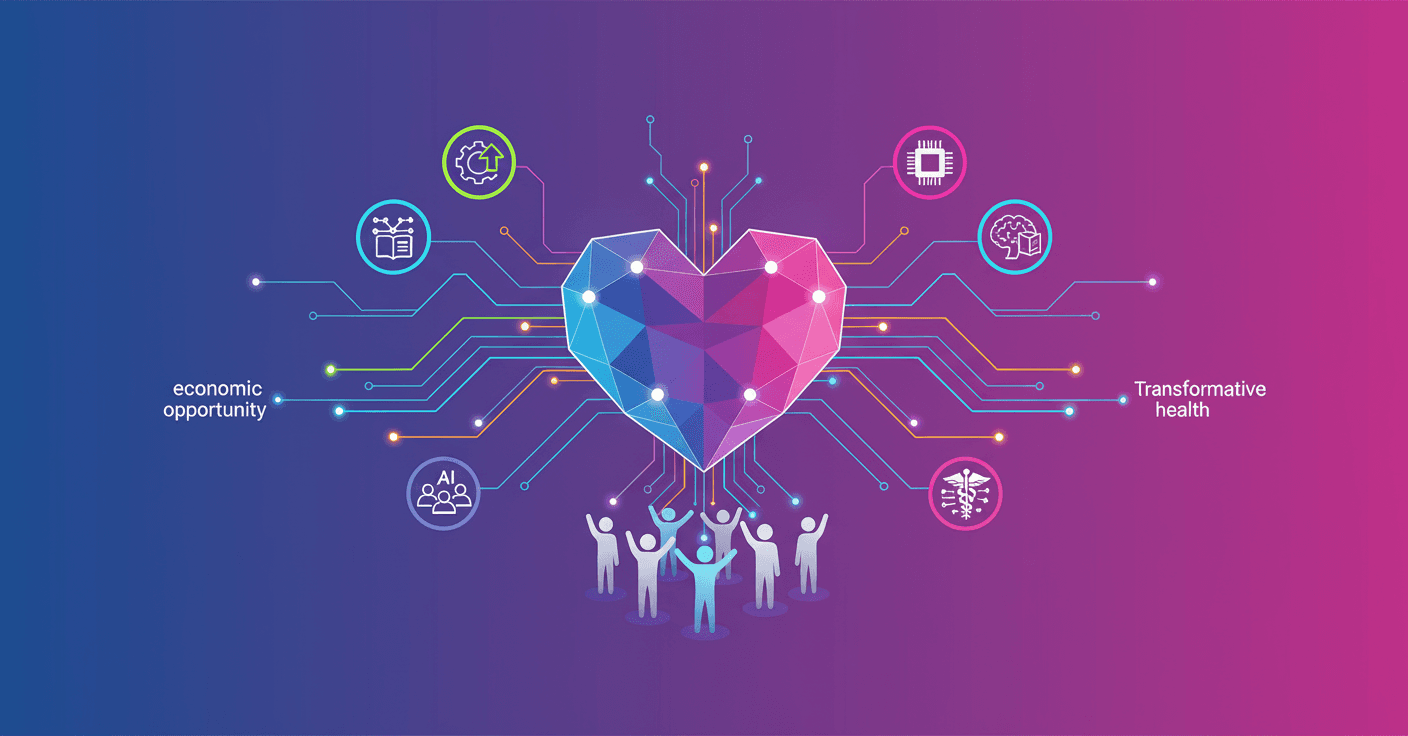
The OpenAI Foundation announced the first recipients of the People-First AI Fund, a multi-million dollar investment aimed at community organizations working on digital literacy, economic opportunities, and local services. These are flexible, unrestricted funds meant for organizations to decide how best to use the support based on their communities’ needs.
What the OpenAI Foundation announced
The Foundation will deliver $40.5 million in unrestricted grants to 208 organizations across the United States. Payments will be made before the end of the year. In addition, a second wave of $9.5 million in Board-directed grants will be announced in the coming months, focused on transformative projects in areas like health with potential for broad public benefit.
Why does this matter? Because the first call was broad and fast: it was open from September 8 to October 8 with a very short four-question form, and nearly 3,000 organizations applied. That shows both the demand for resources and the eagerness of communities to help shape how AI is applied to their work.
Bret Taylor, Chair of the OpenAI Foundation Board, said the fund reflects a commitment to support organizations that strengthen communities and expand opportunities. The foundation wants to learn alongside these groups and share what they learn.
Selection was made through an independent human review process, supported by the Nonprofit Organizations Commission and external experts. All applications were reviewed and final recommendations were approved by the Foundation Board.
Notable examples and types of impact
The cohort reflects geographic and thematic variety: rural and urban groups, national networks, youth-led organizations, Native-led programs, and projects that blend art and STEM. Many grantees are in early stages of exploring AI, which fits the fund’s intent to back trusted local actors.
Some concrete examples included in the first list:
Digital NEST(CA): workforce training for young people in agricultural communities, with mentorship and paid work.Be Loud Studios(LA): youth radio and media exploring the intersection of AI and mental health.Delaware Alliance for Nonprofit Advancement(DE): strengthening the local nonprofit sector.Valley Initiative for Development and Advancement (VIDA)(TX): economic mobility programs and tech training for low-income communities.Rural Opportunity Institute(NC): local capacity to support mental health in rural schools.Springboard to Opportunities(MS): working with residents of subsidized housing, now examining AI's impact on their communities.Arc of Madison County(AL): support for people with intellectual disabilities and development of inclusive educational pathways.Camai Community Health Center(AK): health centers in Alaska exploring AI improvements in primary care.Tribal Education Departments National Assembly(OK): AI literacy programs led by Native communities to strengthen sovereignty.Native American Journalists Association: guiding Indigenous voices in how to interact with emerging technologies.
These are representative examples; the full list includes national and local organizations across states and territories, focused on literacy, community innovation, and economic opportunity.
What areas does the fund prioritize?
The People-First AI Fund supports four main lines:
- AI literacy and public understanding. Empowering local leaders (teachers, faith leaders, mentors) so the community can understand and use AI in useful, critical ways.
- Community innovation. Community-led projects to improve local services: schools, libraries, clinics, and community centers.
- Economic opportunity. Training for future jobs, cooperative models, and support for small businesses and caregivers facing labor changes due to AI.
- Transformative grants. A second, directed round for projects with potential to scale and deliver sustained public benefits, especially in health.
One key point: the grants are unrestricted, which lets organizations decide their immediate priorities—whether training, technology, staff, or local collaboration.
What's next and why you should pay attention
The Foundation says it’s starting a learning process with grantees: it will share ideas and lessons as organizations implement projects. Board-directed grants will be announced in the coming months.
Why should you care if you work in community, education, or local entrepreneurship? Because funds like this can accelerate responsible AI adoption from the ground up, helping ensure solutions respond to real problems and not just tech trends.
If you're part of an NGO or local project, the message is clear: there’s demand and support available to experiment with AI in a people-centered way. The open process and the number of applicants also show many organizations want a voice and the resources to define how AI affects their communities.
Final reflection
This isn’t just about funding AI projects — it’s about strengthening local capacity to decide how to use it. Flexible funds like these can be a lever for communities that need concrete support: training, jobs, health, and culture. The real test will be when we see practical, replicable results and shared learnings among the organizations.