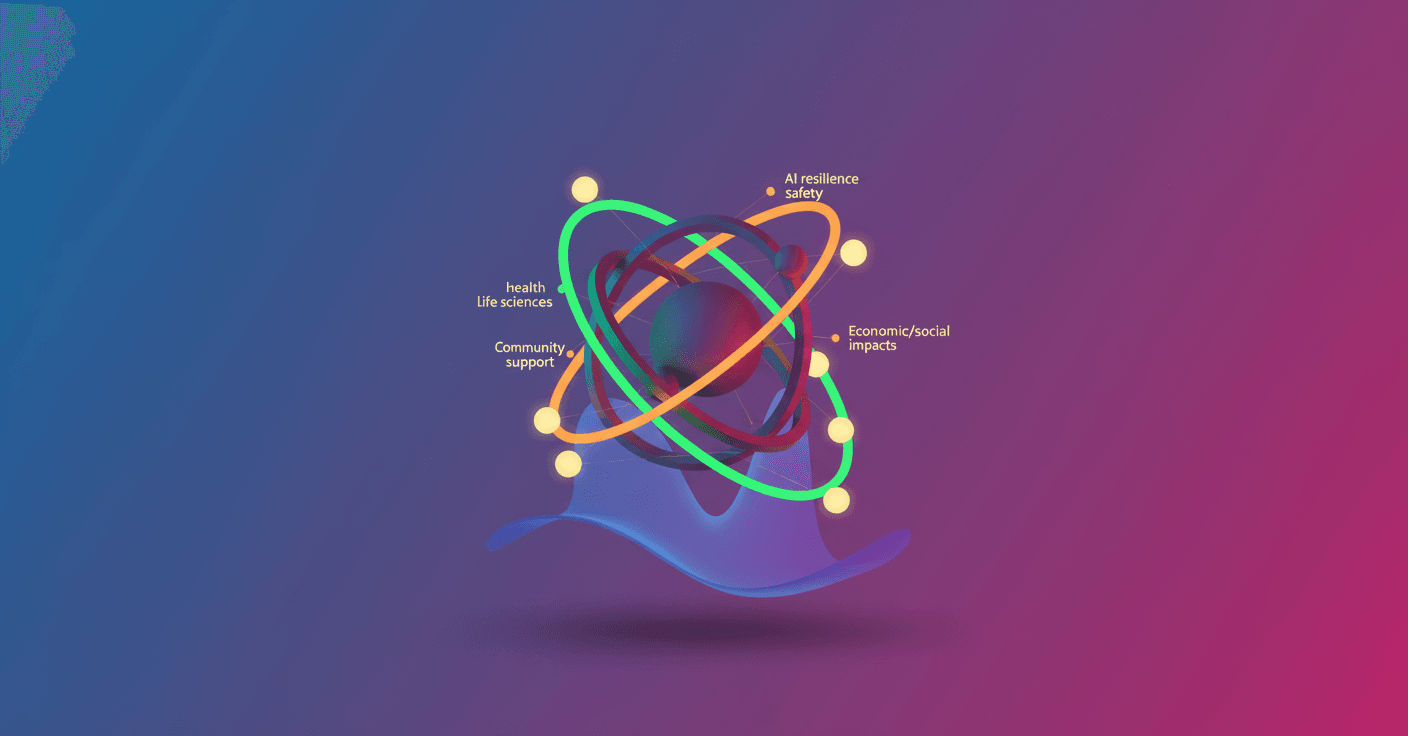
OpenAI announces how it will begin using the resources of its new Foundation to boost medical research, prepare society for AI risks, and support communities affected by technological change. It's an ambitious bet: an initial investment of at least $1,000,000,000 and a larger commitment of up to $25,000,000,000 in key areas.
Qué anunció la Foundation
The Foundation starts with two big goals: empower the use of AI to solve complex human problems and prepare society for the challenges advanced AI brings. It's not just about building models; it's about supporting research, communities, and resilience.
In numbers: the Foundation expects to invest at least $1,000,000,000 in the next year on topics like Life Sciences, employment and the economy, AI resilience, and community programs. This is part of a broader strategy that includes initial investments toward an announced commitment of $25,000,000,000 to cure diseases and strengthen resilience.
Dónde irán los recursos
The Foundation starts by focusing on Life Sciences (previously called Health & Curing Diseases) and AI Resilience. What does that mean in practice? It translates into three initial fronts within health and three within resilience:
Life Sciences y curar enfermedades
-
AI for Alzheimer's: support for leading institutions to map disease pathways, find clinically useful biomarkers, and speed up personalized treatments. Can faster clinical trials really change outcomes? Imagine trials that move quicker because we spot early signals sooner.
-
Public health data: fund the creation and expansion of open, high-quality datasets, and responsibly open closed datasets where appropriate. Sharing data was key to past breakthroughs; the Foundation wants to broaden that base.
-
Progress on high-mortality, high-burden diseases: bring together AI experts and specialists in underfunded diseases to lower costs and risks of developing or repurposing therapies.
Jacob Trefethen will lead this area as Head of Life Sciences and Curing Diseases. He comes from Coefficient Giving, where he managed more than $500,000,000 in grants for science and health.
AI Resilience: preparing for real risks
-
AI's impact on children and youth: invest in data-driven research and assessments to define safeguards that protect healthy development. Worried about how AI shapes young people's lives? This aims to give you evidence-based protections.
-
Biosafety: improve how society detects, prevents, and mitigates biological threats, including those that could be amplified by AI.
-
AI model safety: promote independent testing, stronger standards, and fund foundational research to detect and prevent safety problems early.
Wojciech Zaremba, OpenAI cofounder, joins as Head of AI Resilience to lead these efforts.
Comunidad, trabajo y gobernanza
The Foundation will also work with unions, economists, small businesses, civil society organizations, and policymakers to design practical solutions for changes in work and the economy. The goal is to mitigate risks while taking advantage of productivity gains and new jobs.
Additionally, the final phase of grants from the People-First AI Fund will be completed, and the Foundation will keep supporting trusted community organizations that help people understand and navigate technological change.
Equipo y gobernanza inicial
The Foundation brings on several people with experience in philanthropy, operations, and technology:
- Anna Makanju will arrive in April as Head of AI for Civil Society and Philanthropy to connect AI with NGOs and philanthropy.
- Robert Kaiden will be Chief Financial Officer, with experience at Deloitte and other firms.
- Jeff Arnold joins as Director of Operations to build operational infrastructure.
The board is also looking for an Executive Director and will continue strengthening the team in the coming months.
¿Por qué importa esto para ti?
Because the Foundation isn't just funding lab science: it aims for AI to improve daily life — from faster diagnoses to more efficient public services — and to make sure society is ready when new risks appear.
Are you worried about jobs, model safety, or protecting minors? Those issues are on the agenda. Are you a researcher or work in public health? There will be resources and open data to help you make progress.
The strategy is experimental and iterative: the Foundation promises to learn, adjust, and publish updates as it rolls out grants and programs.
The conversation is just beginning, and the motivation is clear: use AI to help more people solve hard problems and improve quality of life, while building defenses against harmful effects.