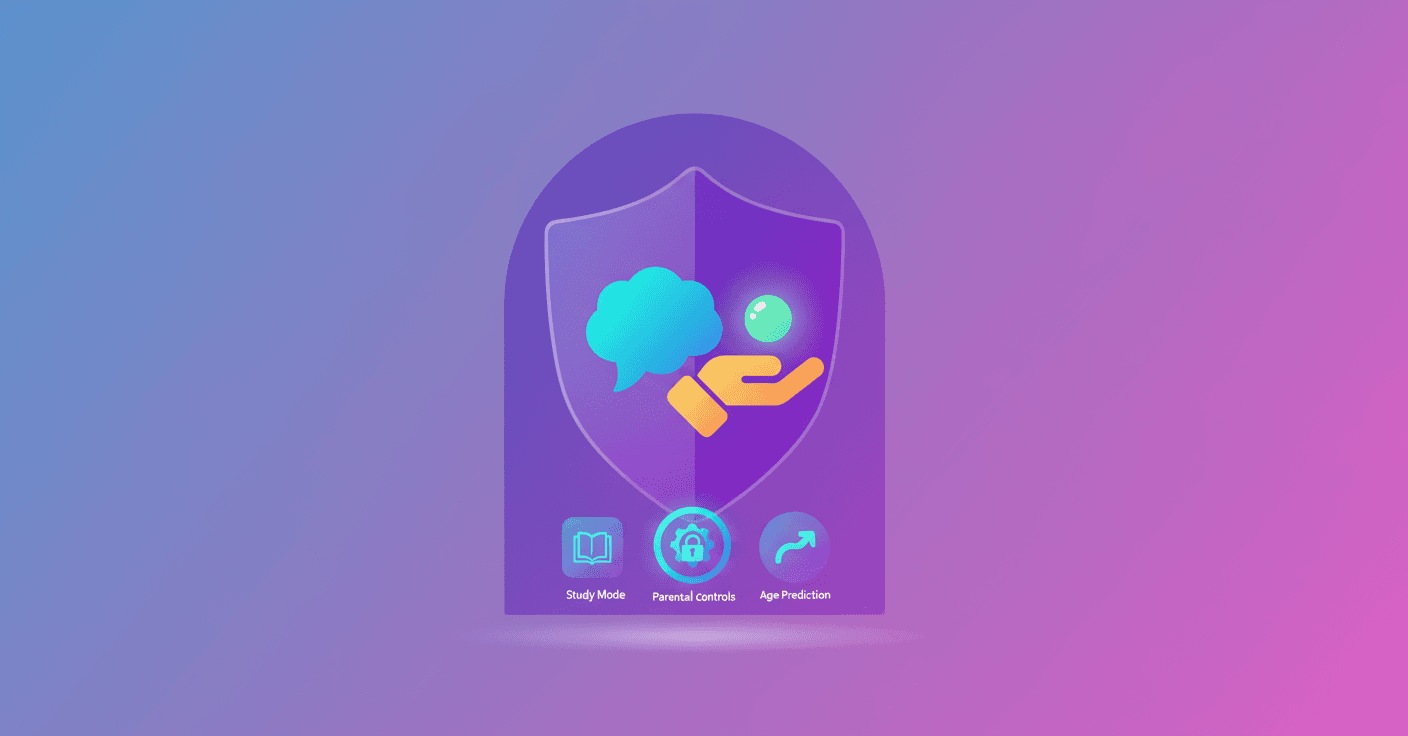
Teenagers are the first generation to grow up with AI as a normal part of life. Does it make sense to ask them to avoid a technology they already use to study, create and learn? OpenAI argues they should have access — but with protections designed for their age.
Why OpenAI believes teenagers should use AI
Nearly 9 out of 10 teenagers who use ChatGPT do so weekly to learn, stay informed, build skills or boost productivity. Imagine banning the web or search engines until they're 18: you'd leave them less prepared for a tool that helps define their era.
OpenAI shares the example of Oriana McKenzie, who used ChatGPT to study more efficiently, became the top student in her class, and freed up time for sports and other activities. Stories like hers show the positive side when AI supports learning.
But access can't be unconditional. OpenAI insists that letting teens into AI must come with safeguards tailored to their stage of life.
What measures and tools OpenAI presents
OpenAI lists several actions it has implemented or expanded in the last year:
- Strengthening default protections for minors.
- Automated age prediction to offer age-appropriate experiences.
- Expansion of
Parental Controlswith options for permissions, quiet hours and management of features like voice and image. - New family resources and guides in over 50 languages to help parents and educators.
- Introduction of
Study Modeto promote active thinking, with guiding questions, structured explanations and chances to reflect without handing over the answer. - Starter prompts for education to turn notes into study guides, flashcards or practice questions.
- Expansion of interactive experiences: 18 million weekly users engage with activities in math and science, now covering over 250 topics.
- Pronunciation audio experiences in more than 61 languages.
- Reminders to take breaks when usage extends, encouraging healthier digital habits.
- Notifications to parents in high-risk situations, for example when a teen account is disabled due to violent threats, seeking to balance safety and privacy.
Principles emphasized: put teen safety first, encourage real-world support, treat teens according to their stage, and be transparent about expectations.
Study Mode and the focus on active learning
Study Mode is a central piece of the educational argument. It was designed with teachers and learning scientists so students work step by step instead of getting ready-made answers.
Early internal studies show improvements in performance, and now parents with linked accounts can activate it from parental controls.
Also, the starter prompts and interactive experiences are meant to get the student involved: turning notes into guides, creating flashcards or practicing with interactive exercises helps you retain and understand, not just copy information.
Where the tensions are and what's left to solve
None of this removes important debates. How do you balance notifying parents with respecting a teen's privacy? How accurate and fair are age predictions? Do technological safeguards reach all cultures and educational contexts?
OpenAI admits it can't do this alone: it works with educators, mental health organizations, youth safety experts and groups like the American Federation of Teachers, the American Psychological Association, Moonshot and the Family Online Safety Institute. It also calls for global standards and shares policies and tools so other developers can implement them.
Final reflection
The proposal is clear: banning isn't the answer, but using AI without limits isn't either. Giving teenagers access to AI can boost learning and creativity, as long as it comes with controls, education and real support. Who's responsible? Shared: families, schools, developers and public policy must move forward together so AI is a help, not a risk.