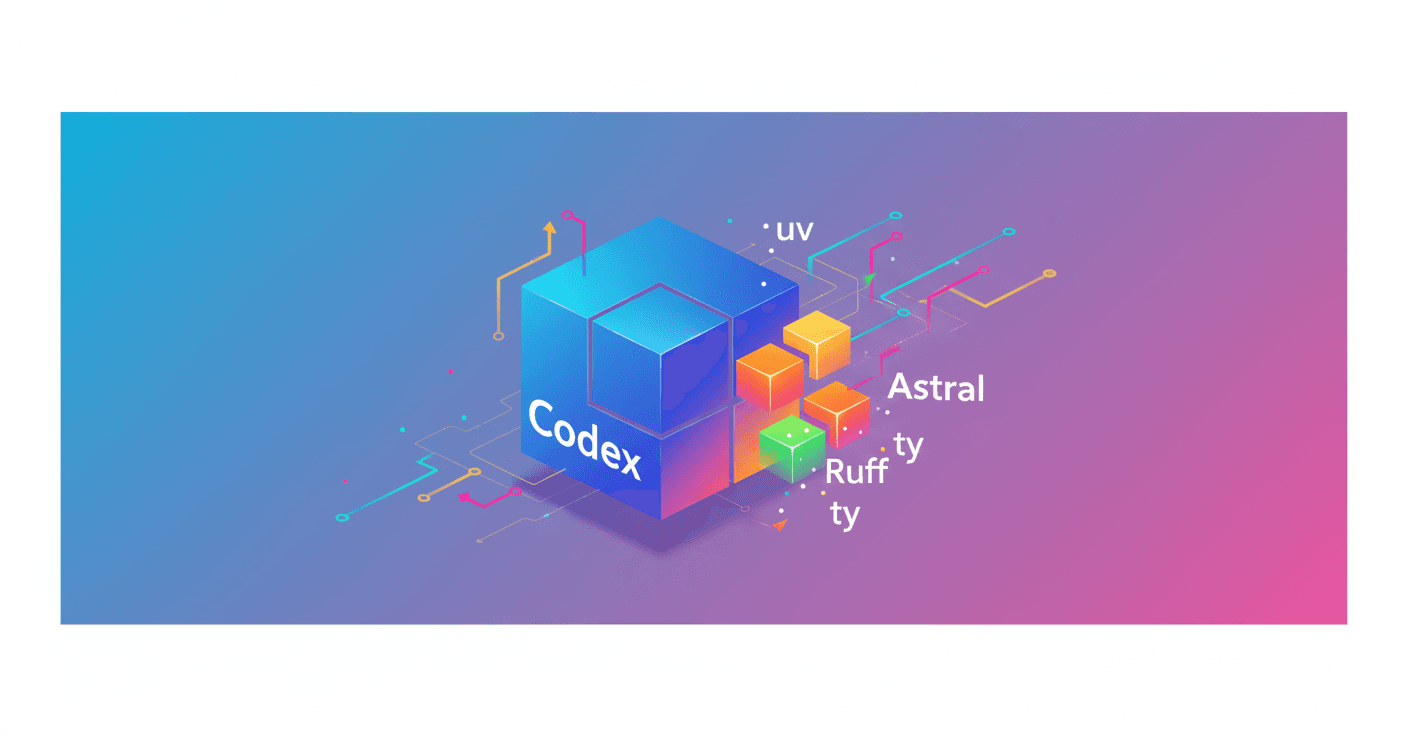
OpenAI announced it will buy Astral to integrate its open source tools into the Codex ecosystem. It's a move meant to bring tools that millions of Python developers already use closer to the AI agents that help write, review, and maintain code.
What OpenAI announced
The announcement says OpenAI will acquire Astral and that, after the deal closes, they plan to support Astral's open source projects. Astral is behind widely used Python tools like uv, Ruff and ty.
OpenAI explains this integration will help accelerate Codex development, which is already growing strongly: 3x in users and 5x in usage since the start of the year, with more than 2 million weekly active users.
What Astral does and why it matters
Astral isn't just another startup: it built utilities that are now part of many teams' daily workflows. Why does that matter to you?
uv: simplifies dependency and environment management — the kind of friction you hit every time you start a new project.Ruff: provides extremely fast linting and formatting; it catches issues and keeps code uniform without making reviews take forever.ty: helps strengthen typing and safety across codebases, reducing bugs that are hard to spot late in the cycle.
Together, these tools help manage projects, keep quality high and catch problems early. Integrating them with Codex means the AI can interact directly with the same tools you already use.
What this means for developers and teams
Can you imagine an AI assistant that not only generates code snippets but also runs the linter, checks types and adjusts dependencies in your environment? That's the promise of this combination.
Practical benefits:
- Faster iteration: fewer manual steps from idea to tested code.
- Consistent quality: linters and checkers applied by AI before a commit.
- More integrated flow: the AI can orchestrate tools that are already part of your pipeline.
But there are legitimate questions: will the tools truly remain open? OpenAI says it will support the open source projects, and until the deal closes both companies will remain independent. The close is subject to the usual conditions, including regulatory approval.
What to watch in the coming weeks
- Status of the closing and regulatory approvals.
- How licenses and governance of the open source projects will be maintained.
- Early integrations between
Codexand the tools: will it be trivial plumbing, or will we see agents that runRuff, updatepyprojector manage environments withuvautonomously?
The promise is ambitious: move Codex from a snippet generator to a collaborator that participates across the development cycle. If it works, the way you work with Python could become much smoother.
In the end, this is a practical reminder: big productivity gains often come from combining things that already work well. Integrating popular tools with smart assistants may sound like a small detail, but for the person maintaining code every day it can turn hours of work into minutes.