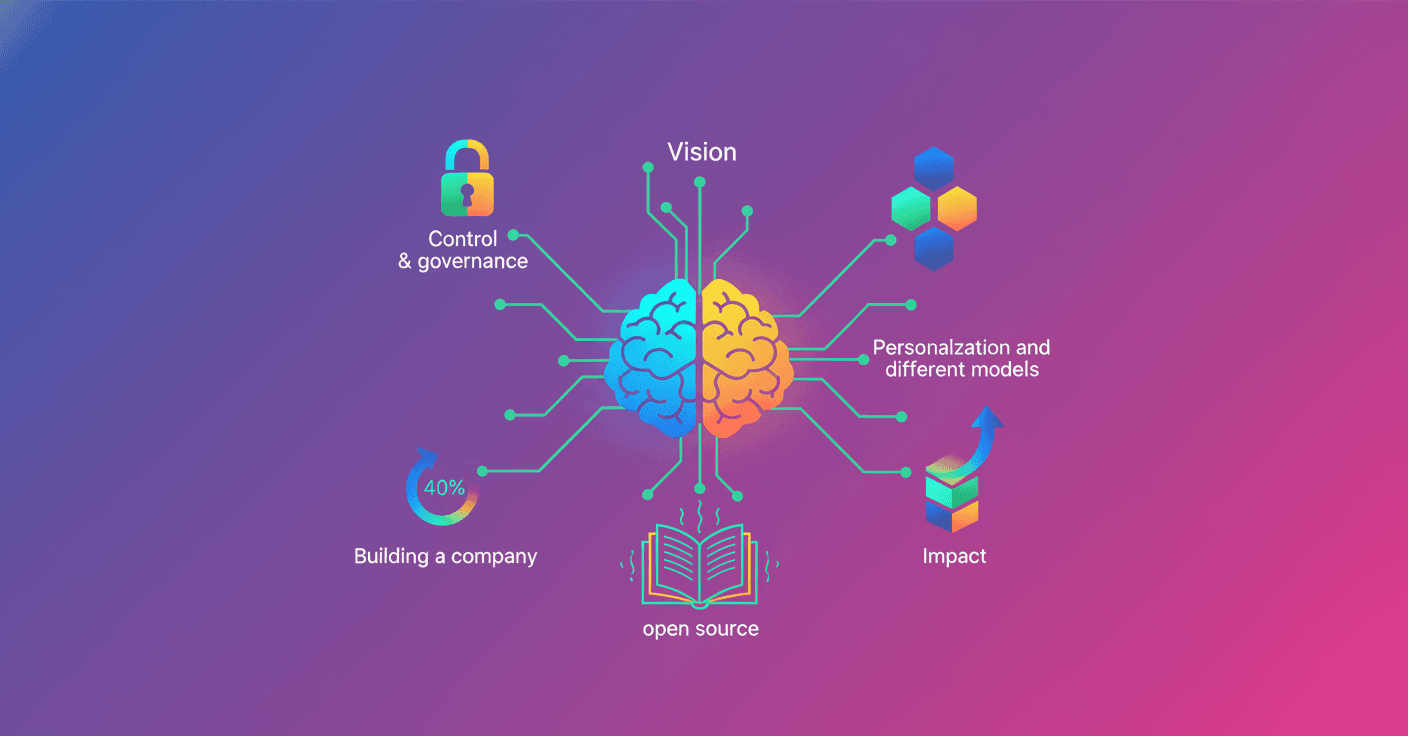
In the first episode of the "Meet Mistral AI" series you get an up-close look at Arthur Mensch, CEO and co-founder of Mistral AI. It’s a direct conversation about how you build an AI company, where the inspiration comes from, and what it really means to own your future in AI.
Episode 1: Arthur Mensch up close
The series aims to show the people behind the technology, and this first episode does exactly that: a chat between Arthur Mensch and Howard Cohen, Head of Communications for North America. It’s not just executive glamour; it’s an honest explanation of choices, priorities, and vision.
Arthur talks about several topics that matter both to those building AI and to those who will adopt it in their organizations:
- What it takes to build a successful company in a fiercely competitive field.
- Where the inspiration to found Mistral AI came from and which problems they aim to solve.
- How execs should think about getting return on investment (ROI) from AI projects.
- Why the AI ecosystem benefits from open source.
- The importance of personalization, control and of "owning" your future in AI.
- What’s next for Mistral AI and for innovation in AI in general.
What does this mean for you?
If you’re an entrepreneur or leader, the conversation gives you a practical reminder: AI isn’t just giant models, it’s strategic decisions. Arthur suggests thinking about AI as a series of steps: identify use cases with measurable impact, run small pilots, and scale when both results and processes are clear.
Wondering about ROI? Think in concrete metrics: reduced processing time, higher conversion rates, savings in operational costs. A simple example: automating initial triage of requests can cut hours of human work and speed up customer responses. That’s tangible ROI.
The role of open source and model control
Arthur highlights that open source feeds collective innovation. It’s not just a philosophy; it’s both a technical and business strategy. When components are open, more people can audit, improve, and adapt the technology to local contexts.
At the same time, Mistral emphasizes personalization and control: you want to be able to adjust models to your data, rules, and values. Why? Because the best AI is the one that adapts to your reality, not the one that forces you to change entire processes.
Practical tips from the interview
- Start with a small but high-impact use case. Don’t try to transform the whole company at once.
- Measure from day one: define clear indicators to know if AI is delivering value.
- Value solutions that allow personalization and control, especially if you handle sensitive data.
- Consider open source tools as a starting point to reduce vendor lock-in and enable auditing and improvement.
What to expect from Mistral AI according to Arthur
The company bets on combining competitive models with options that let organizations retain control over their deployments. In short: speed of innovation without losing the ability to adapt and govern the technology.
The conversation is useful because it dials down the rhetoric and raises the practical. If you’re interested in AI from a business or product perspective, it’s worth watching the episode and noting the recommendations on ROI, governance, and personalization.