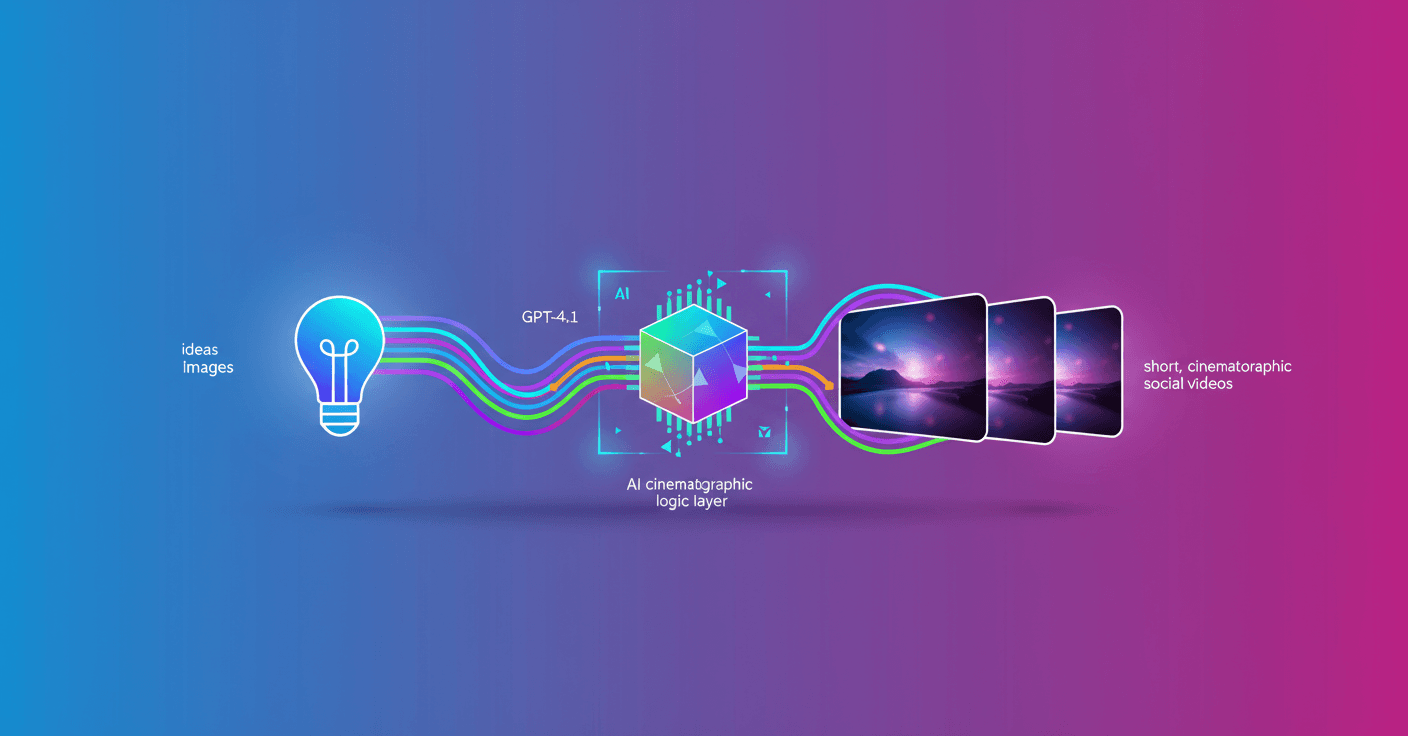
Short-form video attention dominates modern commerce, but producing clips that actually work is harder than it looks. Higgsfield turns a product link, an image or a bare idea into short, cinematic videos using GPT-4.1, GPT-5 and Sora 2, and generates nearly 4 million videos a day.
What's the secret? It's not just generating moving images. It's translating what you want to feel into instructions a machine can execute: rhythm, camera moves, hook timing and visual priority.
What Higgsfield does
Higgsfield puts a layer of cinematic logic up front that interprets creative intention and expands it into a concrete video plan before generating any frames. Instead of asking you to write shot lists or technical rules, the system internalizes decisions like narrative arc, pacing and visual emphasis.
The platform uses a library of viral presets that encode repeatable structures observed in high-performing videos: each preset has a narrative structure, a pacing style and camera rules. They create about 10 new templates per day and retire those that stop being effective.
Sora 2 Trends is the tool that applies those presets: from a single image or idea it produces videos aligned to platform trends without manual tweaking. The result aims to look native on TikTok, Reels or Shorts from the first version.
Users rarely describe what a model needs. They say how they want the video to feel. Higgsfield translates that intention into technical instructions the engine can execute.
How Click-to-Ad works (step by step)
- You paste a product link.
- The system analyzes the page to extract brand intent and visual anchors.
- It maps the product to a predefined trend preset.
Sora 2generates the video applying professional rules for camera movement, pacing and style.
The goal is to deliver a useful result in 1 or 2 attempts, instead of iterating five or six times. A typical generation takes between 2 and 5 minutes and, thanks to concurrent executions, a team can produce dozens of variations per hour.
Since the launch in November, Click-to-Ad was adopted by more than 20% of professional creators and enterprise teams on the platform, measured by downloads, posts or use in live campaigns.
Technology without technobabble
Higgsfield mixes models depending on the task. For flows with strict format and high predictability they use GPT-4.1 mini for its control, low error margin and low latency. For more ambiguous inferences, like interpreting pages with partial information, they use GPT-5 for its reasoning and multimodal understanding.
Routing decisions are based on internal heuristics that measure:
- depth of reasoning required versus acceptable latency
- predictability of the outcome versus creative freedom
- explicit intent versus inferred intent
- machine-facing output versus human-facing output
The idea isn't to choose the best model overall, but to pick the appropriate behavior for each step in the flow.
Results and practical impact
The numbers show what many creators feel: presets and upfront planning boost performance. Compared to their previous baseline, videos produced with this approach show a 150% increase in share velocity and roughly 3x more cognitive capture, measured by subsequent engagement behavior.
For marketing teams that means planning campaigns around volume and variation, not trial and error. In practice, instead of spending time learning how to write perfect prompts, brands define tone and structure, and the platform handles the technical execution.
New formats and the near future
Recent advances in image and video models made it possible to maintain visual continuity between shots, reduce object drift and sustain longer sequences. With that, Higgsfield launched Cinema Studio, a workspace for trailers and short films where videos of several minutes are produced that are often indistinguishable from real footage.
As models evolve, the platform translates new capabilities into flows that feel obvious in hindsight. Creators' work shifts: less tool handling, more decisions about tone, structure and meaning.
Can you imagine generating a trend-accurate version of your ad in minutes and testing 30 variants in an hour? For many teams that stops being an idea and becomes routine.