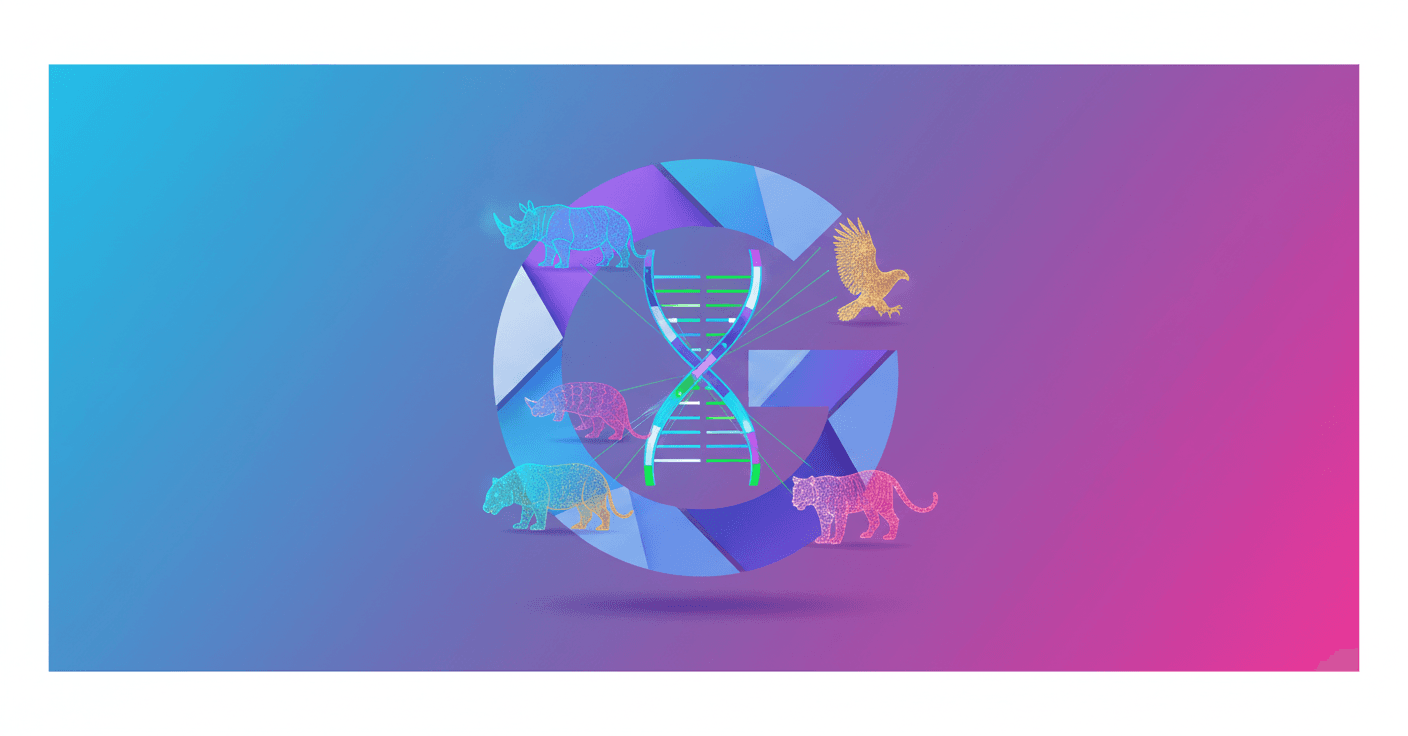
Google has joined global scientific projects to preserve the DNA of endangered species. Why now, and why should you care? If we lose a species' genetic information, we lose key tools to bring it back and to protect the ecosystems you depend on.
What Google and the scientists are doing
Google is providing funding, support, and artificial intelligence tools to speed up genome sequencing for threatened species. The goal is to help the Vertebrate Genomes Project and the Earth BioGenome Project build a complete catalog of life’s genomes on Earth.
Sequencing a genome used to take years and cost millions. Today, thanks to advances in technology and AI models, it can be done in days and for a fraction of the cost. Tools like DeepPolisher, DeepVariant and DeepConsensus improve accuracy and reduce errors, which makes it realistic to process many more specimens.
The bet is clear: preserve genetic information now so we don't regret extinctions later.
Why a genome can be the key to saving a species
A genome is an organism’s biological instruction manual. Knowing it lets conservationists understand genetic diversity, spot inbreeding problems, design breeding plans, and choose populations for reintroductions into the wild.
Sound dramatic? It isn’t. The kākāpō in New Zealand is a real example: analyzing the genomes of every individual made it possible to design a successful breeding plan and bring the species back from the brink. That’s the kind of practical impact projects like this want to replicate worldwide.
Nine species whose genomes are already available
Google and its partners helped preserve the genetic information of 13 species in total; here are nine notable ones whose genomes are public:
- The cotton-top tamarin: a critically endangered primate from Colombia, important for seed dispersal.
- The golden mantella: one of the smallest and rarest frogs, from Madagascar.
- Grevy’s zebra: the largest wild equid, with declining populations.
- The Nubian ibex: once common across northeast Africa and the Middle East, now vulnerable.
- The elongated tortoise: a critically threatened species in South and Southeast Asia.
- The hog deer: formerly widespread in Southeast Asia, now suffering loss of genetic diversity.
- Eld’s deer: managed populations suffer inbreeding and need cooperative breeding strategies.
- The golden lion tamarins: from Brazil’s Atlantic coast, whose diversity has been saved by intensive conservation.
- The African penguin: in steep decline in South Africa and Namibia and at risk of extinction.
All these genomes are free and available to researchers and conservationists.
Impact and next steps
Beyond the initial release, Google.org awarded funds to The Rockefeller University to expand the project to 150 additional species, all with open data. That collaborative approach aims to make research useful for universities, NGOs, and governments.
The idea is simple and powerful: combine biological expertise with modern AI tools to scale what used to be impossible. This isn’t science for science’s sake; it’s about preserving the biodiversity that supports our food, climate, and medicines.
Final reflection
Species loss isn’t only a problem for biologists; it affects all of us. Thanks to AI and open access to genomes, we have better tools to make informed decisions and save populations that can still recover. Isn’t that an opportunity worth seizing?
Original source
https://blog.google/innovation-and-ai/technology/ai/ai-to-preserve-endangered-species