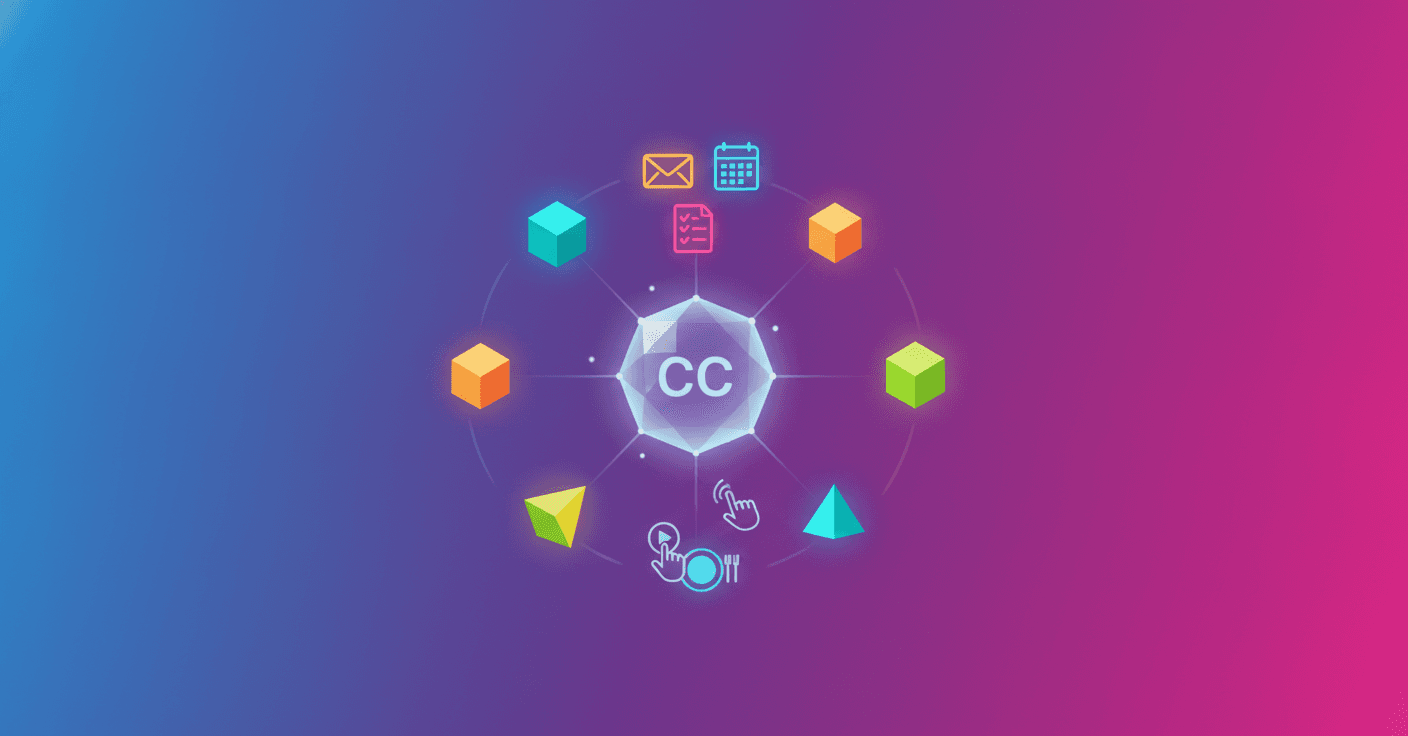
Google is expanding CC, its artificial intelligence agent designed to organize your day, with a new feature aimed at families and households. The tool can now coordinate calendars, tasks, emails, and shared documents among up to six people.
The proposal responds to a very everyday problem: family information is often scattered across different inboxes, chats, calendars, and mental to-do lists. Who is taking the kids to practice? When is the school permission form due? What do you need to buy for dinner?
CC aims to bring those pieces together in a single shared context, without turning individual privacy into public information for the entire group.
An AI agent for coordinating the household
CC now has its own Google account, a distinct identity, and a specific permissions model. Up to six members can join the group to collaborate with the agent and receive a shared summary of the day's activities.
Every morning, CC prepares a report called «Your Day Ahead». It can bring together commitments, pending tasks, places each person needs to go, and actions the agent has completed previously.
The idea is simple, but it could have a significant impact: reducing reliance on a single person who usually manages the school emails, medical appointments, sports activities, and household planning.
From email to the family calendar
CC can extract relevant information from messages that members choose to share. For example, an email from the school can become a calendar event, while a travel reservation or birthday invitation can feed into a task list.
You can also send it specific information. A user could forward an image with the soccer schedule, share a Google Drive folder, or add CC to a calendar so the agent can update the household's organization.
In addition, members can select senders they always want to share with CC, such as their children's school, sports center, or veterinary clinic. Each week, they will receive a private list of new senders so they can decide whether to add them.
What tasks can CC perform?
The agent does more than summarize information. With authorization, it can also carry out logistical tasks that usually take up time:
- Fill out PDF forms for school permissions or registrations.
- Create shopping lists for school supplies or activities.
- Prepare weekly meal plans.
- Update events and tasks when schedules change.
- Check travel times between consecutive activities using Google Maps.
- Create shared documents and spreadsheets.
When it needs missing information, CC can request it and save it to its group memory. That way, it can act with more context the next time, such as remembering a regular grocery list or the family's favorite restaurant.
However, that memory does not mix all information indiscriminately. CC is designed to distinguish what belongs to the household, such as a shared shopping list, from individual data, such as one person's dietary preference or time zone.
Privacy and the architecture behind the agent
CC's operation depends on a system of explicit permissions. Each member decides what information to share and can change that decision at any time.
CC's own account also limits its reach. The agent only responds to group members and should not take actions or share information outside that space without authorization.
From a technical perspective, each CC instance runs on an isolated computer in the cloud. Google says it uses its infrastructure for agents, called Antigravity, together with its latest Gemini models.
This approach allows CC to move from answering questions to carrying out multistep workflows. For example, it can read shared data, identify an event, look up additional information, complete a document, and update a calendar. User authorization is still required for sensitive actions.
The difference between a chatbot and an agent is that an agent does not just converse: it also interprets context, decides which steps are necessary, and can act within connected tools.
A still-limited test
CC remains a Google Labs experiment. The new experience is available on the web and on mobile devices for people over 18 who are located in the United States and use a personal Google account.
Current users will receive an email to upgrade their account, while new users can join a waitlist. For now, no international availability has been announced.
Google's bet shows where applied AI is heading: fewer isolated answers and more coordination among services, people, and real-world tasks. The challenge will be preserving that benefit without convenience turning into overly broad authorization.
For a family, saving time does not mean letting a machine decide for everyone. It means allowing it to handle remembering, organizing, and preparing certain things, while people retain control over what information they share and which actions they allow.
Original source
https://blog.google/innovation-and-ai/models-and-research/google-labs/cc-expanding-to-groups