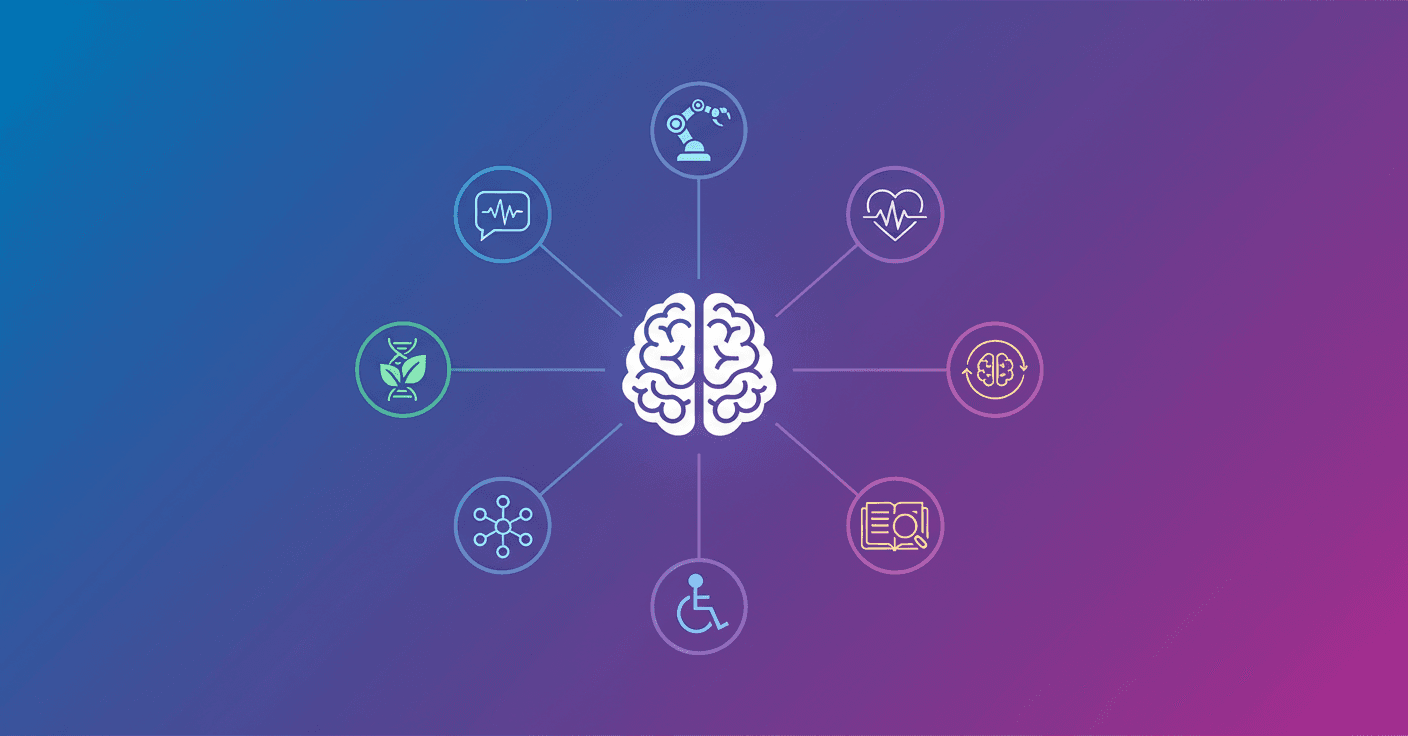
Google published its year in review: 8 areas where research led to concrete advances in 2025.
Are you curious what changed and why it matters? I'll explain it in plain language with practical examples anyone can use: users, entrepreneurs, or the merely curious.
8 areas with advances worth knowing
Google frames 2025 as a year of new AI models, products that transform experiences, and discoveries in science and robotics. It's not just theory: several of these advances already affect products you use daily or create opportunities for businesses and projects.
1. More capable language models
Language models improved in understanding and coherence. That means assistants that follow long contexts, produce better summaries, and help you draft with fewer edits. Can you imagine delegating technical or creative drafts without losing the tone you want?
Practical example: an entrepreneur can use these models to create business proposals, posts, and customer replies in minutes.
2. Product features that transform user experiences
Research turned into concrete features inside products: more accurate search, more helpful assistants, and editing tools that make daily tasks easier. The barrier between research and product is shrinking.
Think less friction: fewer clicks, more useful answers, and functions that used to live only in labs.
3. Applied computational science
Advances in simulation and modeling made it possible to explore basic science problems faster. Improvements in algorithms and hardware help simulate complex physical and chemical processes.
Who cares about this? Researchers, materials startups, and pharma companies that want to speed up discoveries.
4. Robotics with more practical learning
In 2025 robotics progressed in motor skills and learning from experience. Robots learning manipulative tasks in real environments mean automation is no longer only for tightly controlled factories.
That opens doors to logistics solutions, home robotics, and assistance in complex settings.
5. AI-assisted health and biomedicine
AI speeds up analysis of medical images, triage, and drug discovery. It doesn't replace doctors, but it boosts diagnostics and case prioritization.
Example: tools that highlight relevant findings in imaging studies so specialists can confirm results faster.
6. Advanced computing and new materials
Research in computing (including early-stage quantum work) and materials design uses AI to propose structures and optimize processes. This cuts the time needed for physical experimentation.
For industries, that means lower upfront costs and faster prototypes.
7. Sustainability and climate with data and models
Models that integrate large volumes of data help predict weather events, optimize energy use, and design more efficient policies. AI becomes a tool for better-informed environmental decisions.
Green entrepreneurs and governments can use these capabilities to measure impact and prioritize actions.
8. Privacy, security, and fairness in practice
It's not all raw capability: research also advances data protection, bias reduction, and making models more auditable. This is key to accepting AI in sensitive areas.
For companies, it means more trust from users and regulators.
What does this mean for you?
The keyword is utility. Research is no longer isolated: it translates into features that boost productivity, create business opportunities, and bring new technology to the public.
If you work in product, are starting a business, or just use digital services, now is a good time to explore how these capabilities can solve real problems—not just futuristic ideas.
Worried AI will replace tasks? Think collaboration instead: AI takes on repetitive work and gives you time back for tasks that really need human judgment.