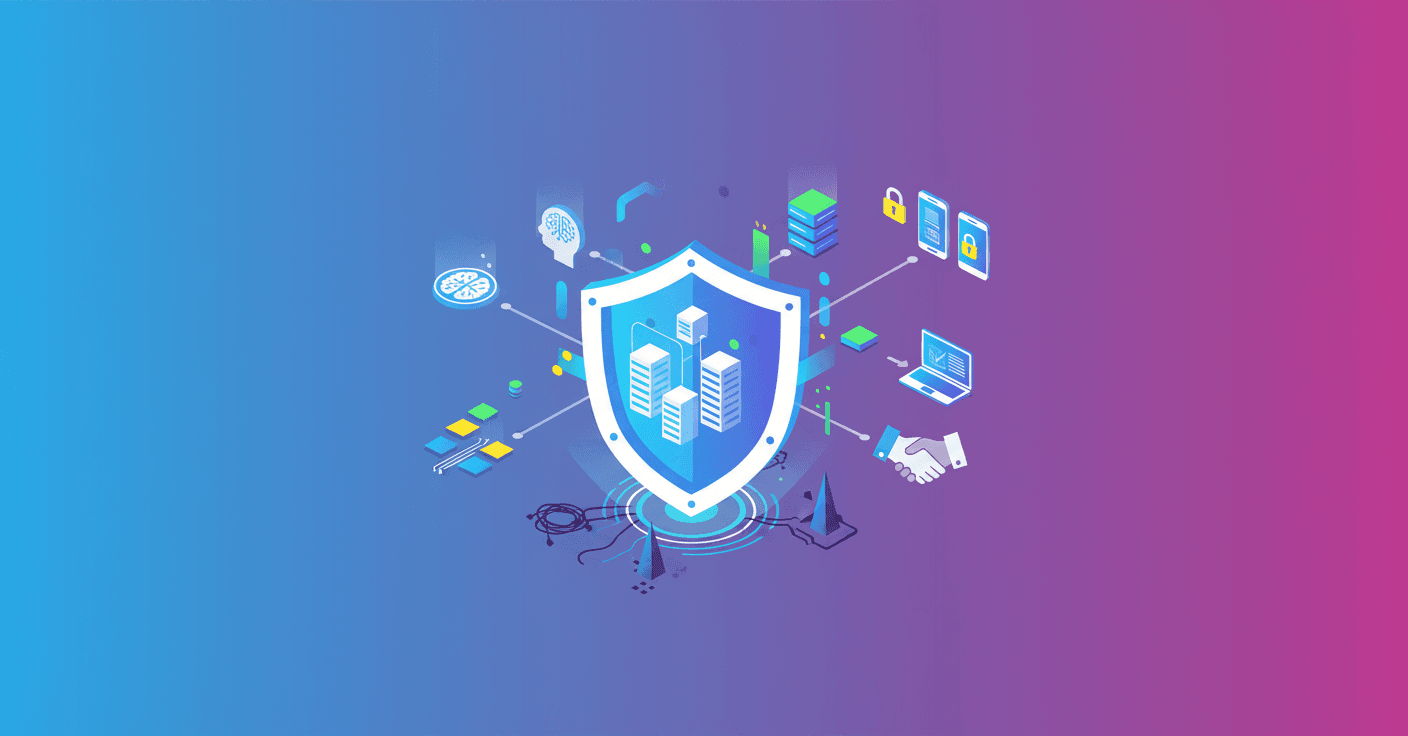
Google presented a clear bet at the Munich Security Conference: help democracies get ahead of digital threats that are no longer distant or abstract. Why does this matter to you? Because national security now depends on the same things you use to work, study, or stay in touch: networks, data, and apps.
What Google presented in Munich
Google released a new whitepaper called Staying Ahead of the Shadows: Digital Resilience in the Era of AI and is discussing it with government leaders. The central idea is simple and bold: defending democracies requires a single strategy that mixes technology, policy, and public-private partnerships.
Sounds technical? Yes, but the practical point is straightforward: if an adversary can disrupt a supply chain or trick employees from the other side of the world, solutions also need to operate at global scale with local coordination.
Key trends identified by Google Threat Intelligence Group
Google shares several findings that explain why a unified approach is urgent:
- Targeting defense technology: state-backed actors attack defense suppliers, especially next-generation tech like drones and unmanned vehicles. China appears with the largest volume of campaigns.
- Risk in the industrial supply chain: hackers and extortion operations threaten the ability to manufacture and deliver critical components in crisis moments.
- Exploiting the human factor: campaigns use fake job portals and manipulations in hiring processes to get inside systems.
- Sustained activity from groups with a China nexus: in recent years China has led by volume of campaigns and keeps a persistent focus on the defense sector.
These trends aren't theory: they affect how an airplane is repaired, how a power plant is secured, and how government communications are kept running in a crisis.
A full-stack approach to digital resilience
Google proposes protecting every layer of the digital ecosystem, from the undersea cable to the app on your phone. The five layers they highlight are:
-
Infrastructure: Google's global network (subsea and terrestrial) offers reach and redundancy. Its Sovereign Cloud solutions aim to combine global scale with local controls.
-
Architecture: breaking data silos so defense and logistics agencies can get real-time intelligence. For example, Google AI helps the U.S. Defense Logistics Agency improve supply chain visibility.
-
Models: models like Gemini and developments from Google DeepMind are proposed as tools for governments to adopt AI on their terms and improve access to public information in critical contexts.
-
Applications: cloud-native solutions like Google Workspace enable secure collaboration and operational resilience; Ukraine's experience keeping government offices connected is a concrete example.
-
Security: it's not just about patches; the bet is to eliminate whole classes of threats with AI-driven tools. They mention
CodeMender, the frameworkSAIF, and efforts inPQC(post-quantum cryptography) to protect for the long term.
Commitments, controls, and partners
Google emphasizes technical and legal controls to build trust: letting customers control their data, supporting open-source software, and avoiding lock-in that limits choices. They also highlight air-gapped solutions and sovereignty certifications like S3NS.
In practice, Google Cloud already works with bodies like NATO's Communications and Information Agency, several ministries of defense, and armed forces to bring secure compute capabilities to the tactical edge.
Three pillars for public-private partnerships
For this to work at scale, Google proposes focusing on three lines of work:
- Speed is security: modernize procurement and permitting to deploy critical infrastructure faster.
- Integration through interoperability: adopt open standards and shared encryption to break silos and reduce dependence on single vendors.
- Control without compromise: seek resilience through technical excellence, not just local-buy rules that can exclude innovators.
A practical, reflective closing
Digitalization stopped being a convenience and became a battlefield. What Google proposes isn't a magic recipe, but it is a coherent framework: combine infrastructure, models, applications, and security with agreements between governments and companies. Good news? Many of these tools exist today and can be deployed now; the hard part is coordinating wills and processes.