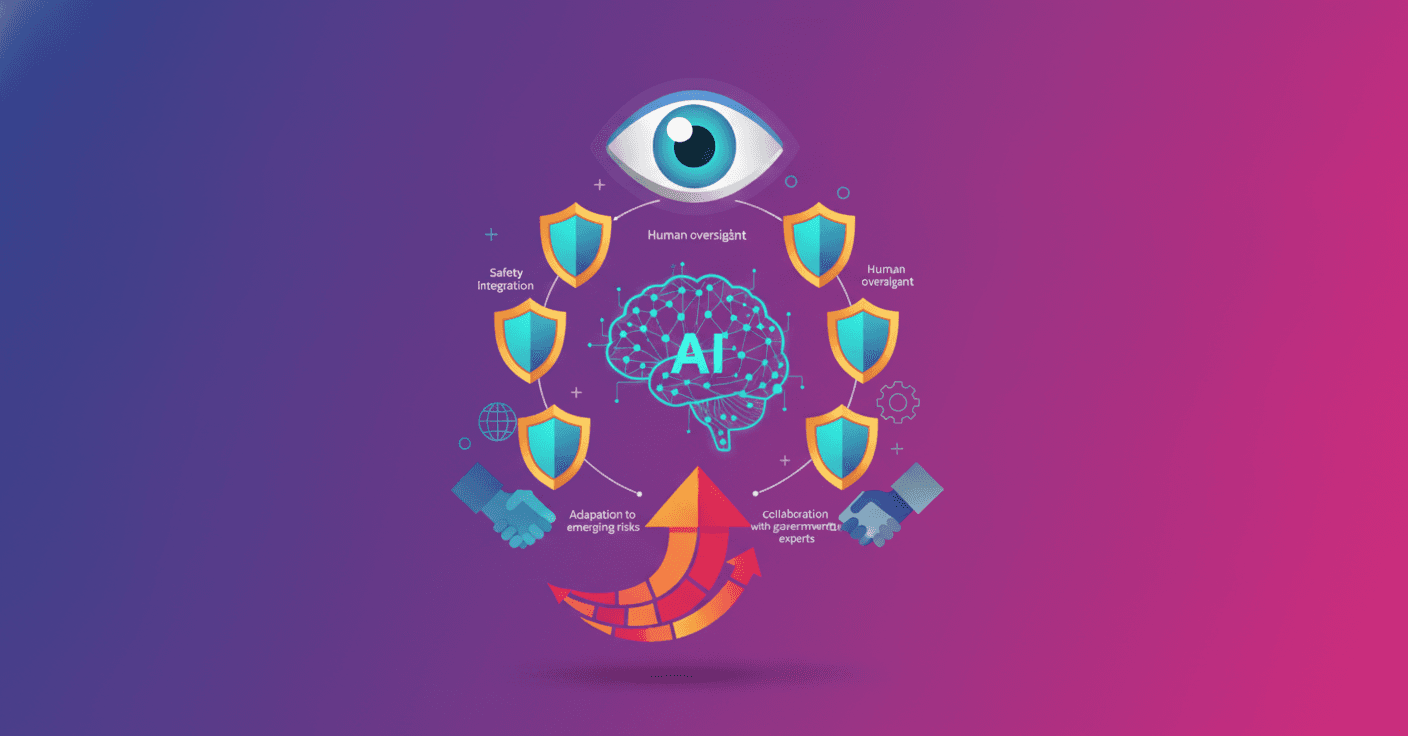
Artificial intelligence has stopped being a tool for experimentation and is becoming a partner capable of reasoning, anticipating needs, and operating across different environments. Google says 2025 marked that shift and presents its new report on the responsible development of these technologies.
Responsibility accompanies the entire AI lifecycle
The report explains that responsibility is no longer treated as a final review before launching a product. According to Google, its processes are integrated into every stage: from initial research and model development to post-launch monitoring and issue resolution.
The company says its AI principles serve as a guide for research, product, and business decisions. To apply them, it uses a multilayered governance system that combines human expertise with automated evaluation tools.
Why does this matter? Because today’s models are more capable, personalized, and multimodal. They can also act more autonomously, which expands their potential benefits but also creates new risks that must be continuously identified and managed.
AI safety is not just about preventing harmful responses. It also requires observing how an AI behaves after launch and adapting protective measures when new risks emerge.
Evaluations with human expertise and automation
Google says its testing strategy draws on 25 years of knowledge about user trust. That experience is combined with extensive evaluations and automated systems that help test models at the speed and scale required.
The idea is to detect problems before they reach people, while also maintaining the ability to respond when unexpected situations arise. In a technology that changes so quickly, a one-time review is not enough.
This approach is especially relevant for AI systems capable of planning and executing tasks. An assistant that only answers questions presents one set of risks. One that can navigate services, make decisions, or complete processes needs additional controls and more consistent oversight.
Access is also part of responsibility
The document presents a broad view of responsible AI. It is not only about blocking dangerous uses, but also about making it possible for more people to use these tools to solve important problems.
Google mentions applications such as flood prediction for 700 million people, decoding the human genome, and initiatives aimed at preventing blindness. These examples show that the debate should not focus only on what AI can do, but also on who can benefit from it and under what conditions.
Of course, expanding access does not mean eliminating precautions. It means finding a balance between usefulness, safety, privacy, oversight, and availability. What good is powerful technology if people do not trust it or if it is available only to a few?
Google calls for collaboration to establish standards
The company also emphasizes that responsible development cannot depend on a single organization. To build trust, it considers collaboration with governments, universities, researchers, and civil society organizations essential.
In that spirit, Google says it will continue sharing research and tools with the technology ecosystem. The goal is to contribute to common standards and promote uses of AI that deliver concrete benefits for society.
The report presents responsible AI as ongoing work, not as a label earned once and for all. As models become more autonomous and integrate into daily life, trust will depend not only on their capabilities but also on how they are tested, monitored, and corrected.
Original source
https://blog.google/innovation-and-ai/products/responsible-ai-2026-report-ongoing-work