The countdown to Google I/O 2026 has already begun. Can you imagine solving an interactive puzzle where artificial intelligence isn’t just behind the curtain, but the star of the game? That’s exactly what Google proposed with its traditional "Save the date", this time powered by Gemini.
What the I/O Save the date is and why it matters
Google I/O returns May 19–20 at the Shoreline Amphitheatre in Mountain View. Before the keynotes, the company keeps a playful tradition: the Save the date puzzle. This year’s idea, called Make Build Unlock, aims to be inclusive: casual players and developers both find something to enjoy and learn.
"Make Build Unlock" was designed to welcome audiences of any technical level, offering multiple ways to participate and levels of challenge.
It’s a clear invitation: AI isn’t just for specialists, it can be a creative tool that lets you play, build, and unlock rewards.
Five games, five ways to showcase Gemini
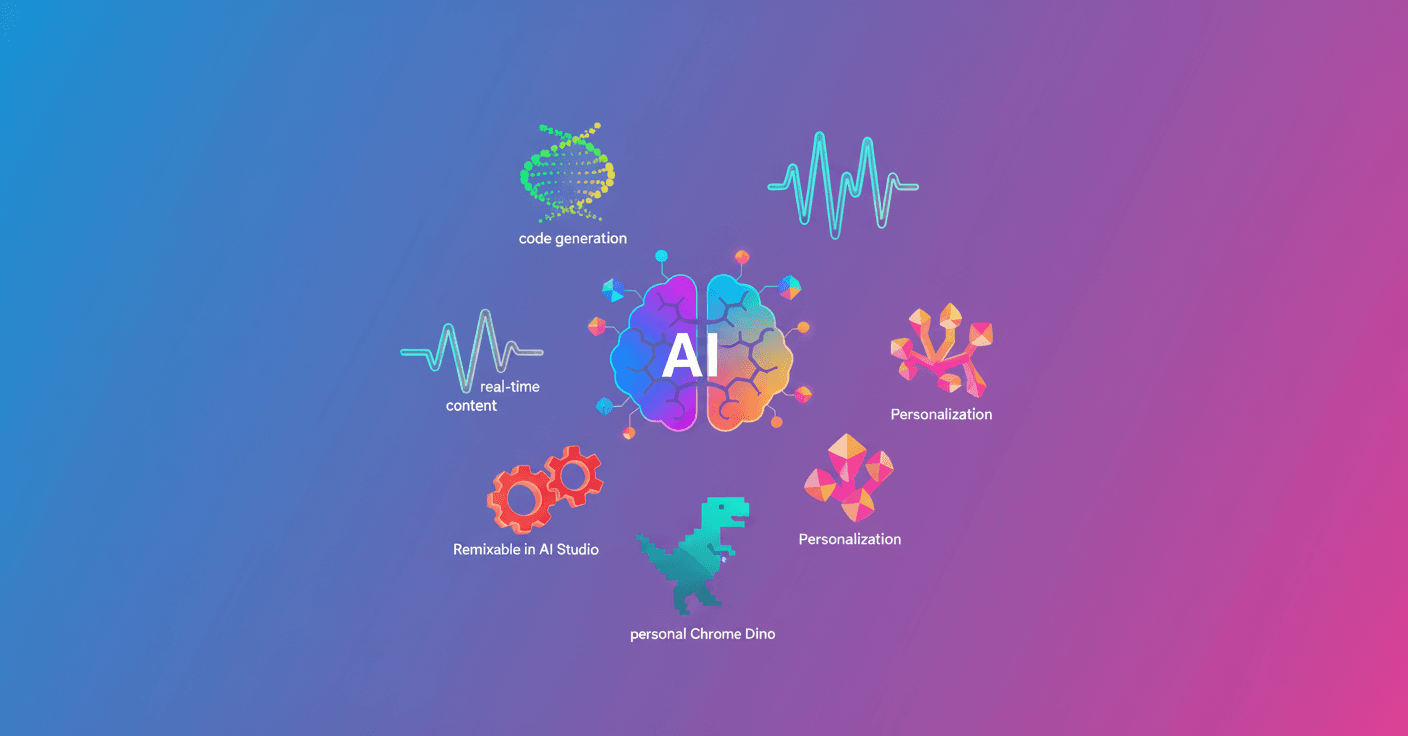
The experience offers five games that together show how Gemini can influence game design: from code generation to real-time content creation.
-
Supersonic Bot: reinvents the classic side-scroller runner. Here you control the Android Bot’s flight with the volume of your voice. Yes, your voice becomes the controller.
-
Hole in one: mini golf with an AI caddie. The model generates contextual tips and encouragement based on your shots—like having a digital coach who understands your play style.
-
Nonogram: the first level is predefined, but levels 2 and 3 are dynamically generated by
Gemini, so each match can bring a new puzzle. -
Dino Pal: if you complete the five games you receive a personal Chrome Dino.
Geminiassigns personality traits that evolve based on how you play. -
One more game focuses on prototyping and code generation, where
Geminihelped brainstorm ideas and deliver reusable snippets for production.
The idea? To show different facets of AI: real-time interaction, procedural generation, learning support, and direct code generation.
How it was built: from sandbox to production
The team started in the AI Studio sandbox, a space where creatives and developers prototyped many ideas quickly. Many of the pieces generated by Gemini were directly useful in production, which sped up the creation cycle.
As the games gained complexity, the project moved to Google Antigravity, a bridge between early concepts and the polished version you can play today.
"The goal was to show AI model capabilities in varied formats," the leads explain. And they achieved it through a diverse collection of games.
Remix and learning: the invitation to the creator
A key point is that the games are available in AI Studio for developers to explore the code, remix it, and build something of their own. Want to take the mini golf and turn it into a putting training game? You can.
That openness turns the experience into more than a pastime: it’s an educational tool that teaches rapid AI prototyping practices and shows how to integrate models into real products.
Why should it matter to you?
Because this illustrates something practical: AI is becoming an accessible toolbox. It’s not just marketing sparkle; it’s reusable code, new user experiences, and a concrete way to speed up creation.
If you’re a developer, it’s an invitation to experiment and share your versions. If you’re a player, it’s a demonstration of how AI can make games more lively and personalized. And if you’re just curious, it’s a good excuse to play and see how technology changes the experience.
Beyond the prize (your own Chrome Dino), the message is clear: AI can be a creative booster that opens doors to new ways of playing and building.
Original source
https://blog.google/innovation-and-ai/technology/developers-tools/io-save-the-date-2026-gemini