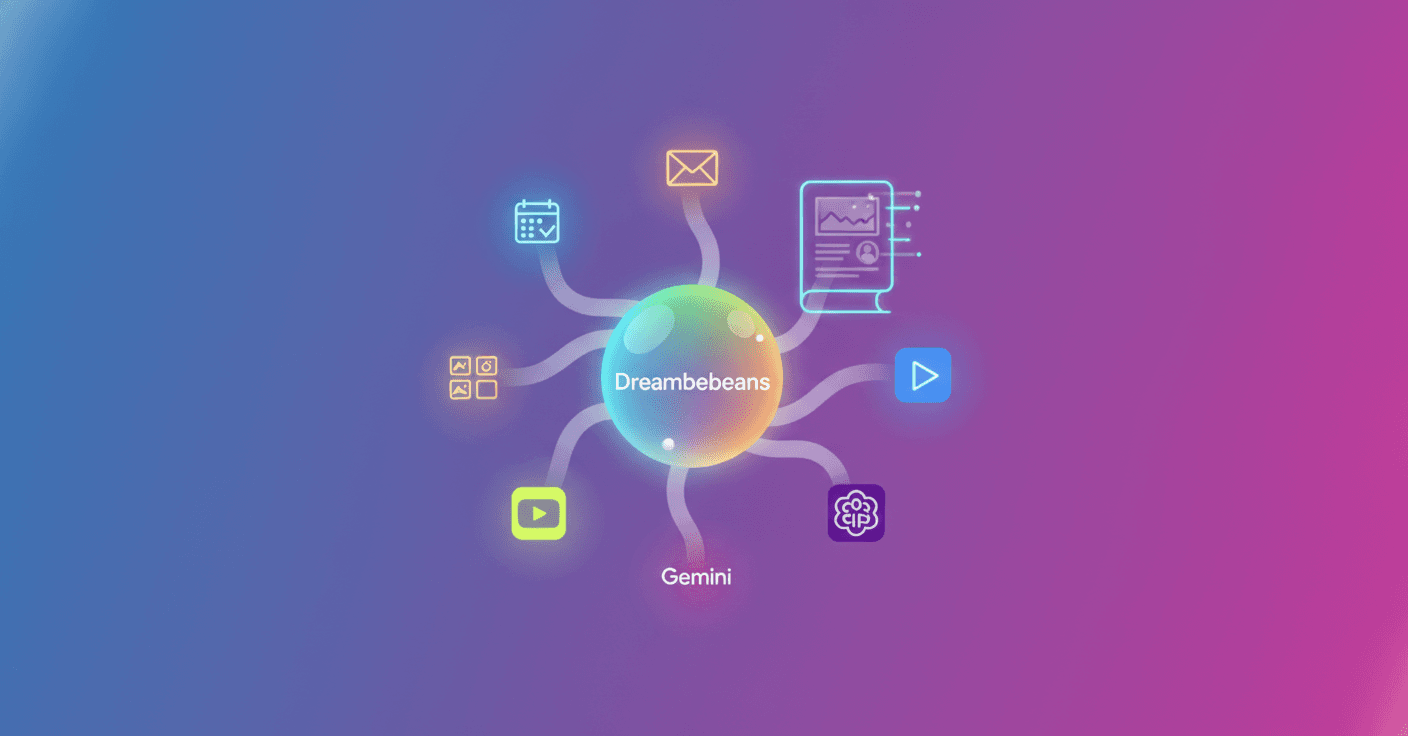
Google is expanding Dreambeans, a Google Labs experiment that turns your interests and information from select apps into small collections of daily stories. Starting September 10, 2026, the feature is available to all eligible accounts in the United States, on both Android and iOS.
The idea? Instead of manually searching for something to do, watch, or explore, you receive recommendations prepared around what matters to you.
How Dreambeans works
Each dreambean combines two main elements:
- Personalized topics: places you might visit, shows and movies to watch, ideas related to your interests, or reminders about upcoming events.
- Connected apps: summarized information from the Google apps you choose, such as Calendar, Gmail, Photos, Search, YouTube, and now Gemini as well.
In simple terms, Dreambeans acts as a personalization layer that connects scattered signals from your Google services and transforms them into short stories. It does not simply show you a list of links: it aims to create a more contextual experience designed for each person.
For example, an upcoming Calendar appointment could be connected to an interesting place to visit. A recent search could become a recommendation for exploring a topic further. And a video saved on YouTube could appear alongside related content.
Photos, recommendations, and new ideas
The integration with Google Photos adds a more visual dimension. If you connect the service, Dreambeans can include photos of you and your loved ones in its stories, while also suggesting ways to interact with those memories.
That could mean ideas for looking back at photos from a trip, remembering an important date, or sharing a collection with someone close to you. The feature aims to make recommendations more than just informative—they should feel personal too.
Dreambeans does not create the same experience for everyone: it uses the topics and apps each user chooses to connect.
You can also open any story to learn more, save it for later, or share it with other people. In this way, the tool works as a starting point for discovering content, organizing plans, or finding inspiration.
What connecting Gemini adds
The arrival of Gemini expands the sources Dreambeans can use to prepare its stories. Although Google does not detail the architecture or specific models behind the system in this announcement, the integration points to an experience that is better able to interpret interests and connect information from different services.
Its usefulness will depend on the quality of those connections. The more relevant your selected topics and apps are, the more likely Dreambeans is to offer stories that are genuinely useful to you rather than simple generic recommendations.
Availability and considerations
Dreambeans is available to Google accounts in the United States whose users are 18 or older. It can be used on Android and iOS devices. The feature began as a Google Labs experiment in June and is now expanding to all accounts that meet the requirements specified by Google.
As with any tool that combines personal data, it is worth reviewing which apps you connect and what kind of information you share. The proposal may be useful, but control over those sources should remain a central part of the experience.
Google is also inviting users to submit feedback to improve the stories over time. And that makes sense: a personalized recommendation is only valuable when it learns to distinguish between something you are genuinely interested in and something you happened to check once.
Dreambeans points to a clear direction for consumer AI: fewer isolated answers and more experiences that connect your calendar, email, photos, searches, and entertainment. The question is no longer just what artificial intelligence can generate, but how it can help you discover something relevant at the right moment.