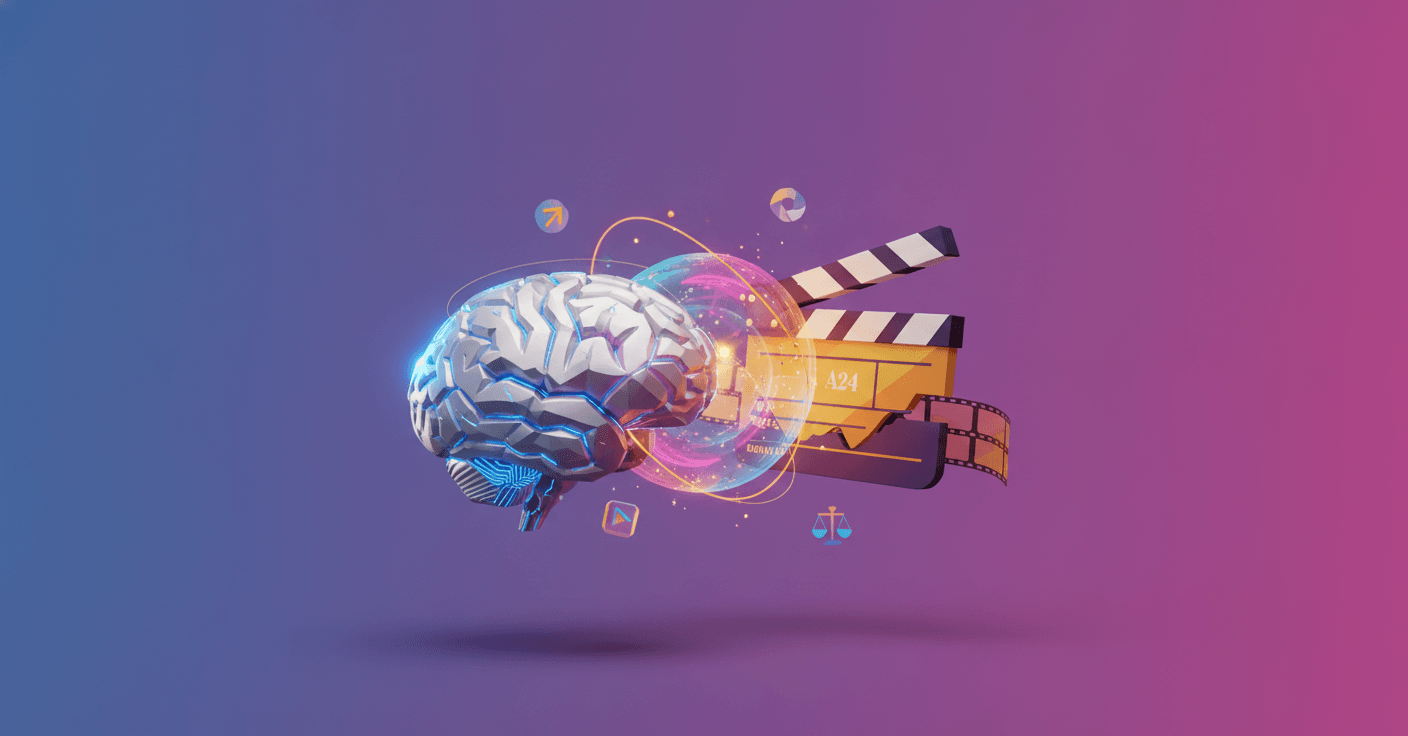
Today Google DeepMind and A24 announce an unusual alliance: a leading artificial intelligence research lab teaming up with a film studio known for prioritizing the author’s vision. What does this mean for film and technology? Basically, it means the people who make the movies will help shape the tools of the future.
Qué anunció la alianza
The collaboration is a long-term research and development partnership between A24 and Google DeepMind. It’s not just a contract to call an API: it’s hands-on work across multiple projects where filmmakers and researchers will iterate side by side.
- Google DeepMind will bring technical AI expertise and research resources.
- A24 will bring creative practice, direct artist feedback, and a strong editorial vision.
- Google has also made an investment in A24, signaling a financial commitment beyond the technical one.
The core idea is to anchor technological innovation inside the creative process, so tools adapt to artists’ vision—not the other way around.
Por qué esto importa (incluso si no eres cineasta)
Does AI still feel distant or abstract to you? Here it’s different: creators get to shape the tools they’ll actually use. That shifts priorities: instead of optimizing only for speed or scale, you can optimize for storytelling, visual subtlety, and real-world workflows.
For you as a viewer or a hobbyist creator, this can mean:
- New ways of telling stories that blend technical power with human sensitivity.
- More intuitive tools for storyboarding, editing, color, and effects that respect artistic choices.
- Final products with more aesthetic experimentation because systems were designed with artists in mind.
Cómo funcionará la colaboración (a grandes rasgos)
Specific milestones and technical details will evolve over time, but the announced working model suggests clear steps:
- Joint research: DeepMind teams and A24 creatives test ideas and prototypes.
- Practical iteration: filmmakers use tools on real projects and give direct feedback.
- Technical adjustments: researchers refine models and pipelines based on that feedback.
- Scaling or release: some tools may become products, others remain open research.
It’s likely we’ll see experiments in automating repetitive tasks (for example, audio cleanup), help in preproduction (scripts and visual planning), or new techniques for effects and color. But all of that will be guided by the artists’ creative perspective.
Riesgos y preguntas que conviene vigilar
A partnership like this opens many possibilities, but it also raises legitimate questions you should watch for:
- Rights and credit: how do you acknowledge authorship when an AI participates in the creative process?
- Data and privacy: what material trains the models and with what permissions?
- Labor impact: do these tools amplify creative capacity or replace technical roles?
- Transparency: which parts will be explainable and which will remain black boxes?
It’s a good sign the collaboration is framed as research: that lets teams experiment, document, and adjust policies before rolling tools out at scale.
Mirando al futuro
This alliance marks the start of a collaborative journey between research and creation. It doesn’t promise immediate solutions, but it does offer a different way to build tech: with artists inside the process. Can you imagine a director shaping a tool to capture a specific emotional tone on screen? Or an editor using AI to explore hundreds of cuts in minutes?
What stands out is the intention: putting creators at the center of innovation. That doesn’t make AI any less technical, but it does make it more relevant to culture and audiences.