Video calls solved the problem of distance, but left another one unresolved: how can you make everyone feel truly part of the conversation? Google Beam has introduced a new experiment that aims to reduce the feeling of watching a meeting from the outside, even when some participants join from conventional devices.
Google Beam places participants around the table
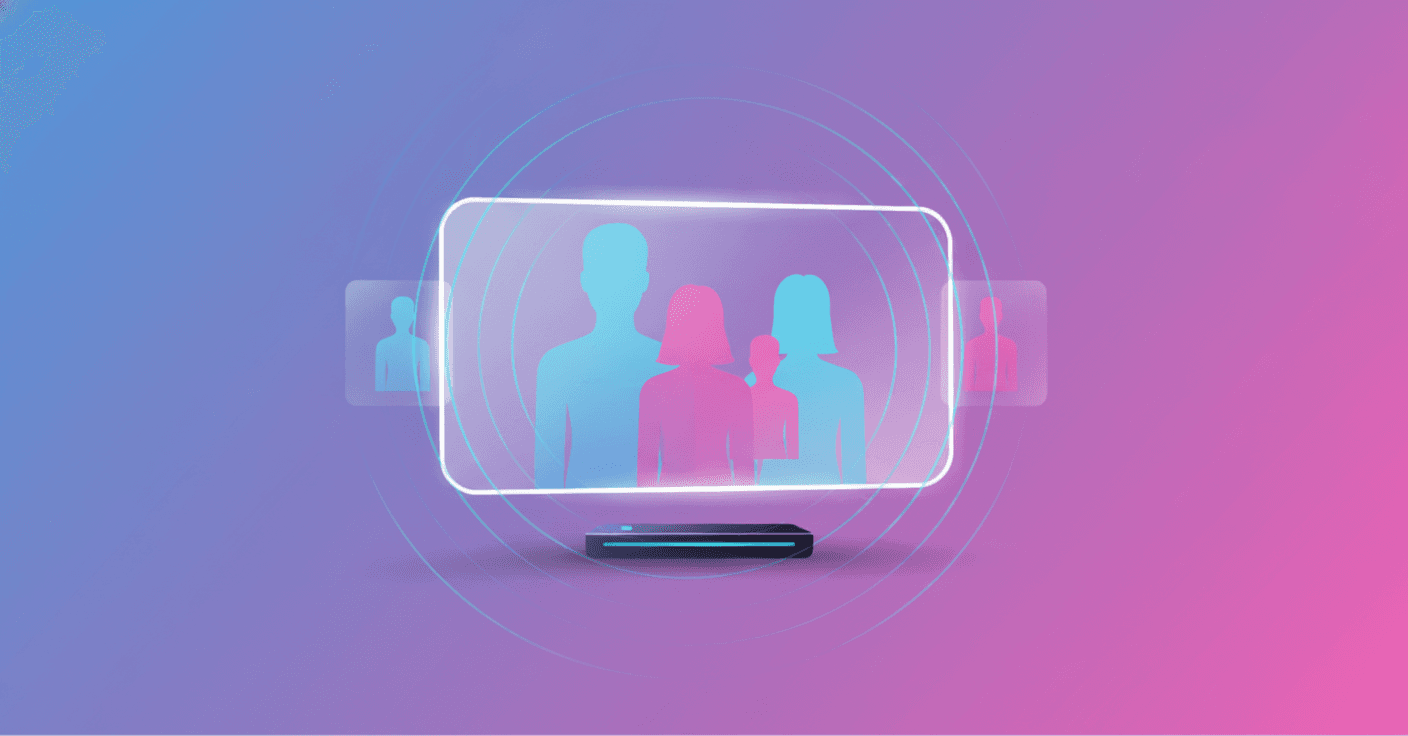
The proposal uses the HP Dimension immersive display to represent people who join from devices that are not part of Beam. Instead of appearing as small windows, participants are shown at life size and positioned as if they were sitting alongside everyone else.
The idea is easy to understand, even if it is technically demanding: turning a traditional video call into a spatial experience. The system aims to preserve a more natural scale and position so that looking, listening, and following the conversation feels more like sharing the same room.
A voice connected to each person
The image is combined with spatial audio. Each voice is positioned in space according to where the person speaking is located, rather than being played as a flat sound from the same point.
This may seem like a minor detail, but it changes the dynamics of a meeting. If someone speaks from the left side of the virtual table, for example, their voice should feel connected to that location. That makes it easier to identify who is speaking and follow conversations involving several people.
The goal is not to make video calls seem more spectacular, but to enable more natural and balanced participation.
The challenge of inclusion in hybrid meetings
In an in-person meeting, people often rely on subtle cues: a glance, a nod of approval, or the intention to speak. In a video call grid, those signals can get lost among small windows, cameras turned off, and different connection conditions.
Google describes this problem as the hybrid inclusion gap. It happens when people joining remotely end up feeling like observers, while those in the room can more easily control the pace of the conversation.
According to the research cited by Google, solutions of this kind were associated with a 50% greater sense of social connection and a 21% increase in people’s reported ability to contribute to conversations. These are results shared by the company and should not be interpreted as a guarantee for every meeting or team.
Optimization works from home or the office
Google says the representation adjusts automatically, regardless of whether someone is joining from home or from an office. This matters because a tool for hybrid meetings cannot depend on everyone having the same space, camera, or specialized equipment.
The experience is designed so that Google Beam users can include colleagues who still rely on traditional computers and devices. That way, immersive technology would not become an additional barrier to participation.
Google also says it continues to work with Google Workspace and Zoom to improve meetings that already take place through Google Beam. The specific scope of this integration, as well as its general availability, will depend on how the experiment evolves.
More presence, but not necessarily more collaboration
Representing a person at life size and placing their voice in space can help recover some of the nonverbal language lost in a video call. However, technology alone does not guarantee more inclusive meetings.
Clear rules for sharing speaking turns, attentive moderators, and a culture that values remote contributions are also necessary. The screen can bring participants closer, but the team still has to make sure everyone has room to speak.
The Google Beam experiment shows where video conferencing is headed: fewer floating windows and more of a sense of shared presence. The key question will be whether this improvement can reach everyday meetings without requiring expensive equipment or complicated setups.
Original source
https://blog.google/innovation-and-ai/models-and-research/google-research/google-beam-group-meetings