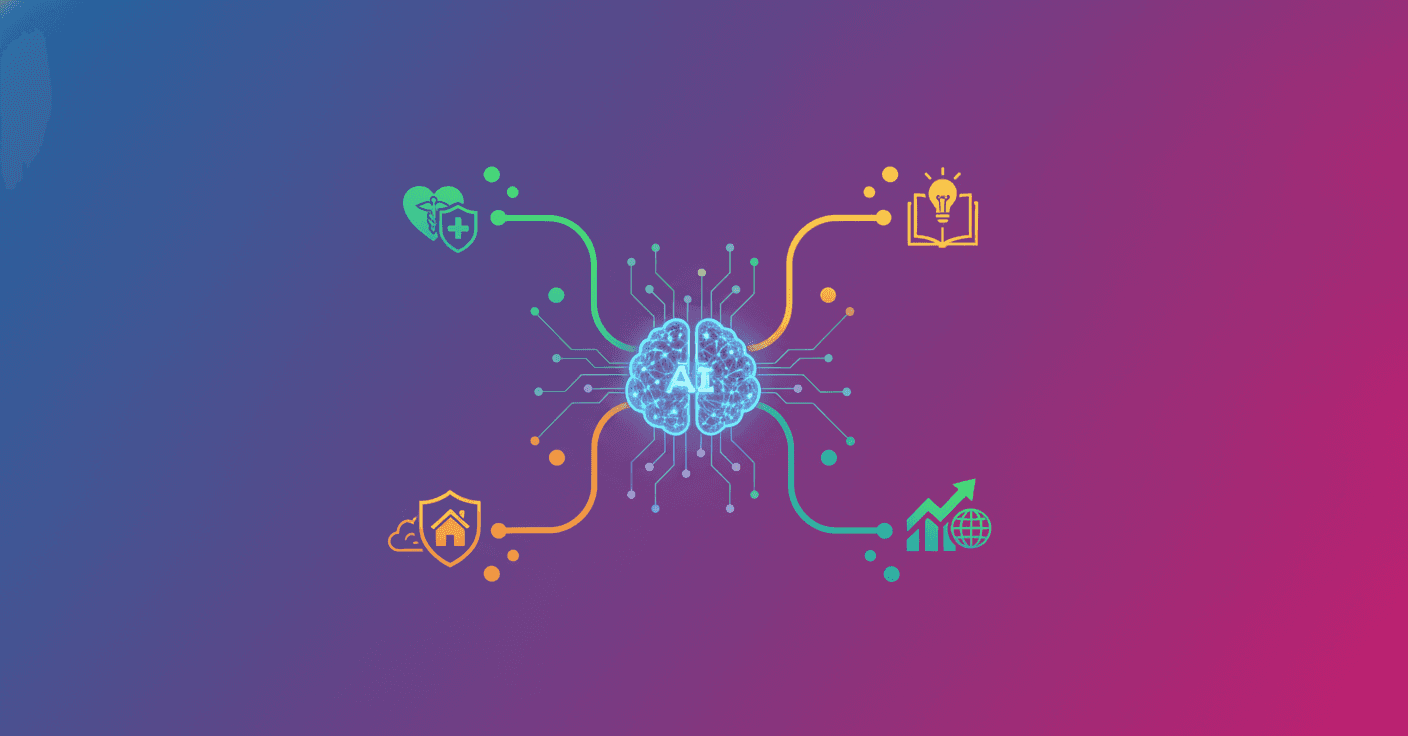
Artificial intelligence no longer belongs only in laboratories or futuristic demonstrations. Google highlights how these tools are moving from theoretical research to concrete applications that can help solve humanity’s most urgent problems.
The focus is on areas such as health, disaster prevention, education, and economic opportunities. What’s the central idea? Use AI so scientific advances can reach more people and have a measurable impact on everyday life.
From research to real-world impact
For more than a decade, AI has steadily advanced in tasks related to science and the analysis of massive amounts of information. Today, that progress makes it possible to address challenges that once required years of work or were too complex to study using traditional methods.
Google argues that the potential of these technologies is no longer hypothetical. AI can help detect diseases earlier, speed up the search for treatments, and improve prevention. It does not automatically replace doctors, researchers, or community leaders, but it can give them better tools to make more informed decisions.
The true value of AI lies not only in what it can do, but in the human problems it helps solve.
Four areas where AI can make a difference
More preventive and accessible healthcare
One goal is to make diseases easier to detect, treat, and prevent. AI models can analyze patterns in medical and scientific data, support new research, and help identify signals that might otherwise go unnoticed.
This does not mean an app can replace a medical consultation. It means professionals and organizations can have better tools to investigate, diagnose, and design public health responses.
Predicting natural disasters
AI can also be used to study natural phenomena and anticipate risks. With the right data, these systems can help improve alerts and planning for floods, wildfires, storms, and other extreme events.
Every minute of advance warning can matter. A more accurate prediction can help communities prepare, protect resources, and reduce the impact on the most vulnerable people.
More opportunities to learn
Education is another area highlighted by Google. AI tools can expand access to learning materials, adapt explanations to different learning speeds, and support teachers working with diverse groups.
The challenge is making sure these solutions do not deepen existing inequalities. To be truly useful, they must account for internet access, languages, content quality, and the needs of each community.
New economic possibilities
AI can also create opportunities for entrepreneurs, workers, and small organizations. From automating repetitive tasks to making specialized knowledge easier to access, these tools can help more people participate in the digital economy.
But technology alone does not guarantee that its benefits will be distributed fairly. Training, connectivity, clear rules, and projects designed together with the communities that will use them are also necessary.
Why working with communities matters
Google explains that it is collaborating with researchers and local leaders to apply these advances in real-world settings. This point is essential: a solution created in a laboratory will not always work the same way in a rural school, an under-resourced hospital, or a community exposed to natural disasters.
Listening to the people affected makes it possible to identify problems that do not appear in the data. It also helps determine whether a tool is understandable, accessible, and genuinely useful, rather than assuming that sophisticated technology will solve every situation.
The conversation about AI’s social impact, therefore, should not be limited to discussing larger models or faster responses. It should also include questions about trust, privacy, access, and responsibility.
Useful AI is AI that reaches more people
The vision presented by Google points to a simple idea: advances in artificial intelligence are more valuable when they improve lives, not only when they impress in a demonstration. Detecting a disease early, anticipating a disaster, supporting learning, or expanding job opportunities are far more important outcomes than any isolated technological novelty.
The challenge will be turning that potential into concrete, measurable, and shared benefits. AI is already here. Now the question is how to build and apply it so its opportunities are not reserved for just a few.
Original source
https://blog.google/innovation-and-ai/technology/ai/ai-for-societal-impact