Learning to ask well is half the work with artificial intelligence. Have you ever asked ChatGPT for something and the answer wasn’t what you expected? That’s not magic: it’s prompting, and like any skill, it gets better with practice.
Qué es el prompting y por qué importa
Prompting or prompt engineering is simply designing and refining what you write so the AI delivers the answer you need. Think of it as talking to a colleague: if you give context, clear goals and the expected format, the result improves.
There’s no perfect way to write a prompt. What helps is understanding a few simple rules and then trying, adjusting and trying again. Why? Because the AI works better when you tell it what to do, for whom, and why it matters.
If you want a useful answer, say it with an action verb: plan, draft, research.
Reglas prácticas para prompts que funcionan
-
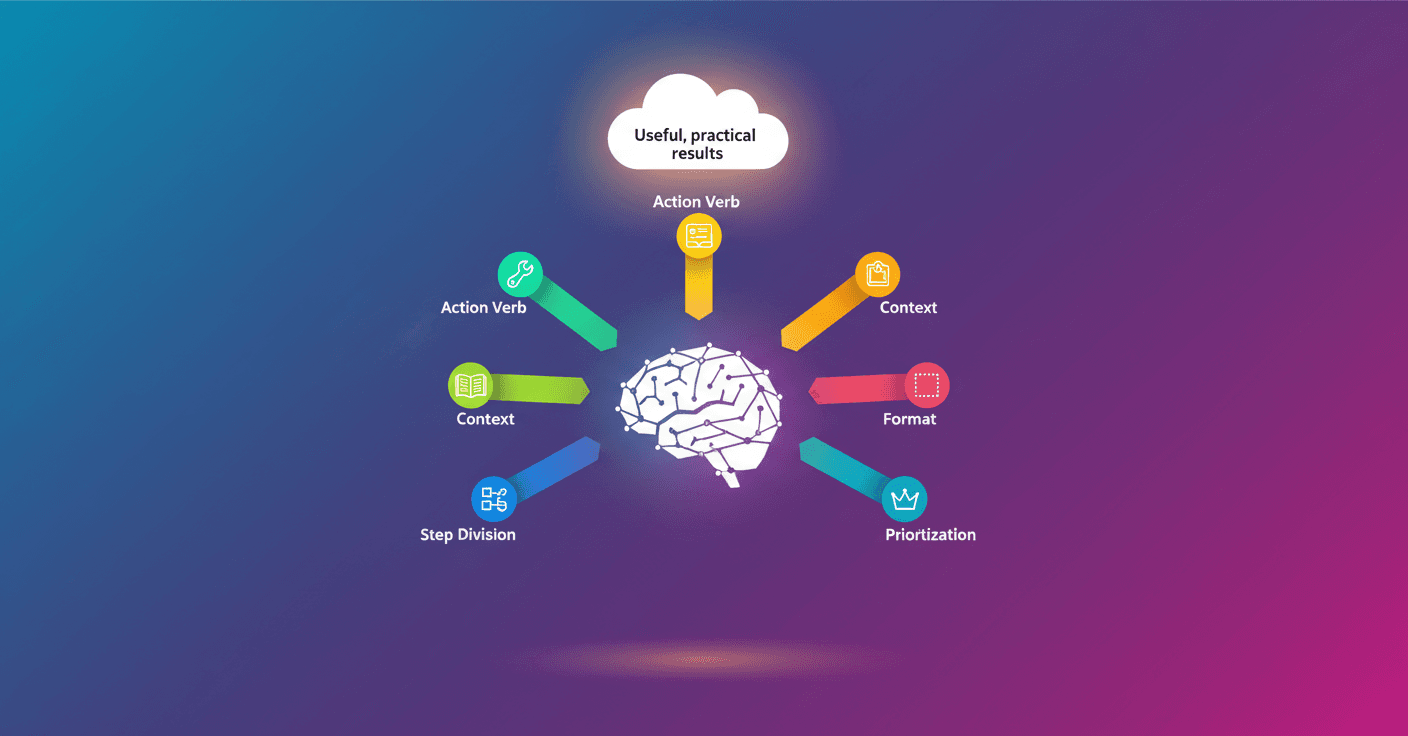
Be clear about the task: use an action verb. Example: plan, summarize, compare, create.
-
Add relevant context: who it’s for, constraints and supporting data. Example: you’re traveling with a 2-year-old, or use the attached Q2 report.
-
Specify format and tone: table, bullet list, executive summary, formal or casual tone, approximate length.
-
Break complex tasks into small steps: asking everything at once tends to produce scattered answers.
-
Ask for options when you want alternatives: “suggest two approaches”.
-
Prioritize: indicate if you prefer accuracy, creativity or speed.
-
Iterate: adjust the prompt based on the response. Improvement comes from trial and error.
Ejemplos sencillos: de bueno a excelente
-
Okay: Explain machine learning.
-
Better: Explain how machine learning works with an everyday analogy.
-
Best: Explain how machine learning works using the analogy of learning to cook a new recipe. Include:
- 3 key steps (data preparation, training, evaluation)
- A short example for a non-technical audience
- Informal tone and under 200 words
Do you see the difference? The third one gives the AI the format, the analogy and length constraints: a more directed and useful result.
Plantillas prácticas que puedes adaptar
-
For planning: "Help me plan a 7-day itinerary for Prague in September 2026 for two adults and a 2-year-old child, using public transport. Include travel times and two kid-friendly activities per day. Present in a table with times."
-
For reports: "Summarize Q2 sales results using the attached data. Include 3 main insights, 2 marketing recommendations and one suggested KPI to measure impact."
-
For creativity: "Write 5 alternative headlines for an article announcing a new AI feature. Tone: professional but approachable. Length: maximum 10 words per headline."
Consejos para trabajar con archivos y contexto extra
If you can upload files or images, mention it in the prompt and explain what you want from those documents. If you can’t attach them, paste key excerpts. More relevant context = better answer.
-
Avoid overload: include only the information that affects the task.
-
Point out where to use the information: "Use point 3 of the report as reference for the competitive analysis."
Errores comunes y cómo evitarlos
-
Asking vagueness: "Explain something" usually produces generic answers. Be specific.
-
Giving too much irrelevant information: it confuses the focus.
-
Not asking for format: the answer may come as a block of text that’s hard to use.
-
Not iterating: if the first version isn’t useful, tweak and ask for concrete refinements.
Para practicar: un pequeño ejercicio
Take one of your work or personal tasks and write three versions of the prompt: Okay, Better and Best. Try them with ChatGPT and compare responses. Which one saves you more time? Which gives you ready-to-use results?
Practice changes everything. Starting to think of prompts as clear, conversational instructions will make you more efficient and less frustrated.
Think of it like teaching an assistant: the better you guide them, the better their deliveries. Ready to refine your next prompt?