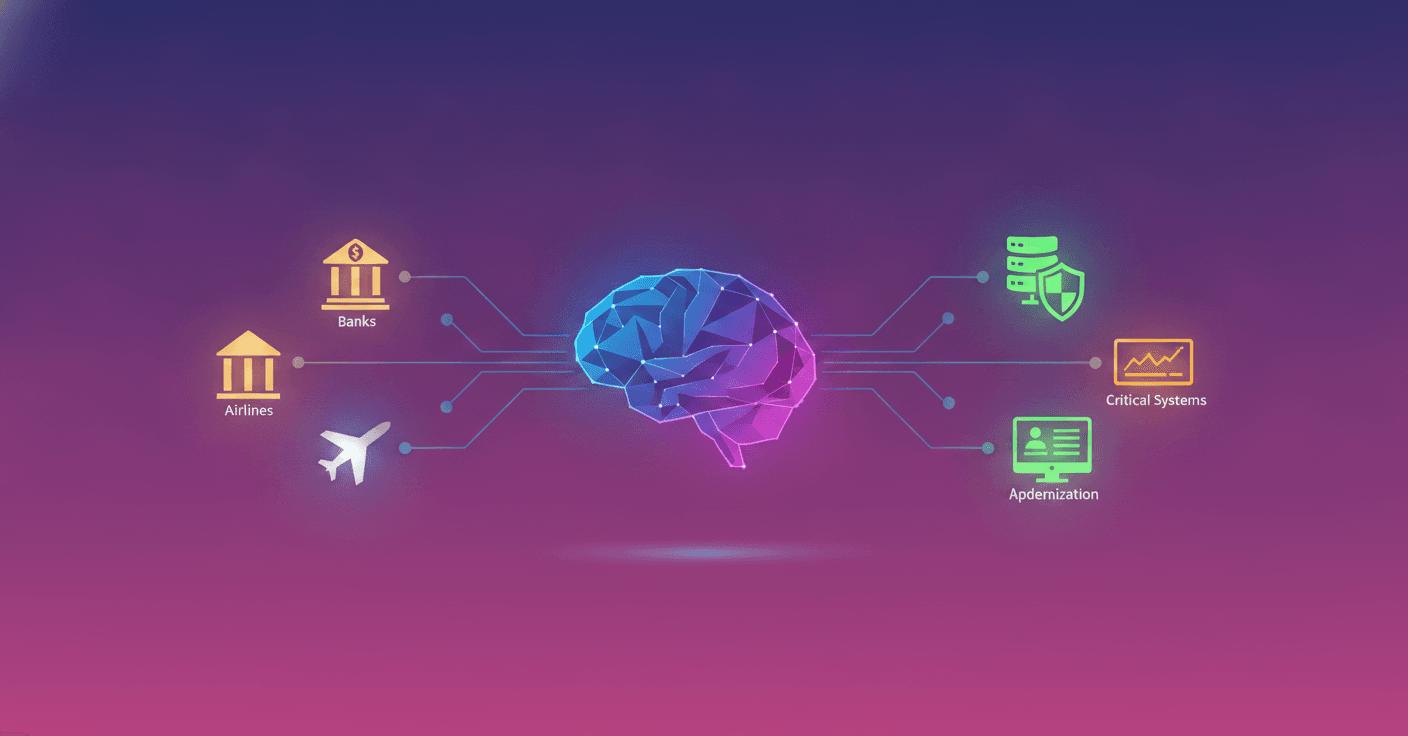
Anthropic and DXC Technology announce a global alliance to bring Claude into the systems that support banks, airlines, insurers, manufacturers and government agencies. DXC will train tens of thousands of engineers certified in Claude, who will work directly inside client organizations to deploy AI in regulated environments with strict security and compliance requirements. Sounds ambitious, right? But it’s also very practical — the kind of move that affects what you see when a claim is processed or when a flight manifest updates.
What the alliance announced
The partnership is multi-year and global. DXC will train and certify a large group of engineers called forward-deployed engineers, or FDEs. Those engineers will be embedded within client operations to adapt and run Claude in the critical systems DXC has managed for decades.
Before offering it to clients, DXC used Claude inside its own operations, which span roughly 115,000 employees across 70 countries. There, Claude was central to creating DXC OASIS, DXC’s new AI-native orchestration platform. According to the company, Claude generated more than 95% of OASIS’s code and sped development by a factor of 10. OASIS already serves more than 50 DXC clients and is expected to expand globally.
Paul Smith, Anthropic’s Chief Commercial Officer, highlights that DXC tested Claude under the same security and compliance requirements its clients demand before deploying it in those environments.
Where the integration will start
DXC will initially focus the alliance on four areas with immediate impact:
- Insurance: modernization of core systems and agentic solutions that understand the operational context of each insurer.
- Modernization as a Service (MaaS): analysis and refactoring of legacy code to accelerate migrations and reduce human errors.
- Cybersecurity: creation of an always-on security subagent, based on Claude Security, to support security operations centers (SOCs).
- Application services: agents that put Claude into the management and maintenance of applications operated by DXC for enterprise clients.
What this means for companies and users
Is this just a productivity boost or a deeper change in how critical systems are managed? A bit of both.
Benefits you can expect
- Faster development and modernization of applications.
- Automation of repetitive tasks in operations and security.
- Better-prepared internal teams and vendors thanks to Anthropic Academy certification plus DXC’s additional curriculum.
Risks and considerations
- AI-generated code requires human review and clear governance processes.
- Integration into regulated environments demands data controls, traceability and strict service-level agreements.
- Continuous oversight is necessary to avoid unwanted dependency and to manage new vulnerabilities.
In short, this doesn’t mean systems stop being managed by people. It means organizations that adopt this need to invest in governance, training and auditing to capture speed without sacrificing security or compliance.
How to prepare if you're a client or vendor
- Review data flows and vendor contracts to understand how sensitive information will be handled.
- Require certification proofs and audit exercises in test environments before production rollout.
- Consider internal training to work alongside FDEs and Claude-based agents.
- Define clear success metrics: reduced delivery time, error rates, regulatory compliance and incident response.
Anthropic also invites you to explore its Claude Partner Network and training programs like Anthropic Academy. The company has launched initiatives such as Claude Corps to broaden access to AI-related opportunities for people early in their careers.
The DXC–Anthropic alliance is a clear example of AI moving from experiment to becoming part of the backbone of critical infrastructure. The ideal outcome? Faster, more efficient systems — but also better governed and more transparent.