Doppel was born to stop deepfakes and online impersonation, but it soon realized that AI doesn't just help defend: it also lets attackers scale their fraud almost without limits. Can a fake website create damage in minutes and disappear in less than an hour? Yes — and that changed the rules of the game.
What Doppel does
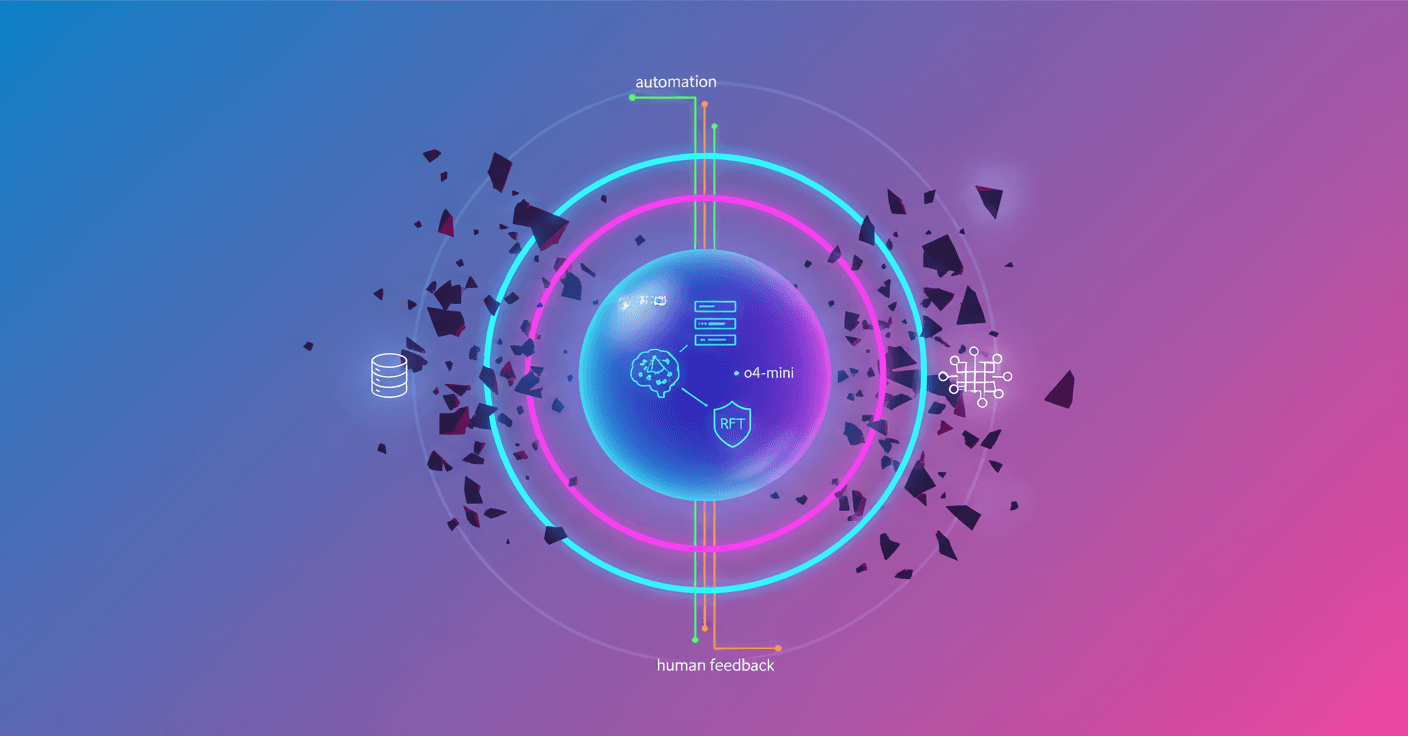
The platform uses GPT-5 and models o4-mini together with a technique called RFT or reinforcement fine-tuning. With that, Doppel claims to reduce analyst workload by 80%, triple threat-handling capacity, and move from responses that took hours to actions that happen in minutes.
Why does this matter to you? Today an attacker can generate hundreds of phishing variants, fake domains and spoofed accounts in seconds. If your team waits to manually review each signal, the campaign has likely already done damage. Think of a fake online store popping up during a big sale — it can trick people fast.
How it works, step by step
-
Signal and feature extraction: they ingest millions of domains, URLs and accounts daily. A mix of heuristic rules and
o4-minifilters the noise and extracts structured data. -
Confirmation in parallel: each signal goes through several prompts of
GPT-5designed for different analyses, for example risk of impersonation, brand misuse or social engineering patterns. -
Threat classification: the
RFTversion ofo4-minisynthesizes the confirmations and labels items as malicious, benign or ambiguous with production-grade consistency. -
Final verification: another pass of
GPT-5validates the decision and generates a justification in natural language. If confidence exceeds a threshold, the system initiates the action automatically. -
Human review: low-confidence or conflicting cases go to analysts. Their decisions are recorded and fed back into the
RFTcycle to improve the model.
The window to act is very narrow. Automating consistent and explainable decisions is what makes it possible to stop attacks at scale.
What is RFT and why does it matter?
RFT (reinforcement fine-tuning) uses human feedback as labeled examples. It’s not just showing the model the correct response: it’s teaching it why a decision is good and how to explain it.
Doppel took analysts' judgments and transformed them into structured data to train the model. They also designed reward functions that value not only accuracy but the quality of the explanation. The result: more consistent decisions in ambiguous cases and automatic justifications that clients can see instantly.
Concrete benefits and next steps
- Less repetitive work for analysts and more focus on complex cases.
- Responses in minutes, not hours, which reduces the real impact of a fraud campaign.
- Transparency: every takedown comes with a reason in clear language, which helps build trust internally and with third parties.
Doppel plans to expand its RFT dataset by an order of magnitude, experiment with new evaluation strategies, and use GPT-5 for earlier feature extraction in the pipeline. If they automate end-to-end for domains, they'll apply the same strategy to social media, paid ads and other vectors.
Final reflection
Doppel's story isn't just about technology: it's a lesson in combining powerful models with human oversight to create fast, consistent and explainable decisions. Does this mean AI replaces humans? Not exactly. It means AI handles what it can at scale, and people decide what requires fine judgment.
The battle for trust on the internet is no longer won only with rules: it's won with speed, consistency and the ability to explain why you acted.