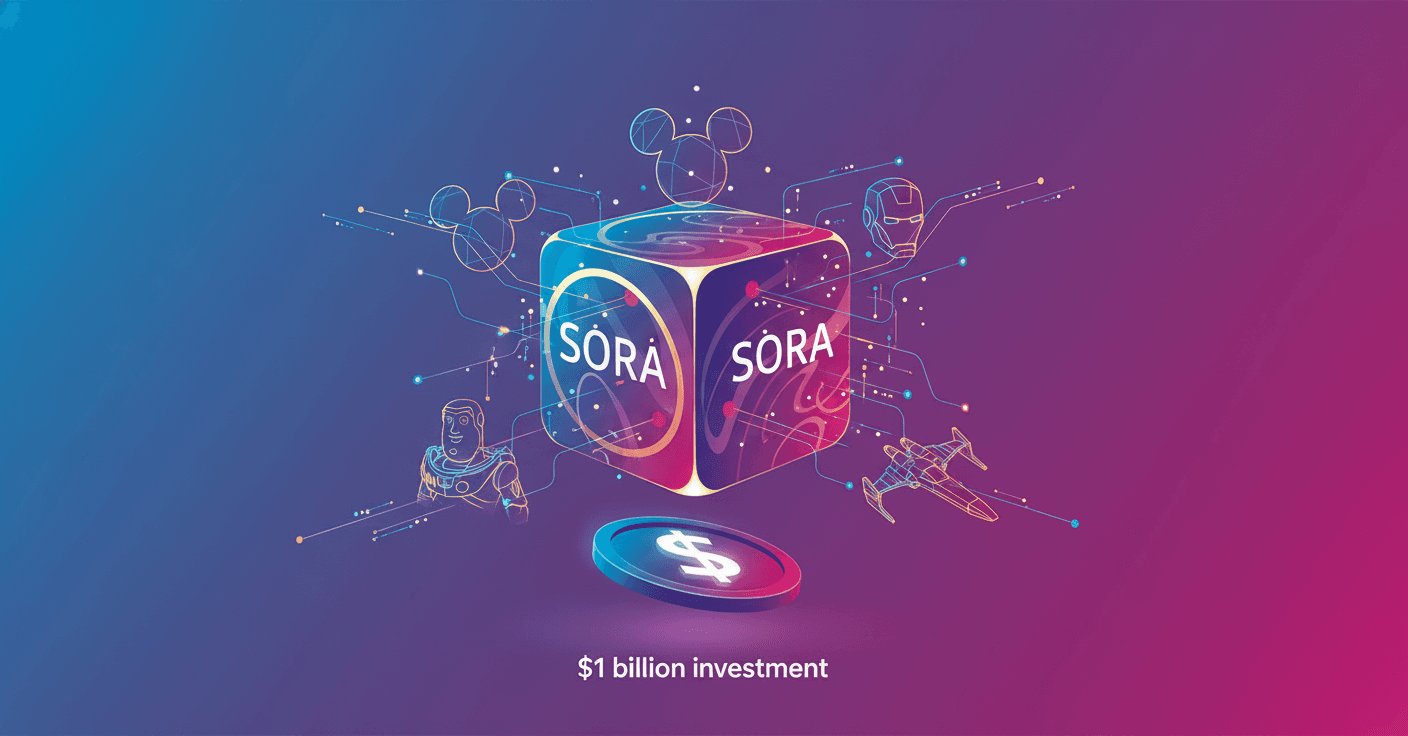
The alliance between The Walt Disney Company and OpenAI promises to put new ways to create with iconic characters in fans' hands. Can you imagine generating a short video with your favorite characters and sharing it on social networks in seconds? That's what this deal suggests, with important nuances about control and safety.
What the agreement includes
-
It's a three-year licensing contract that allows
Sora, OpenAI's generative video platform, to create short social videos based on more than 200 characters from Disney, Marvel, Pixar and Star Wars. That includes costumes, props, vehicles and iconic environments. -
A curated selection of those fan-generated videos will be available to watch on Disney+.
-
ChatGPT Imageswill be able to generate images from a few user words using the same intellectual property. -
The agreement does not include voices or the real-life appearance of actors or performers. No rights are granted over talent likenesses or voices.
-
Disney will also be a major customer of OpenAI: it will use the APIs to build products and experiences (including for Disney+), and deploy ChatGPT internally for employees.
-
As part of the deal, Disney will make a $1 billion equity investment in OpenAI and will receive warrants to buy additional shares.
-
The transaction is subject to definitive agreements, corporate approvals and the usual closing conditions.
What fans will be able to do and when
-
Starting in early 2026,
SoraandChatGPT Imagesare expected to begin generating fan-inspired videos and images using licensed characters. -
Available characters include Mickey and Minnie, Lilo and Stitch, Ariel, characters from Frozen, Encanto, Toy Story, Up, Marvel heroes like Iron Man and Thor, and Lucasfilm characters such as Darth Vader and the Mandalorian. In short, a wide range of animated and illustrated universes.
-
Creators will be able to ask the platform to generate short, social-ready content ideal for sharing. Want to see a fan video with Simba in a new environment you designed? That possibility is on the table.
Security, rights and controls
-
Disney and OpenAI emphasize a shared commitment to responsible AI use to protect user safety and creators' rights.
-
OpenAI commits to maintaining and strengthening trust and safety measures: age-appropriate policies, reasonable controls to prevent illegal or harmful content, and respect for content owners' rights.
-
Important to remember: while fans will be able to use characters and environments, protections around voices and the appearance of real people remain. That limits problematic uses like deepfakes of real performances.
Why this matters now
-
Why does a deal like this change things? Because it pairs an entertainment giant with a leader in generative models. That can speed up how interactive experiences are designed and how audiences take part in storytelling.
-
For Disney it means a new route to reach younger audiences and creative fans. For OpenAI it's a strong commercial validation and a relationship that implies deeper technical integration into entertainment products.
-
It's also an industry thermometer: big entertainment companies are figuring out how to incorporate AI without breaking rights, safety and trust.
The news raises legitimate questions: how will fan-generated content be moderated? What creative limits will controls impose? How will the relationship between professional creators and hobbyist creators change? What is clear is that AI is entering popular storytelling not as a curiosity, but as a tool integrated into products and platforms we already use.