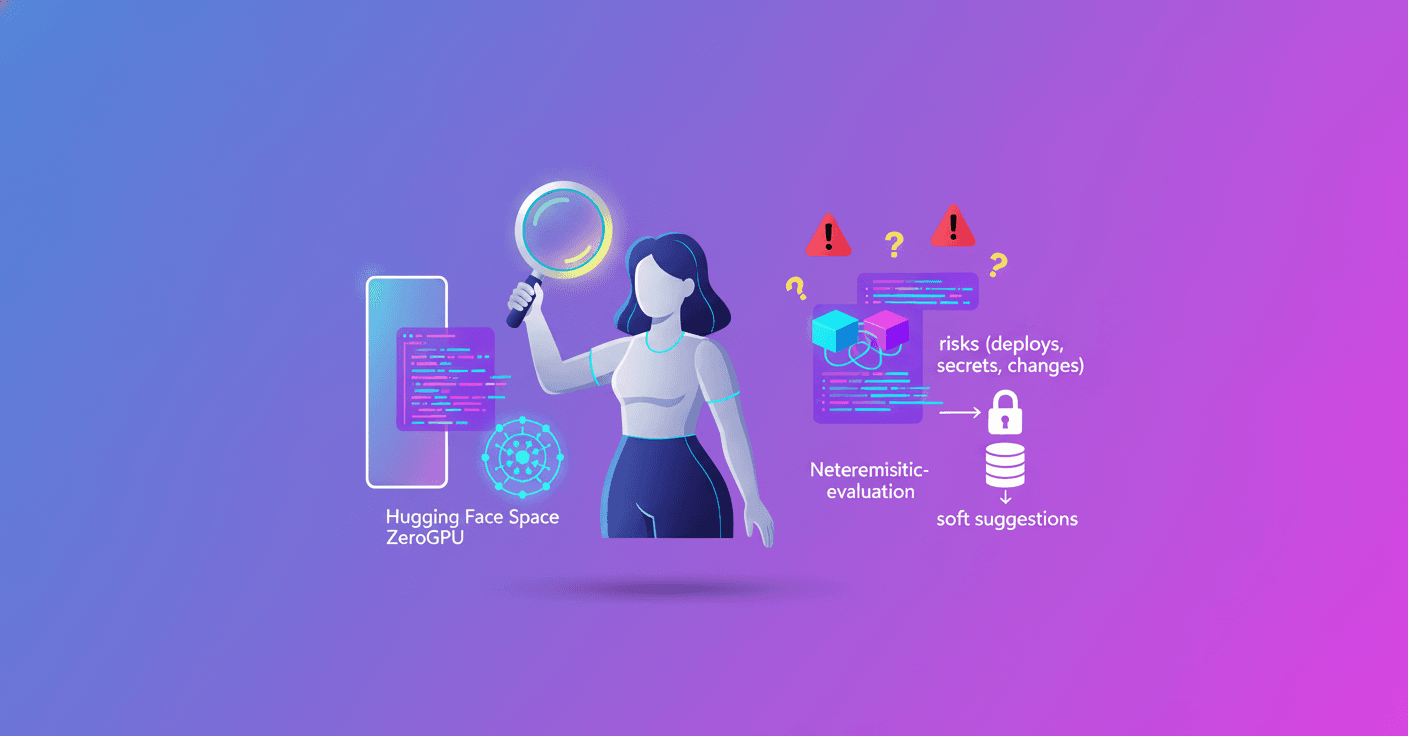
Her · हेर is a tool that acts like a detective for your Claude Code sessions. Want to know why an agent did a deploy, where the tokens went, or which subagent ate half an execution? Instead of reading 4,000 lines of .jsonl, let Her do it for you.
What Her does
Each Claude Code session leaves a trail: a .jsonl file with every turn, every tool call, and every token. That’s usually a write-only log: useful but hard to access. Her reads that trail for you and reconstructs the story in plain language.
Her detects and flags risky moves — deploys, configuration or production changes, and possible secret leaks — and shows you exactly which turn triggered them. It also maps where tokens went, which tools, subagents, skills and MCP servers were used. When it spots a known, fixable pattern, it suggests improvements based on Anthropic and community best practices. It suggests, it never asserts, and it stays quiet if there’s nothing relevant to say.
It also includes a built-in co-pilot, Ask Her. Why was this tool used? Where is the deploy call? Ask, and Her points to the cited turns and opens the exact tool call.
You use a single file to view a session; drop multiple files and you get a project view to track questions across many sessions.
Under the hood: architecture and security
Her runs in a Hugging Face Space and does not call third-party AI APIs. The Nemotron-Mini-4B-Instruct model runs on the Space GPU via ZeroGPU. Your session is uploaded only to a private namespace, created and deleted automatically for your run; nothing leaves the box.
The logic that extracts numbers and facts is strictly deterministic. That means the part that calculates costs, counts calls and locates events does not depend on the model and won’t change if the model changes. The model is used only to turn findings into clear English and to propose gentle suggestions; never to assert evidence. In other words:
Numbers don’t move when the model changes.
Her also includes a local database of common tools (Homebrew, npm, PyPI) to identify most CLIs and libraries without external connections. When a deploy tool, a database client or a dev server actually runs, Her highlights that activity for a second review.
The interface is a React app served from a Gradio server, with a deterministic evaluation engine doing the forensics and Nemotron writing the prose.
Concrete use cases
-
Did a pipeline consume unexpected tokens? Her shows you the heaviest node in the query graph and traces the chain of subcalls that generated it.
-
Did something get pushed to production by accident? Her marks the turn that fired the deploy tool and links the exact call.
-
Is there a secret in a turn? Her points it out so you can fix it before it becomes a problem.
-
Want to investigate trends across runs? Upload multiple
.jsonlfiles and create a project view to search for patterns.
Think of Her as the first human-digital filter: it gives you reproducible evidence and a clear narrative so you can act fast.
Practical recommendations
-
If you work with agents and tools, download the
.jsonlfor each key session and upload it to Her instead of digging manually. -
Use the project view when investigating costs, regressions, or recurring incidents.
-
Rely on the deterministic numbers for audits; use the model’s suggestions as guidance, not as a final verdict.
Final reflection
Her is not another black box that adds noise; it’s a magnifying glass that turns a dense log into actionable evidence. If you manage agents, pipelines, or products using Claude Code, Her gives you back time and confidence to investigate what actually happened. And when Claude loses patience, you can call her.