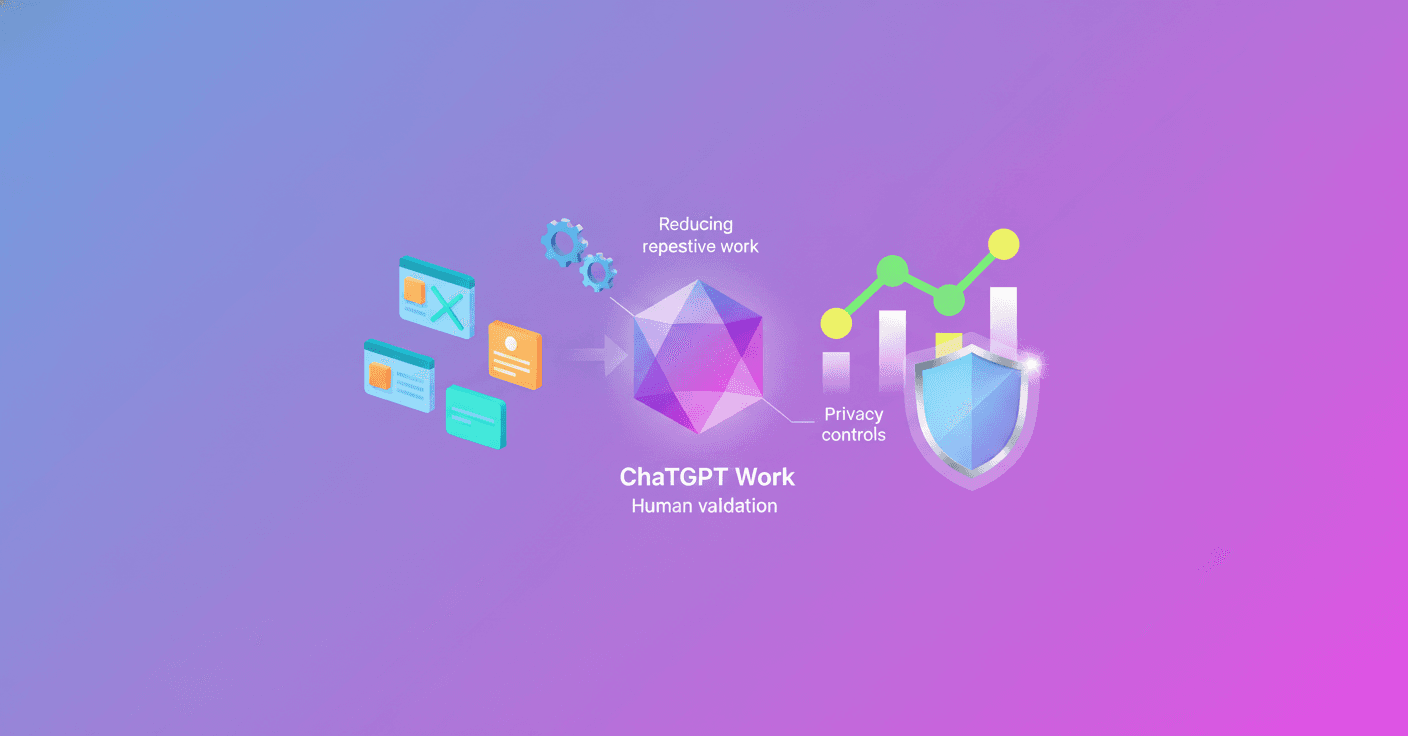
ChatGPT Work helps turn loose questions, dashboards, and raw data into deliverables ready for review. Can you imagine speeding up the creation of a first draft that already includes charts, caveats, and questions for review? That's exactly what this material shows: combining business context, metric definitions, exports, and experiment notes to produce a usable analysis asset.
What ChatGPT Work can do for a data science team
ChatGPT Work acts as an assembler and first drafter. Instead of starting from a blank document, you can begin with: dashboards, metric definitions, exported files (CSV), experiment notes, and business context. From there, the tool helps you produce:
- A first draft of the report or memo.
- Charts and visualization suggestions (with instructions to recreate them).
- A list of caveats and important assumptions.
- Links to sources and internal references.
- Questions for peer review or the business.
Result? You spend less time assembling the format and more time validating assumptions and decisions.
A practical example (so you can visualize it)
Imagine you have a dashboard with an ambiguous metric, a CSV with the last 30 days, and notes from an A/B experiment. Instead of: 1) cleaning data, 2) writing a summary, 3) designing charts, 4) assembling the memo, you can ask ChatGPT Work to:
- Summarize the experiment notes and highlight key results.
- Suggest appropriate visualizations for the CSV (for example, time series or cohorts).
- Generate a draft with conclusions, assumptions, and links to the data.
- Propose review questions for the product and business teams.
That doesn't replace human verification, but it saves hours of repetitive work and helps you move faster toward the strategic discussion.
Best practices and precautions
Using it well requires discipline: it's not a magic box that guarantees truth. Some practical recommendations:
- Always validate the draft against the raw data and metric definitions.
- Keep traceability: retain links to sources and the original files.
- Clearly flag which parts are automated inferences and which come from verifiable data.
- Control access and privacy according to your organization's data policies.
What if your team already used Codex?
The original webinar was recorded when these workflows lived in the old Codex app. Today you can follow them in ChatGPT Work, available at chatgpt.com or in the ChatGPT desktop app. The central idea remains: transform scattered inputs into review-ready assets, but with an integrated, updated experience.
Using ChatGPT Work doesn't replace your team's expertise: the real benefit is reducing friction in repetitive tasks so data scientists can focus on interpretation and the decisions that matter.
Original source
https://openai.com/academy/codex-for-work/how-data-science-teams-use-codex