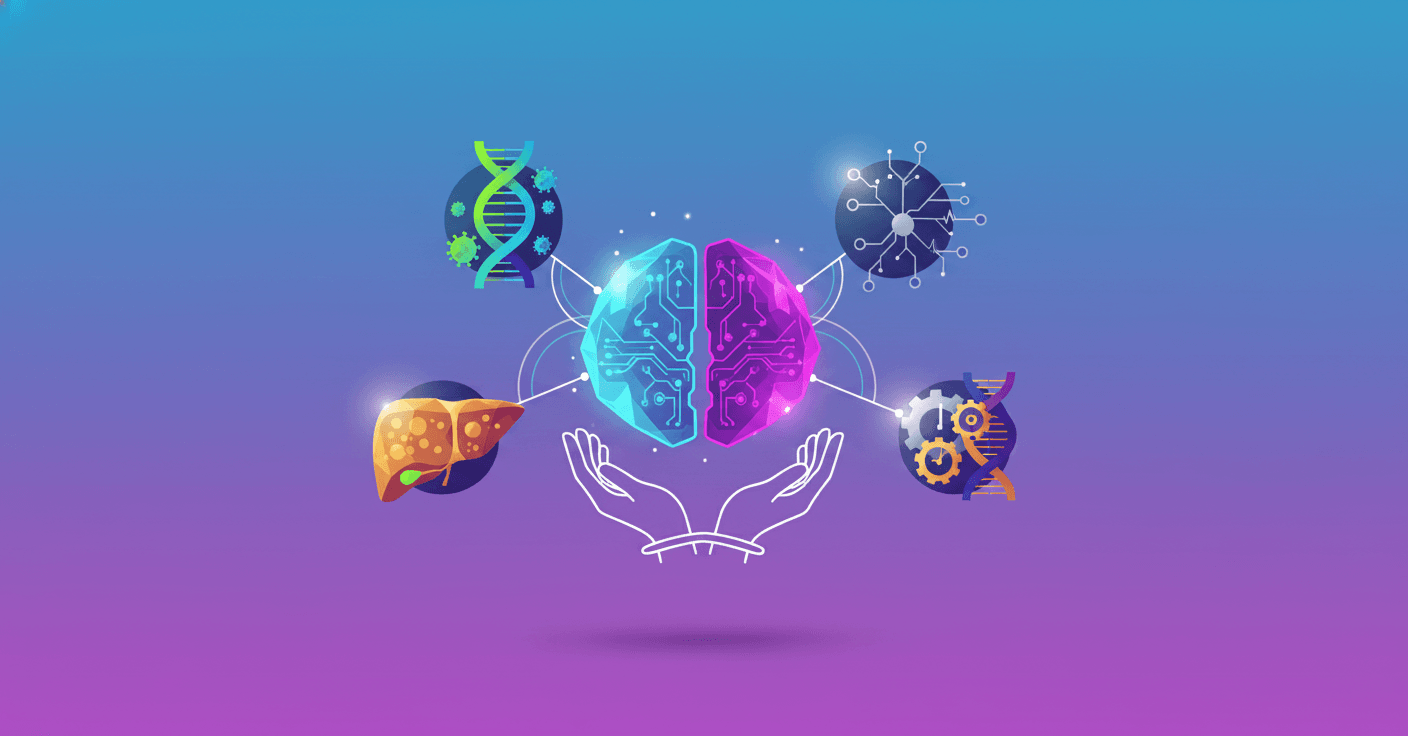
Google published research about Co-Scientist, an artificial intelligence designed to think like a scientific team. What's its goal? To speed up how hypotheses are generated, debated, and refined in the biosciences and beyond — not to replace people but to multiply your capacity to explore.
What is Co-Scientist
Co-Scientist is a coalition of specialized agents that collaborate in three clear phases: proposing ideas, debating them, and improving them. Some agents act as creative proposers, others work as critical reviewers, and a few combine or polish the most promising ideas.
A supervisor agent organizes the work: it takes a broad research objective, breaks it into manageable tasks, assigns resources, and coordinates the agents so they work in parallel. Think of it as a lab team where each member has a defined role and the supervisor sets the agenda.
The three phases explained without jargon
1. Generate ideas
Agents explore different routes and propose varied hypotheses. Here breadth matters: many ideas, even unexpected ones, so you don’t miss potentially useful directions.
2. Debate and filter
One agent plays a virtual reviewer, looking for methodological flaws or inconsistencies. Another runs an "ideas tournament" where better-defended hypotheses compete. It’s a sieve to keep what has the strongest support.
3. Evolve and synthesize
Agents refine, combine, and improve the finalist hypotheses. There are also agents that synthesize findings into formats you can understand quickly, ready for experimental validation.
Important: Co-Scientist proposes and organizes, but experimental validation and final interpretation remain the responsibility of the scientists.
How it is already impacting research (real examples)
- Finding the molecular switches behind new infectious diseases: helps prioritize experiments.
- Speeding up discovery of mechanisms in liver disease: suggests biochemical pathways to explore.
- Bringing together biological tools to tackle amyotrophic lateral sclerosis: makes combinations of approaches that were costly to design more feasible.
- Advancing genetic leads to reverse cellular aging: proposes hypotheses that connect disparate observations.
These aren’t finished experiments; they’re examples of how Co-Scientist shortens ideation time and lets human teams test more hypotheses in less time.
How to access it and what it means for research teams
Co-Scientist will be available to researchers through the experimental tool Hypothesis Generation, developed by Google DeepMind, Google Research, Google Cloud and Google Labs. That means academic and industry teams will be able to try this human-AI collaborative way of working in their projects.
So what changes in practice? Less time wasted designing redundant research paths, parallel exploration of ideas, and clearer documentation of why a hypothesis was prioritized. In short: more speed and focus, while still needing human validation.
Risks, limits and best practices
It’s not magic. Key points to consider:
- Models can produce incorrect or incomplete results; experimental verification and reproducibility remain essential.
- It’s vital to keep data traceability and transparency about how hypotheses were generated.
- The human team should include disciplinary diversity to avoid bias and broaden perspectives.
- Ethical and regulatory implications in the biosciences demand strict controls before taking any hypothesis into clinical practice.
Final reflection
Co-Scientist is a tool that promises to transform how scientific ideas are generated and prioritized, not to replace your intuition or responsibility as a researcher. Used well, it can multiply your productivity and open routes that used to seem costly or impossible to explore. Ready to think with a team of agents working in parallel with you?
Original source
https://blog.google/innovation-and-ai/technology/research/co-scientist-research-problems