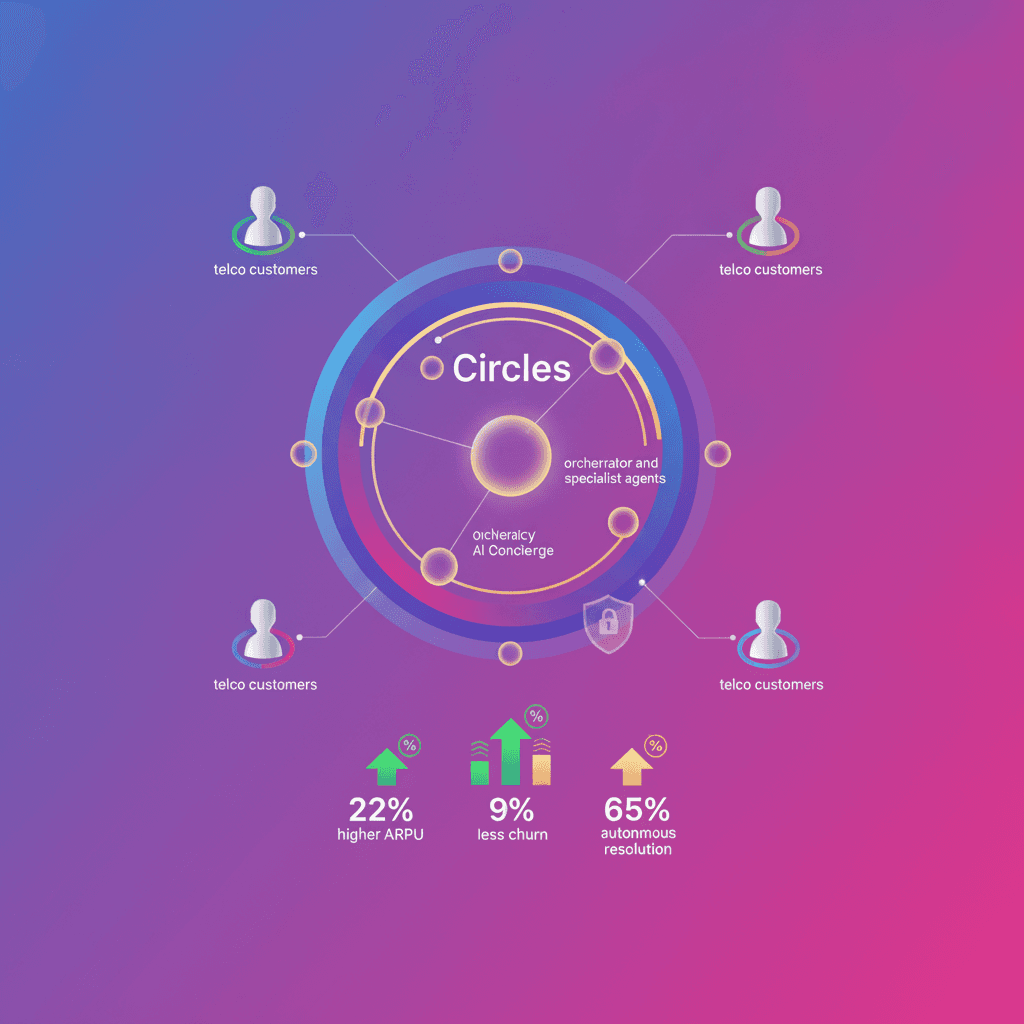
Circles has rethought the mobile operator experience using OpenAI models to turn user signals into personalized, real-time actions. The result? Recommendations that arrive at the right moment, support that solves issues without making you repeat everything, and measurable improvements in revenue and retention.
What Circles did and why it matters
Operators sit on piles of data: usage, billing, network activity and location. The classic problem is turning those signals into actions that actually help the customer at the precise moment they need them. Circles built an AI-native stack on top of the OpenAI API to bring support, personalization, operations and monetization into a single flow.
Their core product is the AI Concierge, a conversational interface that understands context in real time. Instead of endless menus or generic replies, the system can recommend a roaming plan, pinpoint a billing issue, or escalate a case with the full history already attached.
How CareX and the conversational experience work
CareX is the multi-agent architecture that makes the AI Concierge possible. Think of three simple layers: an orchestration agent that knows your history and context, specialist agents for billing, subscriptions and network, and escalation routes to humans when needed.
When you start a query, the orchestrator gathers only the relevant information and shares it with the right specialist. That avoids making you repeat details and reduces unnecessary access to full profiles. If the AI can’t resolve it, the case moves to a human with all the context prepared.
Concrete results (real numbers)
- 22% increase in ARPU in Singapore thanks to personalized recommendations that drive upgrades and add-ons.
- 9% reduction in churn among customers who received AI-driven recommendations.
- 65% autonomous resolution rate in support with CareX — interactions resolved without human intervention.
- In a first week of deployment one operator hit 55% autonomous resolution, and the future goal is 95% including voice support.
- 29% increase in developer efficiency by using Codex for design assistance, coding and internal testing.
Surprised by these numbers? What they show is that AI isn’t just an automatic reply; when integrated with real flows and contextual data, it delivers measurable value for users and businesses.
Security and operational controls
Circles doesn’t leave privacy to chance. Before any data reaches the model, they identify and encrypt personal information. Specialist agents receive limited access only to what’s necessary to solve the task, not the full profile.
They also apply human escalation paths, phased rollouts, rate limits, rollback mechanisms and commercial safeguards to keep operational control as the solution scales. These are practical measures that balance automation with responsibility.
What this means for customers and operators
For you as a customer: more natural interactions, fewer waits and useful recommendations when you actually need them. For example, getting a roaming package suggestion right before you travel instead of a mass campaign that arrives too late.
For operators: higher ARPU, lower churn and more productive engineering teams. But it also means redefining processes, investing in controls and accepting that scalability comes with operational responsibility.
Looking ahead
Circles aims to expand observability in CareX and add real-time voice support, with the ambition of offering a conversational experience that goes beyond traditional app navigation. The goal is for interacting with your operator to feel natural, immediate and truly useful.
The lesson is clear: AI is no longer a distant promise for telcos. When designed with context, controls and business goals, it can transform both the user experience and commercial outcomes.