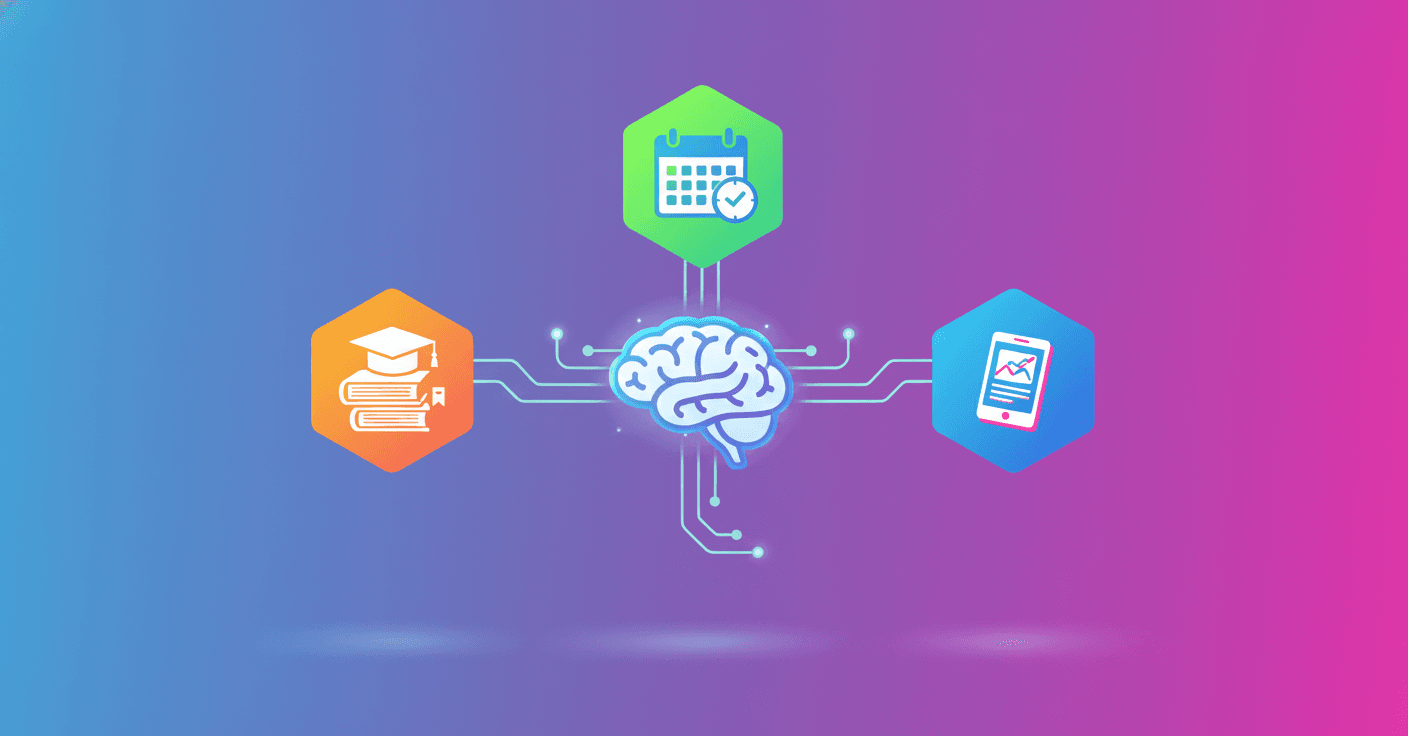
OpenAI introduces three new plugins for ChatGPT Work and Codex designed for K–12, university instructors, and students. The idea? That artificial intelligence stops being just an answer and starts helping you do complex work with the real context of classes, calendars, and materials.
What OpenAI announces
The plugins act like packages with apps, instructions, and ready-made workflows. You don't have to become a prompt expert: you connect the resources you already use (documents, LMS, calendars, and approved apps) and the system understands the task and the context.
They're available through ChatGPT Edu and ChatGPT for Teachers in institution-managed deployments. The philosophy is clear: AI should support learning, not shortcut it, and keep students and teachers in control.
What each plugin can do
Plugin for K–12 Educators
- Helps plan lessons and create differentiated resources.
- Designs interactive visuals and materials aligned to local standards.
- Integrates tools and materials you already use (includes collaboration with Learning Commons).
- Keeps the teacher in charge of pedagogical decisions, grading, and AI actions.
Plugin for university instructors
- Makes course design, syllabus updates, and multimedia assessment easier.
- Adapts materials for different learning styles and levels.
- Lets you work without rebuilding context between research, teaching, and administrative tasks.
Plugin for university students
- Turns what you study into personalized learning experiences.
- Offers guided tutoring, practice for tough concepts, study guides, quizzes, and flashcards.
- Follows learning science principles to reinforce deep understanding and study habits.
Why this changes the classroom-AI relationship
The big difference is what OpenAI calls agent capabilities: the AI can reason about context, use tools, and execute multi-step tasks, not just answer isolated questions. Can you imagine that instead of asking for a summary you have an assistant that creates activities, places them on your calendar, and generates printable materials?
There's also a practical point: more than 200 million young people aged 18 to 24 use ChatGPT weekly. Still, OpenAI notes a "capability overhang": the tools are much more capable than what most students take advantage of. In fact, advanced users use ChatGPT between 90% and 99% more features than average university users. Structured access (spaces managed by institutions) reduces that gap.
On the institutional side, ChatGPT Edu offers managed environments with enterprise-grade privacy and security controls since 2024. ChatGPT for Teachers (launched in 2025) is free for verified K–12 teachers in the U.S. and adds protections to meet requirements like FERPA and privacy agreements.
Support, partnerships, and training plans
OpenAI isn't just launching plugins: it also works with partners to train the education community. Initiatives include:
- Partnership with the American Federation of Teachers and the creation of the National Academy for AI Instruction to train 400,000 teachers in 5 years.
- OpenAI Academy (in-person workshops, in partnership with Walton Family Foundation) to develop practical skills in teachers and leaders.
- OpenAI Student Collective, a student community to learn and build, with Campus Lead positions and connections to platforms like Handshake for professional opportunities.
- International projects like the deployment in Estonia (more than 20,000 students and 4,600 teachers) with longitudinal research.
- ChatGPT for Academic Researchers program: 12 months of free Pro access for eligible researchers who want to apply
ChatGPT Workand Codex to scientific work safely.
What this means for you (teacher or student)
If you're a teacher, this can save you hours of preparation and give you tools to personalize and assess without losing pedagogical control. If you're a student, these are smart shortcuts to practice, understand deeply, and build study habits, always within the context of your sources.
Does this mean AI will do the work for you? No. The bet is different: teaching you to steer these tools toward meaningful goals, exercise judgment, and turn ideas into real projects.
The next stage of AI in education will be written in classrooms, labs, and coordination offices. The interesting part is that institutions still control which tools and permissions are enabled, and OpenAI bets on combining technology, training, and evidence so adoption is responsible and useful.