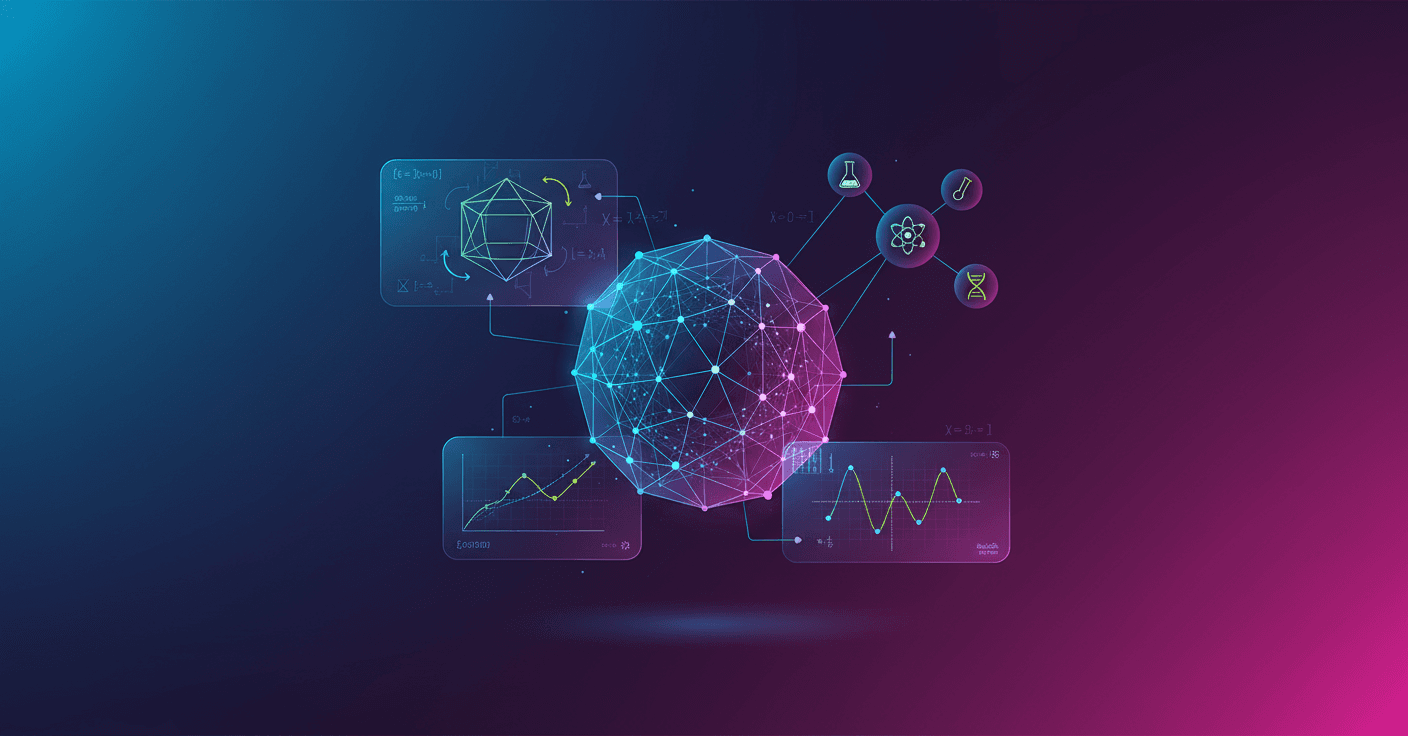
ChatGPT adds interactive visuals to teach math and science concepts, and it does so with the idea that you learn by trying, not just memorizing.
Does it sound familiar that formulas seem abstract until you see them in action? Now, instead of a static explanation, ChatGPT shows how variables change in real time and how that impacts a graph or a result.
What's new
The feature introduces more than 70 key math and science concepts with dynamic visual modules. When you ask about a topic, besides the explanation you'll see an interactive panel where you can:
- adjust variables
- manipulate formulas
- watch how charts and results change instantly
This turns a cold equation into something you can experiment with. It's available globally for signed-in users and arrives as part of ChatGPT's educational experiences.
How it works in practice
Imagine you don't understand why the hypotenuse changes when you move a leg. With the interactive module for the Pythagorean theorem you can drag the values and see the hypotenuse recalculate in real time. Or do you want to see how pressure changes in PV = nRT if you raise the temperature? You change it and the visual shows you.
Examples of prompts you can try:
- Help me understand the Pythagorean Theorem
- Explain how
PV = nRTworks - How can I find the area of a circle?
The topics covered are the most relevant for high school and university students: from the area of a circle and the equation of a line to physical laws like Hooke's, Ohm's and Coulomb's, and concepts like exponential decay or potential energy.
Why this can help you learn better
Research suggests that visual and interactive learning strengthens conceptual understanding more than traditional instruction in many cases. When you can manipulate variables and see immediate consequences, you connect the abstract idea with a concrete experience.
In early tests, students said they understood relationships between variables better. Parents noted they now have a dynamic tool to accompany homework, and teachers saw potential to teach how concepts work instead of only memorizing formulas.
The important thing here is that the tool doesn't stop at the answer; it invites you to explore, extend questions, and see deeper connections.
Limitations and where this is headed
It's not a magic solution. Research on how AI impacts learning is still developing. OpenAI plans to expand topics, publish findings, and collaborate with educators to improve the experience.
Also, the initial list is aimed mainly at high school and university levels, so some areas are left out for now. But they say this is just the beginning: integration with study modes and existing quizzes points to a more complete ecosystem.
How to try it now
- Sign in to ChatGPT with your account.
- Ask about any of the mentioned topics or type one of the example prompts above.
- If a visual module is available, it will appear alongside the explanation and you can interact with it.
Not sure where to start? Ask about the Pythagorean theorem or PV = nRT and play with the values. It's a quick way to see if you prefer experimenting over memorizing.
The central idea is simple: move from passive explanations to active experiences. If you've ever felt that math or physics are just symbols, here's a way to see them move.
Original source
https://openai.com/index/new-ways-to-learn-math-and-science-in-chatgpt