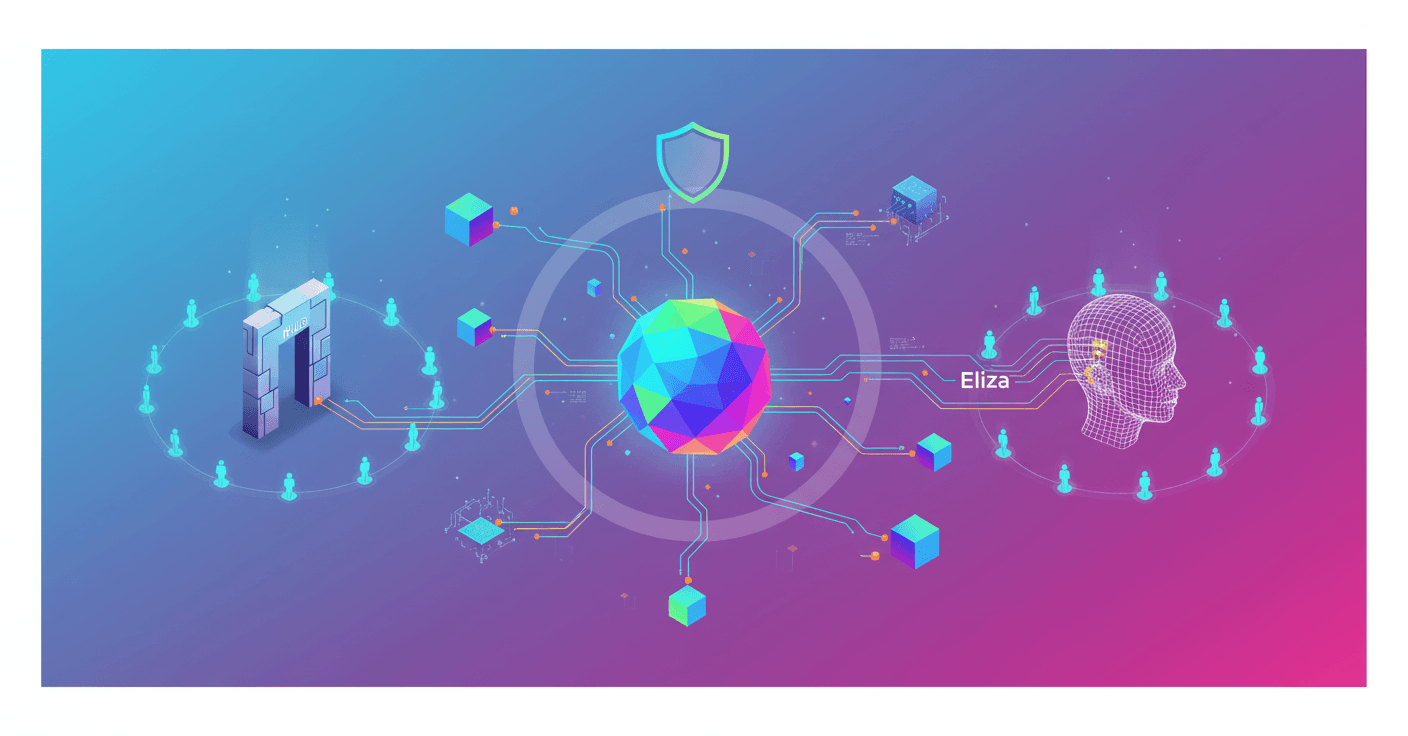
When ChatGPT arrived in 2022, BNY decided not to watch from the sidelines: they put artificial intelligence into the hands of their people. Want to know the aim? AI for everyone, everywhere, and in everything. They did it with a clear plan: an AI center, an internal platform called Eliza, and mandatory training for everyone.
How BNY put AI in everyone's hands
BNY didn’t treat AI like a toy for a few techies. They created a centralized AI Hub and the platform Eliza, designed as a working system where governance and leading models (including OpenAI models) coexist so employees can build safely.
The result: more than 125 use cases in production and 20,000 employees actively building agents. Can you imagine a bank where not only engineers create solutions? That’s exactly what they’re achieving.
Integrated governance: security without stifling innovation
What makes the difference is that governance isn’t a roadblock — it’s part of the platform. Inside Eliza everything — prompts, model selection, agent development and sharing — goes through built-in controls: permissions, telemetry and approval workflows.
BNY leveraged existing risk frameworks and set up several committees that review initiatives daily: a data use review board, an AI release board and an Enterprise AI Council. That lets teams iterate quickly without losing control.
"Governance allowed us to move faster," say the people in charge. And it makes sense: when the rules are embedded in the tool, people can experiment without skipping processes.
Training and culture: making AI a habit
Giving technical access isn’t enough; you have to walk people through it. Today BNY has almost 99% of its staff trained in responsible Gen AI use. Programs like Make AI a Habit Month (daily seven-minute sessions) increased agent building by 46%.
Training was paired with hackathons and activities where legal, sales and operations develop solutions together. The effect? Teams that used to ask for more meetings now share prompts, test agents and learn by doing.
Concrete examples that change real work
Some tools born in Eliza show measurable impact:
- Contract Review Assistant: cuts legal review time from 4 hours to 1 (savings across more than 3,000 agreements a year).
- People Business Partner Agent: fast answers on benefits and policies, fewer manual requests and more consistency.
- Lead Recommendation Engine, Metrics Agent and Risk Insights Agent: opportunity generation, permissioned summaries and earlier risk signals.
BNY is also building "digital employees": agents with identity, access controls and their own workflows that take on tasks like validating payment instructions or improving code security.
Collaboration with OpenAI and the next step
Some teams use ChatGPT Enterprise for deep research that combines internal and external data, supporting risk modeling and strategic planning. That capability, together with agents, lets you move from extracting knowledge to connecting dots and creating personalized products for customers.
The mix of internal responsibility and external collaboration — OpenAI providing research and BNY offering enterprise use cases — is what drives progress.
Practical lessons for other companies
BNY offers a useful map for teams that want to scale AI in regulated environments:
- Extend existing risk frameworks instead of redoing everything.
- Distribute responsibility with multidisciplinary councils.
- Make governance visible and easy: tags, telemetry and in-tool workflows reduce friction.
- Invest in continuous training and short initiatives that turn practice into habit.
- Look for open partners to solve new questions.
The central idea is simple: it’s not just about technology, it’s about how people change the way they work. BNY shows that with integrated governance, mass training and a platform that makes responsible experimentation easy, a large institution can transform critical processes without risking the trust customers expect.