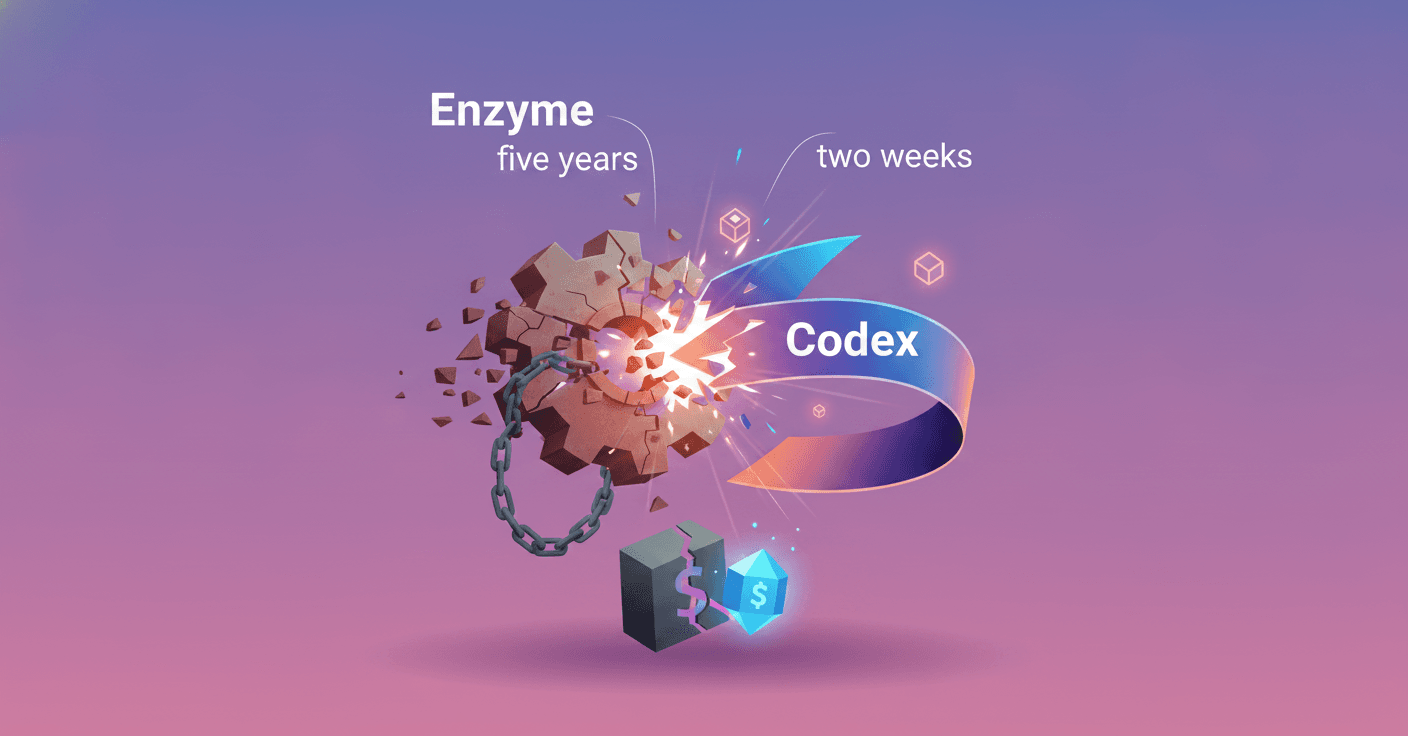
Asana says it managed to complete an engineering project in approximately two weeks that was originally estimated to take five years. The company used Codex, OpenAI’s coding agent, to remove an outdated testing tool from its platform.
The cost of models and infrastructure was around $12,000, compared with an estimate of nearly $6 million if the work had been carried out through the traditional hiring and staffing plan.
The problem: a tool holding back modernization
Asana, known for its work management platform, was still using Enzyme, a testing system for frontend applications that was no longer actively maintained. Over time, this dependency began making it harder to update the technology used in its interface.
Removing it wasn’t simply a matter of deleting a few files. The team had to locate uses of Enzyme across an extensive codebase, replace tests, fix errors, and make sure the changes didn’t break other parts of the product.
What was the result? A project that could remain on the to-do list for years because it required a lot of repetitive work and careful review.
How Asana used Codex agents
Asana started with an instruction of just five sentences. From there, up to four coding agents worked in parallel, each inside a separate copy of the codebase.
The agents proposed changes and moved forward on different parts of the migration. Asana’s engineers reviewed progress twice a day and examined every change before approving it.
This detail matters: Codex did not replace human review. The AI sped up exploration, editing, and problem-solving, but final decisions remained in the hands of the engineers.
The company also discovered that simple instructions worked better than an overly elaborate setup. Instead of designing a complex system of rules, the team allowed the agents to move forward with clear goals and periodic supervision.
From five years estimated to two weeks
According to Asana, the work required around a week and a half of engineering effort, spread across two calendar weeks. By the end of that period, Enzyme had been completely removed.
Model and infrastructure costs reached approximately $12,000. The comparison with the previous plan is striking: five years of work and an estimated $6 million versus an agent-assisted operation that cost a fraction of that amount.
AI doesn’t automatically turn every project that takes years into a project that takes weeks. But it can make certain long, repetitive, or difficult-to-justify tasks viable again.
The figure doesn’t mean that any company can simply repeat the result. Asana had a codebase, engineers, and review processes ready to work with agents. The project also required constant validation to prevent a fast migration from introducing new problems.
What changes for software teams
The case shows a concrete application of AI in software engineering. It’s not just about asking a chatbot to write a function, but about coordinating several agents on a broad task, with reviews, tests, and changes distributed across real code.
For teams, this could change how they evaluate older projects. Technology migrations, rewrites, performance improvements, and the removal of outdated dependencies often compete with new features for engineers’ time. If agents reduce some of the mechanical work, certain tasks may no longer seem impossible to fund.
It also changes the role of developers. Instead of writing every line manually, they can spend more time defining the goal, reviewing decisions, spotting risks, and making sure the result meets the product’s standards.
Asana plans to test this approach on other migrations, rewrites, and performance problems that it previously assumed would take years. The lesson isn’t that technical expertise has lost its value, but that it can be used differently: less time on repetitive tasks and more attention to design and quality.
AI is already entering the day-to-day work of software teams. The practical question isn’t whether an agent can write code, but which projects you’ve been postponing for years could become reasonable with a combination of automation and human review.