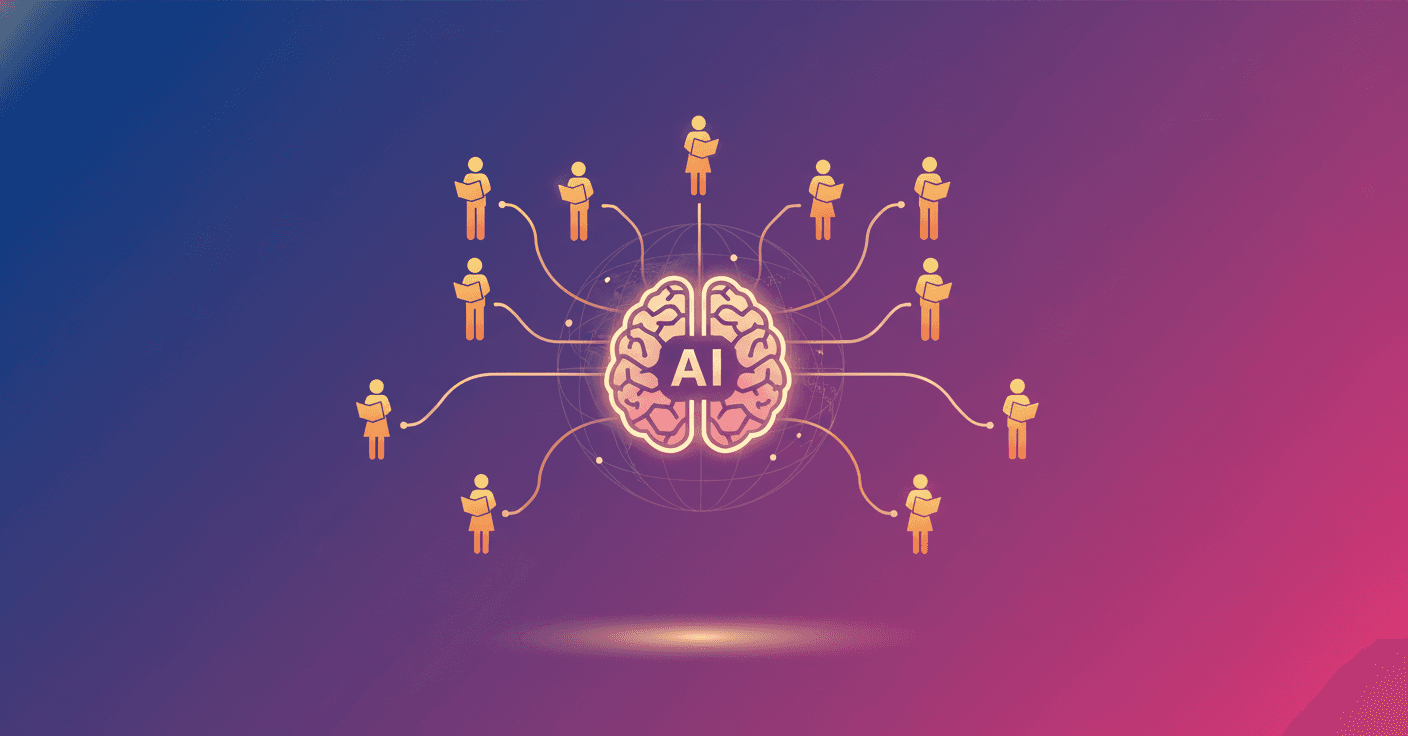
Anthropic and Teach For All announced a partnership to bring AI tools and training to teachers in 63 countries. The initiative, called AI Literacy & Creator Collective (AI LCC), offers more than 100,000 teachers and alumni from the Teach For All network —which serves over 1.5 million students— opportunities to build AI fluency and adapt Claude to real classroom needs.
What Anthropic and Teach For All announced
It’s not just about giving away access to a tool. The proposal puts teachers in the role of co-creators: they receive Claude and training spaces, and in return they provide direct feedback so the product can evolve based on what actually happens in classrooms.
Why does that matter to you? Because most decisions about how AI is used in education usually come from companies or distant experts. Here, the people who know the students best are the ones designing the solutions.
“For AI to make education more equitable, teachers must define how it’s used and contribute to its design,” said Wendy Kopp, CEO of Teach For All.
How the AI Literacy & Creator Collective works
The initiative runs three interconnected programs:
-
AI Fluency Learning Series: six live episodes on AI fluency,
Claude’s capabilities, and practical classroom applications. According to the announcement, more than 530 educators attended the first series. -
Claude Connect: a community hub with daily exchange of prompts, use cases and discoveries. Over 1,000 teachers from 60+ countries are participating in peer-to-peer conversations.
-
Claude Lab: an innovation space for those who want to test practical implementations with
Claude Pro. It includes monthly hours with the Anthropic team and the chance to directly influence the product roadmap. Within four days of announcing the program, they received more than 200 applications.
What teachers are building (real examples)
-
In Liberia, a teacher new to AI attended fluency sessions and within weeks created an interactive curriculum on climate change using
Claude Artifacts, tools that instantly generate apps, games and visualizations. -
In Bangladesh, a 6th and 7th grade teacher designed a gamified math app with boss battles, leaderboards and experience rewards for students struggling with numeracy.
-
In Argentina, a tech educator built digital educational artifacts and is creating interactive spaces aligned with the high-school curriculum.
These examples show a pattern: when teachers have tools and the freedom to experiment, solutions adapt better to local contexts.
Impact on leadership and responsible adoption
The partnership doesn’t only affect isolated classrooms. Ed-tech leaders within the network report shared learning about responsible AI implementation. Organizations like Teach For Nigeria and Teach For Australia have valued the technical exchange and collaboration to scale safe and ethical practices.
Why should you care if you work in education or public policy?
- Because the initiative prioritizes equity: it doesn’t stop at the most privileged schools.
- Because it turns teachers into solution designers, not passive users.
- Because it opens direct channels between real users and developers — a key ingredient for effective and responsible solutions.
Does this mean AI will solve all educational problems? No. But it’s a practical route for technology to respond to concrete issues: more interactive curricula, support for students who are behind, and tools aligned with local contexts.
Looking ahead
The initiative adds to other Anthropic efforts in education, like national pilots and collaborations in several countries. If teachers remain central to design, what’s built is more likely to be useful and fair.
The bet is clear: not just to bring AI to schools, but to make sure the people who teach and know the students decide how it’s used.