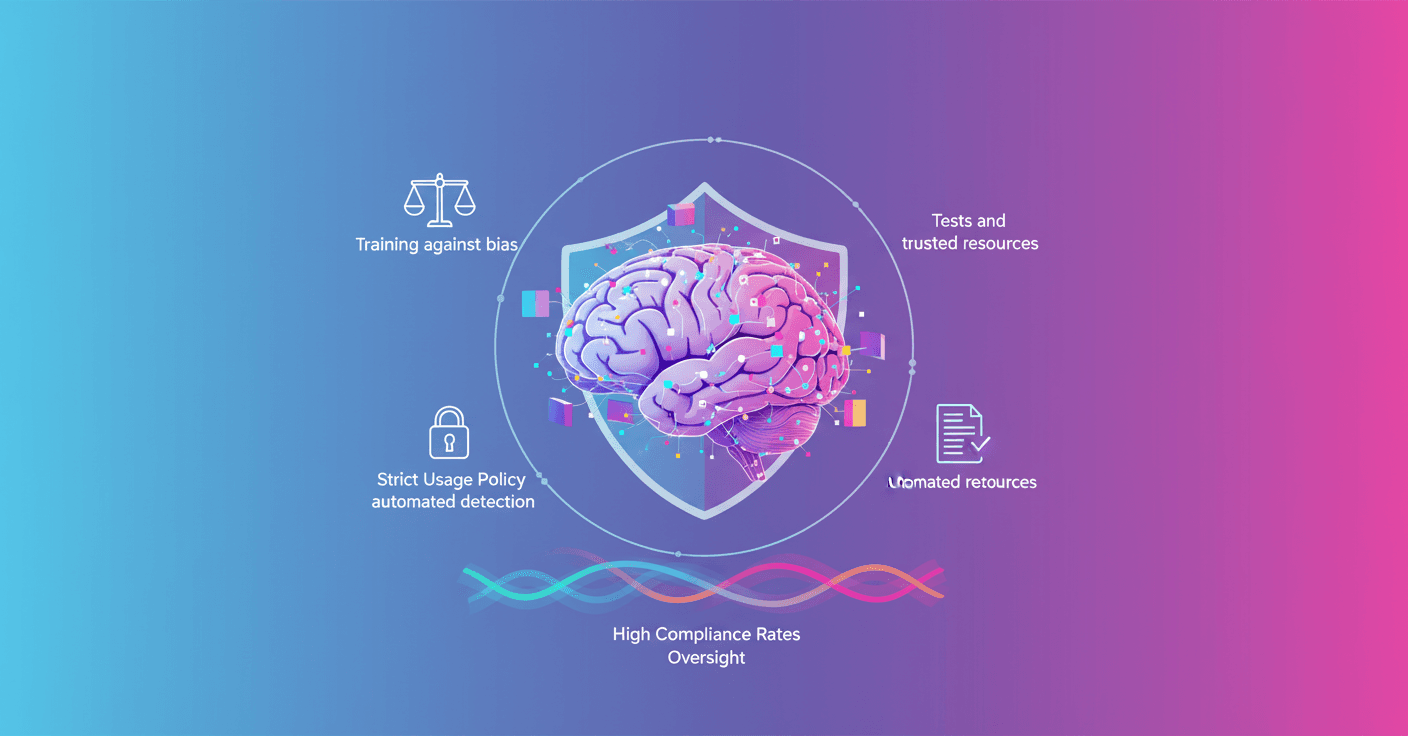
Anthropic published an update about how its assistant Claude is preparing for elections, with tests, policies, and resources to reduce the risks of misinformation and bias. Can AI help you vote better without tipping the balance? Anthropic is betting on controls, evaluations, and external signals to try.
Qué busca Anthropic con Claude en procesos electorales
Anthropic starts from a simple idea: if a model can answer election questions accurately and impartially, it can be a positive force for democracy. That includes practical doubts like where and how to vote, as well as explanations about candidates and public issues.
The bet isn't passive neutrality: it's designing Claude to offer balanced answers that help you reach your own conclusions, not push you toward a position.
Medir y prevenir sesgos políticos
To avoid slanting, Anthropic trains Claude with an approach called character training where responses that reflect values like impartiality and rigor are rewarded. They also use system prompts that build neutrality instructions into every conversation.
Before each release they run evaluations that put the model up against viewpoints across the political spectrum. For example, a model that develops one argument heavily while downplaying the opposing view scores poorly. In these tests, Opus 4.7 and Sonnet 4.6 reached 95% and 96% respectively on criteria for consistent, impartial engagement.
Anthropic also seeks external review. Their collaborators include The Future of Free Speech (Vanderbilt University), the Foundation for American Innovation, and the Collective Intelligence Project to evaluate behaviors related to free expression and political conversations.
The idea isn't to promise perfection, but to measure and improve: measure bias, fix it, and subject methods to external review.
Políticas, detección y pruebas para frenar abusos
The Usage Policy of Anthropic prohibits uses of Claude for deceptive political campaigning, creating false content for electoral purposes, voter fraud, or interference with voting systems. To enforce this, they combine automated classifiers with a threat intelligence team that investigates coordinated abuse efforts.
To evaluate defenses, Anthropic uses tests with 600 prompts: 300 malicious requests (for example, generating electoral misinformation) and 300 legitimate ones (creating campaign material or civic participation resources). Here the metrics were high: Opus 4.7 responded appropriately 100% of the time and Sonnet 4.6 99.8%.
They also simulate influence operations with multi-turn conversations to mimic step-by-step tactics used by malicious actors. In those tests, Sonnet 4.6 and Opus 4.7 responded appropriately 90% and 94% of the time.
A relevant point: they tested whether the models could carry out influence operations autonomously. With safeguards active, the models rejected almost all such requests. Without safeguards (a test to measure capabilities without controls), Mythos Preview and Opus 4.7 completed more than half the tasks, which underscores the need for ongoing oversight.
Banners electorales y datos actualizados
When people ask Claude about registrations, polling places, or dates, Anthropic shows election banners that point to trusted sources. For this year's U.S. midterms, the banner redirects to TurboVote, a nonpartisan resource from Democracy Works. Anthropic plans a similar banner for Brazil and to bring the feature to more countries.
Also, because Claude has a knowledge cutoff from its training, it can trigger web search when necessary to get up-to-date information. In tests on this topic, Opus 4.7 and Sonnet 4.6 triggered web search for midterms questions 92% and 95% of the time, respectively.
Still, Anthropic warns: Claude can be wrong, so it's always a good idea to verify important information with official sources.
Mirando hacia adelante
Anthropic sums up its approach in three clear points: explicit policies, constant detection and monitoring, and external collaboration. It's not a miracle solution, but a mix of technical tests and human review to reduce risks.
What can you do as a user? Ask questions, check multiple sources, and use the tools available — like election banners — to get verified information. In elections, responsibility is shared: developers, platforms, and you.