Dario Amodei, co-founder of Anthropic, published a public statement about the company's conversations with the Department of War. Why does this matter to you even if you're not an expert in defense or AI? Because these are decisions about ethical and technical limits that affect how AI systems are used in national security and, by extension, in everyone's life.
What Anthropic said and what the conflict is
Amodei explains that Anthropic has worked actively with the U.S. government: it deployed models on classified networks, in national labs, and has delivered customized models for national security clients. The assistant Claude is being used in intelligence analysis, modeling and simulation, operational planning, and cyber operations.
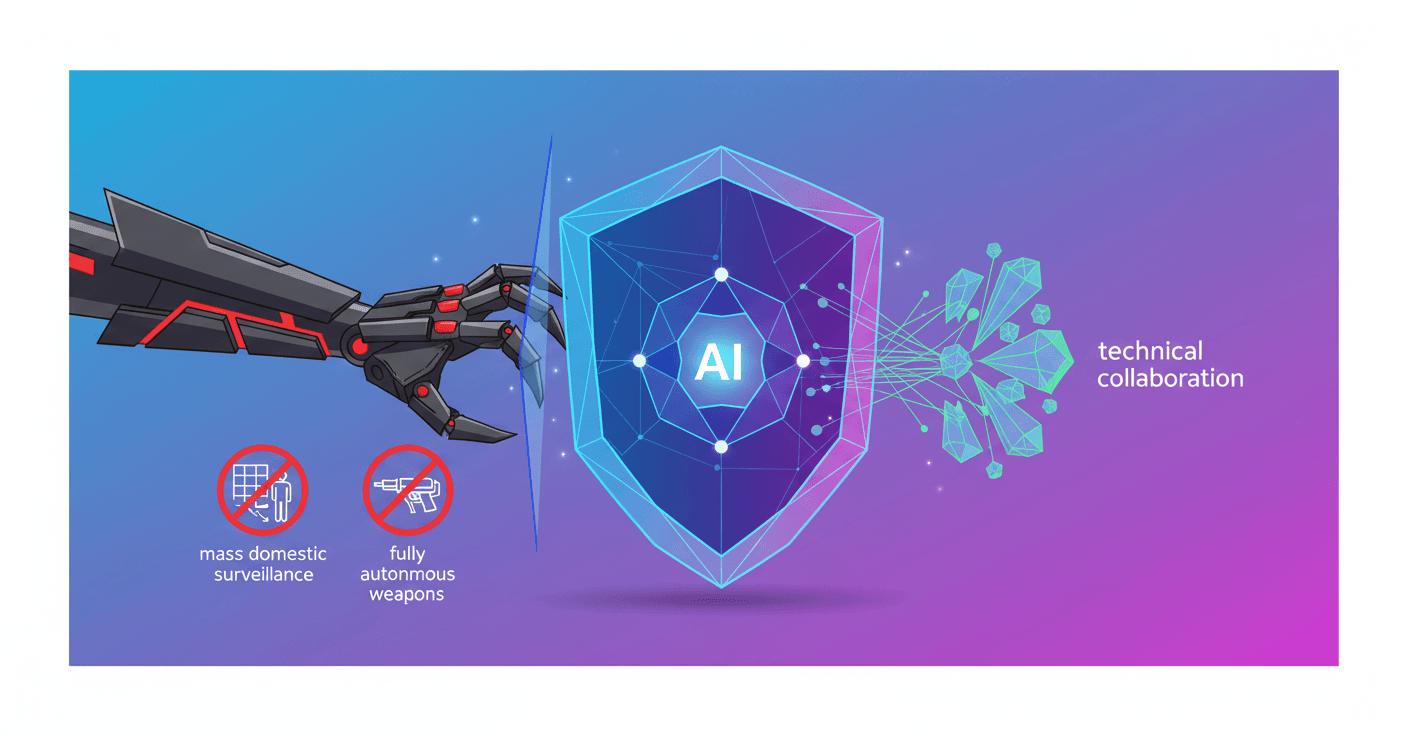
Still, the company draws two red lines that it has never included in contracts and does not want to accept now:
-
Mass domestic surveillance. Anthropic supports intelligence and counterintelligence abroad, but considers using AI to carry out mass surveillance of the population incompatible with democratic values. The fragmented data sold and circulated today can, with powerful AI, be assembled into a full portrait of a person's life, and that radically changes the threat to civil liberties.
-
Fully autonomous weapons. Anthropic distinguishes between partially autonomous weapons, which are already in use and can be critical in defense, and systems that remove humans from the decision loop entirely. Today, frontier models are not reliable enough to make lethal decisions without human oversight, and Anthropic does not want to provide products that put military personnel or civilians at risk.
"We cannot in good faith accede to your request", summarizes Amodei about the Department's demand to accept "any legal use" and remove those safeguards.
The Department's pressures and Anthropic's response
According to the statement, the Department of War demanded that contractors accept "any legal use" and pressured Anthropic to remove its limits. The company says it was threatened with removal from systems, labeled as a "supply chain risk" (a tag reserved for adversaries), and even with the invocation of the Defense Production Act to force changes.
It's a game of contradictions: on one hand Anthropic is presented as a threat; on the other, its models are said to be indispensable. How do you reconcile both claims? Anthropic responds by holding its ground and offering to collaborate on research and development to improve the reliability of systems that might need military use, without surrendering its safeguards.
What options does Anthropic propose? What does it mean for security and democracy?
The company makes clear it respects the Department's choice of who to work with. But it asks to continue serving with the two limits active. If the government decides to offboard it, Anthropic commits to facilitating a smooth transition so critical operations aren't interrupted.
This raises questions that affect all of us: should technological innovation be subordinated to demands for unrestricted use? Or is it reasonable for a company to set ethical and technical limits on how its technology is used? The tension between national security and protection of civil rights isn't new, but the power of these AIs makes it more urgent.
What's next and why you should pay attention
- For the government: decide whether to prioritize unconditional access to the technology or accept safeguards that limit certain uses.
- For Anthropic: maintain its public stance and offer technical collaboration to improve safety and reliability.
- For society: watch how these technologies are regulated and demand transparency about uses that impact freedoms.
This isn't just a corporate dispute; it's a conversation about how far we allow AI to act in decisions that can change rights and lives. Do we prefer quick fixes or building solid guardrails now, before the risk grows?