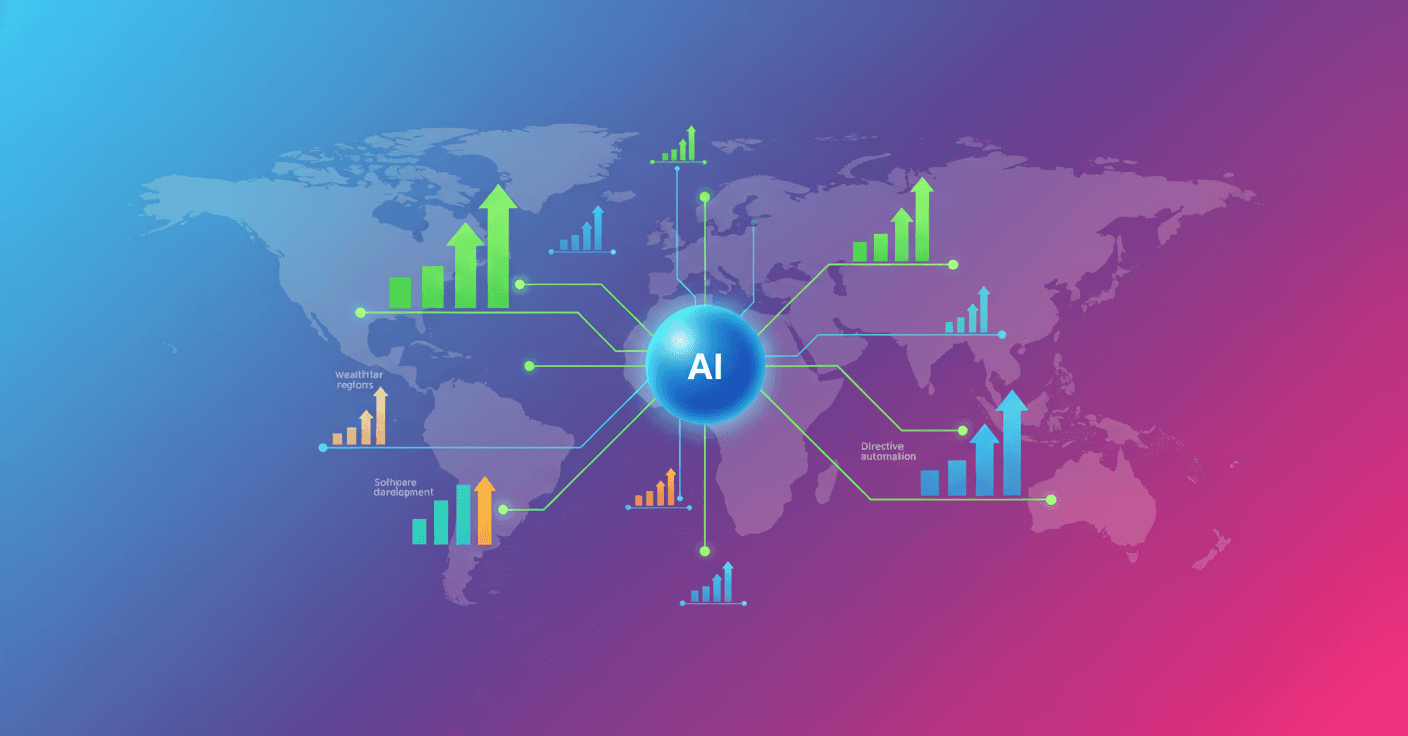
Anthropic’s economic research focuses on something that’s no longer futuristic: AI is changing how you work, produce, and access opportunities. How do you measure those changes in a solid, useful way for governments, companies, and workers? That’s the question their Economic Research team pursues with data and empirical analysis.
They’re not chasing vague theories — they’re building evidence you can act on.
What the Economic Research team does
The team builds the empirical foundation to understand AI’s economic impact. Instead of fuzzy ideas, they collect real usage data from models like Claude and analyze adoption patterns by sector, region, and task type. The result? Reports and metrics that help you make informed decisions about regulation, training, and business strategy.
They work on several technical lines at once:
- Collecting and cleaning conversation data and API calls to map real uses.
- Classifying tasks into categories like collaboration, full delegation, and directive automation.
- Estimating productivity by linking time saved on tasks to aggregate economic effects.
What the Anthropic Economic Index measures
The Anthropic Economic Index isn’t just a single number; it’s a suite of indicators about how AI integrates into productive life. Some key dimensions:
- Geographic adoption: usage by states and countries.
- Adoption by sector: education, health, software, services, etc.
- Interaction mode: human-AI collaboration versus full task delegation.
- Business use via API versus end-consumer use.
Technically, the index combines metrics of usage frequency, proportions of conversation types, and API patterns to draw a dynamic picture of AI diffusion.
Technical findings and their interpretation
Recent reports show several findings that matter for analysts and policymakers alike:
-
There’s a strong correlation between income and AI adoption. In other words, AI is being deployed faster in regions and firms with more resources.
-
Directive automation grew from 27% to 39% of conversations since December 2024. That means more interactions are users asking the AI to execute complete tasks instead of seeking support or ideas.
-
Companies are automating much more than consumers. API usage shows distinct patterns: repeatable, high-scale processes are among the first to be automated.
-
Sectoral use: there’s a shift toward educational and scientific tasks, and a trend to delegate complete tasks rather than collaborate step-by-step.
-
Impact on software: one report examines how AI affects software development productivity, showing both efficiency gains and new integration and quality challenges.
How they estimate productivity gains
In technical papers like “Estimating AI productivity gains from Claude conversations” they use methods common in applied economics:
- Measure changes in time per task before and after intensive AI use.
- Scale those savings using adoption data to estimate sectoral and aggregate effects.
- Apply controls and identification techniques to separate the AI effect from other simultaneous trends.
It’s not simple, but these approaches let you move from anecdotes to quantitative, useful estimates.
Implications for policy and business
What should you do with these results? A few evidence-based recommendations:
- Measure to govern: governments need granular adoption data to design employment and education policies.
- Invest in human capital: if automation concentrates in wealthy areas, inequality can rise. Targeted training programs are key.
- Evidence-informed regulation: instead of banning or rushing ahead without data, use indices like this to balance innovation and social protection.
- Continuous monitoring: AI diffusion changes fast. A dynamic index helps you adjust policies in real time.
Publications and technical resources
Some contributions from the team include:
- Estimating AI productivity gains from Claude conversations
- Anthropic Economic Index report: Uneven geographic and enterprise AI adoption
- Anthropic Economic Index: Tracking AI’s role in the US and global economy
- Anthropic Economic Index: AI’s impact on software development
- Anthropic Economic Index: Insights from
Claude 3.7 Sonnet
These works combine descriptive analysis with econometric methods to offer a reproducible picture of how AI is transforming economic activity.
The research makes one thing clear: AI is already reconfiguring responsibilities and workflows, but the effects aren’t neutral or uniform. Measuring how and where adoption happens is the first step to capturing opportunities and mitigating risks.