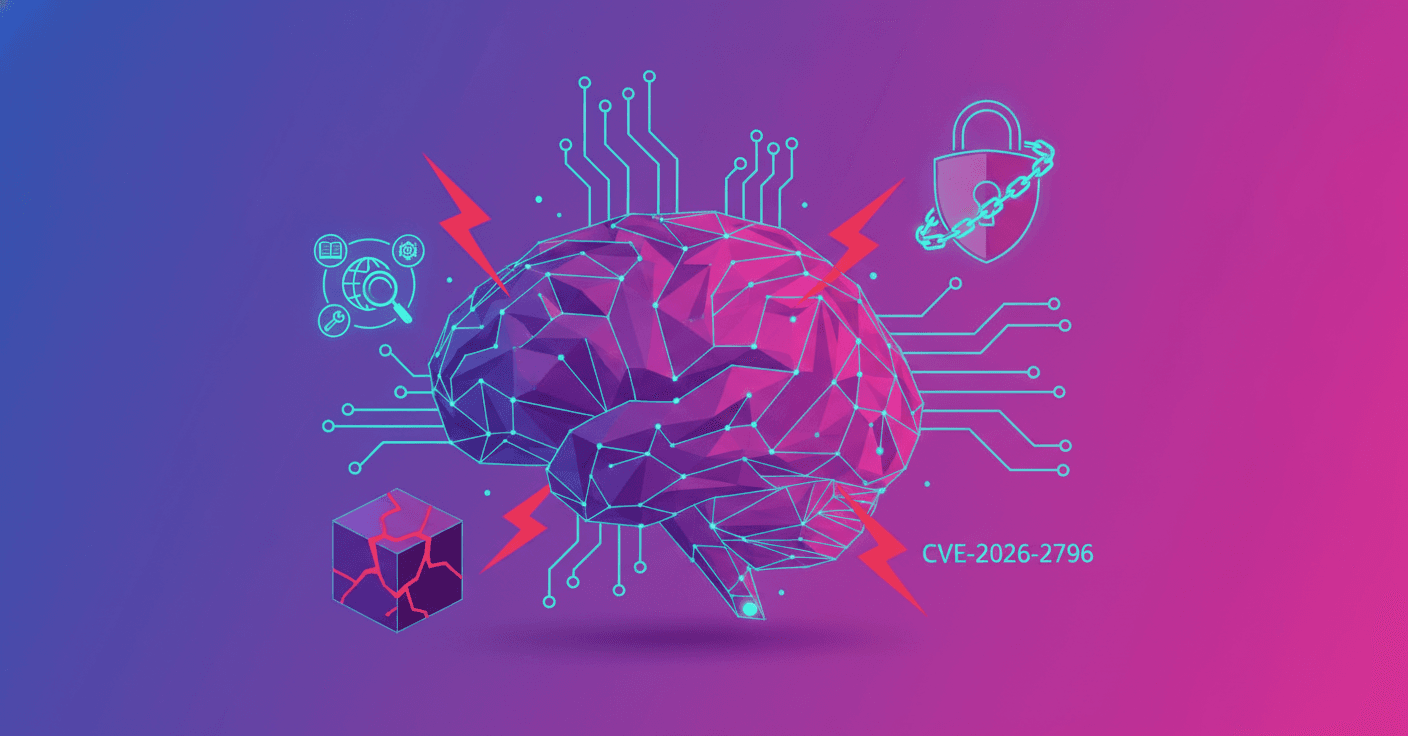
Anthropic reveals its Frontier Red Team project, a technical investigation that explores how large language models (LLMs) can find, develop, and exploit real vulnerabilities. Surprised that an AI can help create exploits? You shouldn’t be scared; it’s better to understand it so you can protect yourself.
What is Frontier Red Team
Frontier Red Team is a systematic red-teaming effort on advanced AI models. It bundles several projects and publications that analyze everything from LLMs’ ability to develop exploits to mapping AI-escalated threats with tools like ATT&CK Navigator.
- Project Deal and Project Fetch: phase two are initiatives that combine tests in controlled environments with quantitative evaluation.
- Specific studies measure impact on N-day exploits, models’ ability to discover 0-days, and the generation of exploitation code.
The idea is not to alarm, but to anticipate: test models in realistic conditions to design more effective controls.
Main findings
The results have practical, immediate implications for security teams and service operators. Want the short version? LLMs can speed up the discovery-to-exploit pipeline in ways you should plan for.
- Models show increased ability to find and exploit vulnerabilities in cyber-realistic ranges.
- With the right prompts and context, an LLM can produce useful steps to develop a functional exploit.
- Evaluations on N-day and 0-day show models accelerate the discovery phase, reducing time between discovery and effective exploitation.
Anthropic also documents concrete cases: evaluation of Claude Mythos Preview, reverse engineering of the exploit associated with CVE-2026-2796, and measures to mitigate risks when LLMs discover new vulnerabilities.
Methods and metrics (technical)
To avoid opinions without evidence, Anthropic uses reproducible methodologies. They try to make the tests understandable and repeatable—so you can see what actually happened.
- Tests in realistic cyber ranges that simulate infrastructure, services, and defenses.
- Measuring LLMs’ capacity to produce functional exploits: from suggesting payloads to generating scripts that pass tests in the controlled environment.
- Evaluating impact on N-day exploits: how much the time to exploitation is reduced and what complexity is required.
- Use of the LLM ATT&CK Navigator to map AI-enabled techniques and tactics, which helps prioritize mitigations.
Technically, they evaluate indicators like exploitation success rate, time from prompt to reproducible exploit, and the exploit’s robustness against countermeasures.
Practical cases and collaborations
Anthropic didn’t work alone. Collaboration helped turn findings into actionable fixes—exactly the kind of practical outcome you want.
- They partnered with Mozilla to improve Firefox security after identifying vectors that could be exploited with the help of models.
- They documented the reverse engineering of the
CVE-2026-2796exploit in Claude, which allowed lessons about how models can facilitate malicious automation.
These collaborations show a responsible approach: when a model can generate risks, the team coordinates mitigations with affected vendors.
How to mitigate this risk today? Practical recommendations
If you’re responsible for security or you’re a developer, there are concrete actions you can take right now. Small steps can make a big difference.
- Strengthen testing in staging environments with AI-enabled scenarios to see if an LLM can exploit your services.
- Implement detection of malicious prompt patterns and monitor model API usage across your organization.
- Prioritize patches on vectors that LLMs identify more often: unsanitized text input, exposed debugging endpoints, and libraries with a history of 0-days.
- Maintain responsible disclosure channels and collaborate with model providers for coordinated response.
Lessons for model developers
The findings don’t only affect traditional defenses; they also create responsibilities for those who train and deploy models. How do you design models that are useful but harder to misuse?
- Design guardrails and filters that reduce the model’s ability to produce concrete exploitation instructions.
- Continuous adversarial evaluations: red teaming should be part of the model development lifecycle.
- Transparency in findings and collaboration with the security community to reduce harm before it’s exploited in the wild.
It’s not about banning features, but about designing them with controls that minimize abuse without stopping innovation.
Conclusion
Frontier Red Team clearly shows that AI is already changing the cybersecurity landscape. The tool is powerful for both attackers and defenders—so understanding the modeled adversary helps you prioritize patches, improve detections, and design safer models.
What’s next? More organizations running real tests and sharing lessons with transparency.