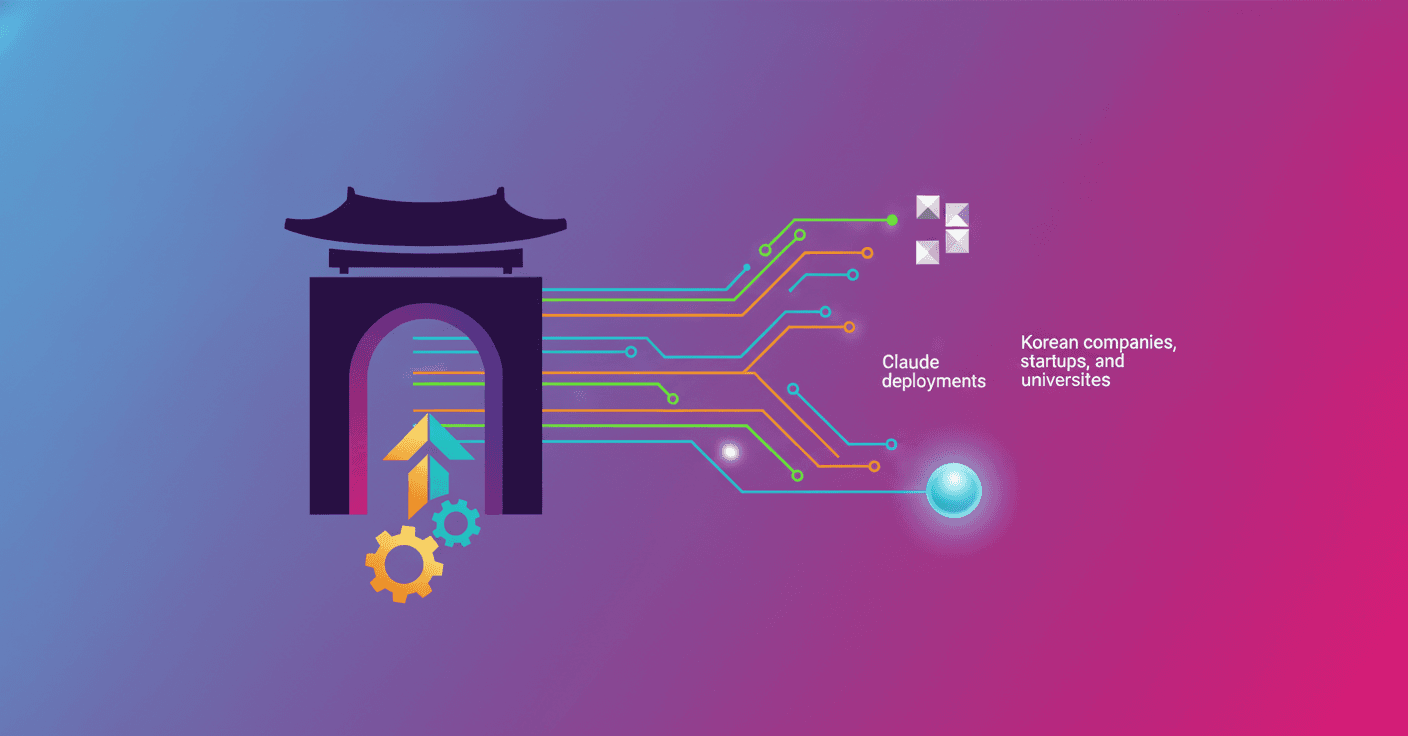
Anthropic already has an office in Seoul and is bringing new partnerships with Korean companies, startups, and universities. Why does this matter for the region and for people using AI right now? Because it’s not just a physical presence: it’s active cooperation on real Claude deployments, developer tools, and support for research in safety and alignment.
What Anthropic announced in Seoul
The office in Seoul opens as a long-term foothold to work with Korean teams who, Anthropic says, see innovation and safety as two sides of the same coin. Company leaders traveled to Korea to inaugurate the office and meet partners, customers, and developers who are already using Claude at scale.
And what does using Claude at scale in Korea mean? It means integrating it into development workflows, customer support, analytics, and even nonprofit organizations. This isn’t a lab experiment: these are deployments that affect daily operations and real products.
Partnerships with companies and startups
-
NAVER has rolled out Claude Code to thousands of engineers, diversifying programming tools and boosting productivity.
-
Nexon uses Claude Code in teams that develop and maintain live games played by millions.
-
LG CNS is adopting Claude across thousands of employees for software development and tech solutions within LG Group.
-
Hanwha Solutions is bringing Claude to global employees through AWS Bedrock to meet strict data residency and security requirements in the region.
-
Samsung SDS deploys Claude, including Claude Cowork and Claude Code, to improve knowledge work, agentic flows, and software development at Samsung Electronics.
-
Channel Corp integrates Claude into Channel Talk, its customer AI platform used by more than 230,000 companies in Korea, Japan, and the United States.
These examples show different levels of adoption: from assistants for internal tasks to functions embedded in products that already serve millions. Can you imagine the hours saved in code review or customer support? That’s happening now.
Research, the social sector, and the developer community
Anthropic is also building links with the academic and social ecosystem:
-
It will work with the National AI Research Lab (NAIRL), which brings together KAIST, Korea University, Yonsei, and POSTECH, offering access to Claude for up to 60 affiliated researchers. The focus: AI safety, model evaluation, alignment, and robustness.
-
Good Neighbors Korea, an NGO focused on children's rights, will use Claude to analyze program results, clarify legal guides, and reduce administrative burden, freeing up time for direct care.
Also, Korea appears among the top countries by usage of Claude.ai according to Anthropic’s Economic Index. To support startups there are programs like Claude for Startups, meetups that have gathered hundreds of developers, and hands-on events like Claude Build Day and a Push to Prod hackathon with Replit and local partners.
The strategy seems clear: combine enterprise deployments, research support, and a vibrant developer community to accelerate responsible adoption.
Impact and why you should pay attention
If you work in technology, product, or at an NGO, this is not just a press release. Having a local office and partnerships with large groups and universities reduces operational friction, improves local data compliance, and makes ongoing technical collaboration easier.
For entrepreneurs, it means more access to mentorship, startup programs, and practical events; for companies, it means integration and deployment options that meet regulatory needs; and for academia, it means more resources to research safety and alignment.
A pragmatic step toward maturing the AI ecosystem in Korea
Opening an office is a gesture, but concrete partnerships and deployments are what transform a market. Anthropic is betting on Korea not just as a customer, but as a collaborator in research, product, and talent development.
Does this mean AI is solved? No. It means the conversation is becoming more practical: regulation, safety, data residency, and responsible application are being discussed alongside productivity and new products.
Original source
https://www.anthropic.com/news/seoul-office-partnerships-korean-ai-ecosystem