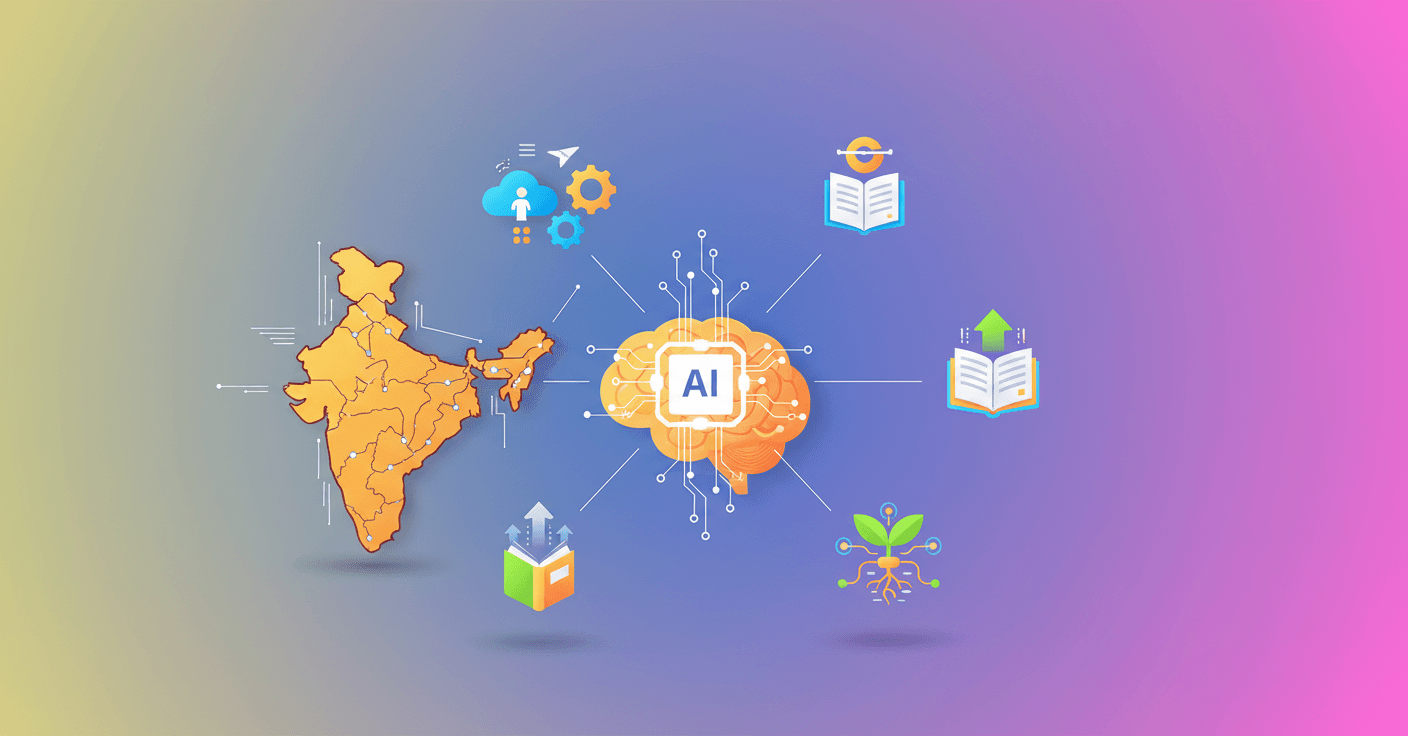
Anthropic opens its office in Bengaluru and announces a series of partnerships across business, education and agriculture that aim to bring Claude to more people and organizations in India. Why does this matter? Because India isn't just a huge market: it's one of the most active developer communities and it expects AI that works in dozens of languages and on real-world problems.
What Anthropic is announcing in India
Anthropic formalizes its local presence with an office in Bengaluru (its second in Asia, after Tokyo) and a roadmap of collaborations that includes:
- Improvements in language capabilities for Indic speakers: work on 10 languages (Hindi, Bengali, Marathi, Telugu, Tamil, Punjabi, Gujarati, Kannada, Malayalam and Urdu).
- Local evaluations in practical domains (agriculture, law) with partners like Karya, Collective Intelligence Project, Digital Green and Adalat AI; Anthropic plans to publish those evaluations.
- Enterprise partnerships: use cases with Air India, CRED, Cognizant, Razorpay, Enterpret and startups like Emergent.
- Education and social outreach projects with Pratham, Central Square Foundation and EkStep Foundation.
- Initiatives for open infrastructure via the
MCP(Model Context Protocol), now in the Linux Foundation ecosystem.
Focus on languages and local evaluations
A real barrier today is that models tend to work better in English. Anthropic spent six months curating more representative data in the 10 languages listed and reports improvements in fluency. To validate this, it works with local teams and sector experts to build evaluations that measure performance on tasks relevant to India.
The intent? For models not just to speak a language, but to solve local problems: from agricultural queries to legal summaries in native tongues. Anthropic says the evaluations will be public, which can help local researchers and developers compare and improve models.
Use cases and key partners
The practical examples show how the technology translates into concrete results:
- Air India uses
Claude Codeto speed up software development and lower costs, as part of a larger AI agent initiative. - CRED reports 2x faster feature deliveries and 10% better test coverage with
Claude Code. - Cognizant deploys Claude for 350,000 employees, modernizing legacy systems and accelerating AI adoption.
- Razorpay integrates AI into risk and operations; Enterpret uses Claude for its assistant and insight flows; Emergent reached $25 million in ARR and 2 million users in under five months, built with Claude.
Those numbers show adoption ranging from large enterprises to fast-scaling startups.
Education and outreach to vulnerable communities
Education represents around 12% of Claude usage in India. Anthropic partnered with Pratham to pilot the "Anytime Testing Machine" with 1,500 students across 20 schools and plans to expand it to 100 schools by the end of 2026. The same system was adapted for more than 5,000 learners in the Second Chance program, which supports women who left formal education.
With Central Square Foundation, Anthropic will provide technical expertise, mentorship and API credits to organizations building personalized tutors, teacher coaching and assessment solutions.
Agriculture, health and access to justice
India has a massive agricultural economy, and Anthropic seeks to deploy Claude in initiatives like OpenAgriNet with EkStep Foundation to bring expert knowledge to rural areas at scale.
In health and social services, they work with Noora Health and Intelehealth to improve coaching and access to care. And in justice, Anthropic supports Adalat AI on a national WhatsApp helpline that delivers case updates, translation, document summaries and interactive consultations in native languages — highly relevant when India has tens of millions of pending cases.
Open infrastructure: MCP and institutional adoption
Anthropic donated the Model Context Protocol (MCP) to the Linux Foundation. The Indian government, through the Ministry of Statistics and Programme Implementation (MoSPI) and Bharat Digital, launched an official MCP server to query national statistics interoperably. In the private sector, Swiggy uses MCP to enable grocery orders and bookings directly from Claude.
This demonstrates a hybrid approach: open standards so different services and datasets can connect securely and practically.
What this means for you (if you're a developer, business leader or citizen)
- If you're a developer: there are more tools, data and local evaluations to build products that work in Indian languages and contexts.
- If you lead a company: Claude is already used to modernize systems and speed up deliveries; Anthropic offers applied support to scale solutions.
- If you work in education or agriculture: there are pilot programs and partnerships ready to scale social impact.
Anthropic also reports that its run-rate in India has doubled since October 2025. Globally, the company announced a Series G round of $30 billion and a post-money valuation of $380 billion, with a run-rate of $14 billion, according to its note. All of this funds expansion, research and operational support.
India has the scale, talent and urgency to solve real problems. Could this be the moment when AI stops feeling like a novelty and becomes an everyday tool for millions? The pieces are in place: local talent, open standards and projects aimed at concrete results.
Original source
https://www.anthropic.com/news/bengaluru-office-partnerships-across-india