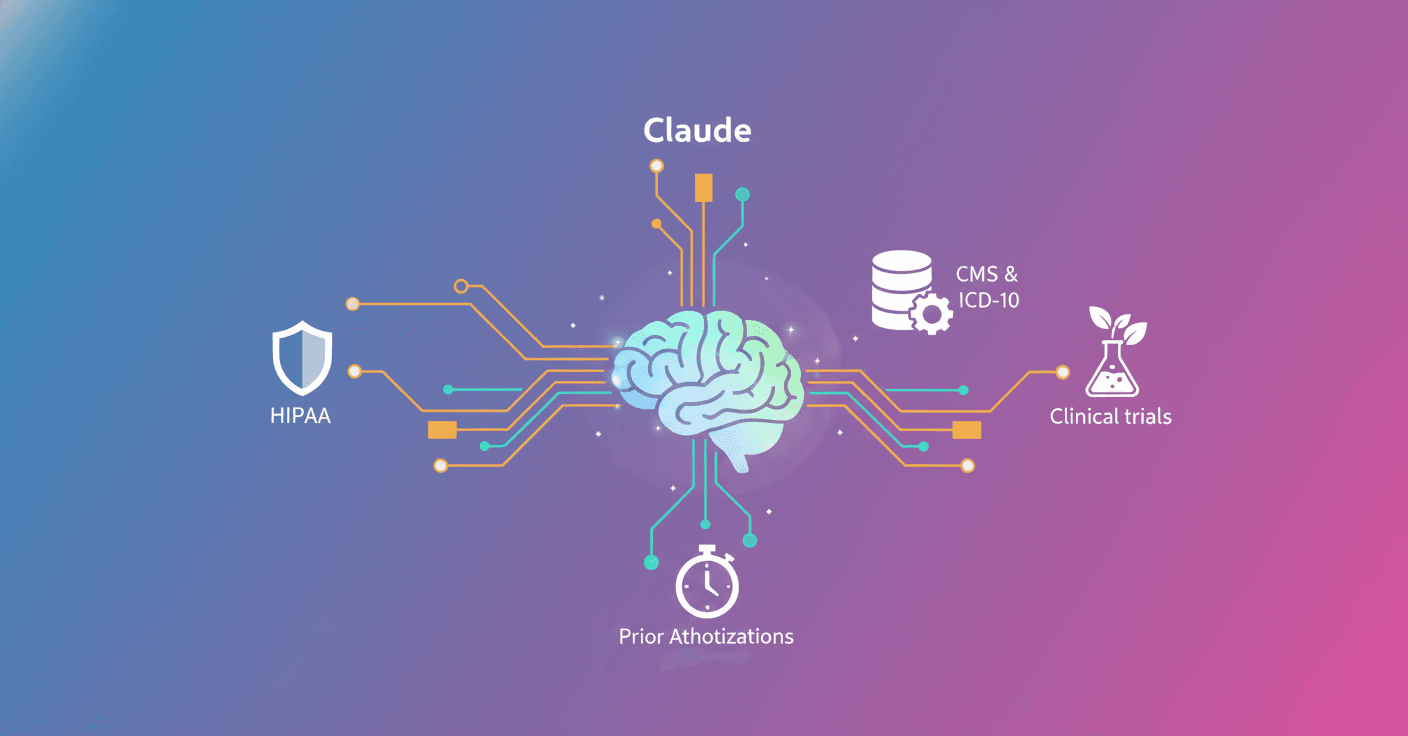
Anthropic announces two big moves: Claude for Healthcare, a collection of HIPAA-ready tools for hospitals, insurers and patients; and an expansion of Claude for Life Sciences, connecting the model to more scientific platforms and supporting clinical and regulatory phases. All of this is backed by improvements to the Opus 4.5 model, which the company says improves reasoning and fidelity in medical tasks.
What changes and why it matters
Why should this matter to you if you work in healthcare, life sciences, or you're a curious patient? Because this isn’t just polished text: these are integrations that let Claude access concrete data (with permission), automate administrative reviews, and support scientific protocols. In practice that can speed up prior authorizations, improve claims appeals, and cut clinicians’ administrative hours.
Anthropic presents tools designed for real uses in hospitals, startups and labs, backed by privacy and security controls.
Claude for Healthcare
What's new:
-
Connectors that let Claude query standard industry systems:
- CMS Coverage Database (includes Local and National Coverage Determinations) to verify coverage requirements and support prior authorization reviews.
ICD-10for searching diagnosis and procedure codes, improving coding and billing.- National Provider Identifier Registry for provider verification and claims validation.
-
HIPAA-compliant organizations can use Claude Enterprise and access existing connectors like PubMed (over 35 million publications) for quick literature reviews. -
New Agent Skills:
FHIRdevelopment (makes interoperability between systems easier) and a customizable prior-authorization review template that you can adapt to internal policies.
Concrete healthcare use cases:
- Speed up prior-authorizations by gathering coverage criteria, clinical guidelines and patient records to propose well-documented determinations.
- Support claims appeals with evidence packages drawn from records, policies and clinical guidelines.
- Coordinate patient messages and triage, prioritizing urgent issues so queries don’t get lost.
- Help startups build products like ambient scribing, clinical data extraction, or chart-review tools.
Connections to personal data:
- Subscribers in the U.S. (Claude Pro and Max) can opt to integrate their records and lab results via HealthEx, Function, Apple Health and Android Health Connect (beta).
- These integrations are opt-in; you control what you share and can disconnect permissions at any time.
- Anthropic states it does not use users’ health data to train models and that Claude includes uncertainty notices and recommendations to consult professionals.
Claude for Life Sciences
What's new:
-
Connectors aimed at research and clinical trials:
- Medidata (access to trial data, enrollment and site performance).
- ClinicalTrials.gov for pipeline, recruitment and protocol design information.
- ToolUniverse (library of >600 vetted scientific tools).
- bioRxiv and medRxiv for access to recent preprints.
- Open Targets, ChEMBL and Owkin (Pathology Explorer) for early discovery and image analysis.
-
Maintains and expands existing connectors: Benchling, 10x Genomics, PubMed, BioRender, Synapse.org and Wiley Scholar Gateway. The Benchling connector is also available on Claude’s web with SSO.
-
New Agent Skills: problem selection for scientific questions, conversion of instrument data to Allotrope, bundles for
scVI-toolsandNextflowdeployment, and a sample for generating clinical trial protocol drafts with recommendations on endpoints and regulatory considerations.
Practical life-sciences uses:
- Draft clinical trial protocols that account for FDA and NIH requirements and use your templates and data.
- Monitor trial operations with Medidata data to catch enrollment or site-performance issues before they hit timelines.
- Prepare and review regulatory submissions, identify documentation gaps and draft responses to agency queries.
Models, security and ecosystem
-
The core engine is
Opus 4.5with "extended thinking", which Anthropic presents as an improvement in agent reasoning and honesty evaluations (fewer factual hallucinations in their internal tests). -
The company emphasizes its safety approach (mentioning its Constitutional AI–based method) and working with partners who apply additional controls.
-
Claude is available on the three major clouds: Amazon Bedrock, Google Cloud Vertex AI and Microsoft Foundry, and Anthropic lists partners and integrators like Accenture, Deloitte, PwC and others who help bring these tools to production.
Who’s already using it and how
Anthropic shares testimonials from pharma companies and providers who report efficiencies in document automation, faster development cycles and reduced operational burden. Companies like Sanofi, Veeva, Schrödinger and several health providers describe improvements in speed and accuracy for repetitive tasks.
How to get started
- The new features and connectors are generally available to Claude Pro, Max, Teams and Enterprise subscribers.
- To explore specific solutions:
- claude.com/solutions/healthcare (Claude for Healthcare)
- claude.com/solutions/life-sciences (Claude for Life Sciences)
- You can also contact Anthropic’s sales team for enterprise integrations.
So what now? If you work in healthcare or life sciences, this means less time fighting paperwork and more time focused on patients or science. If you’re a patient, it means tools to better understand your clinical data. As always, the key is to test carefully, validate results and keep privacy and security controls in place.