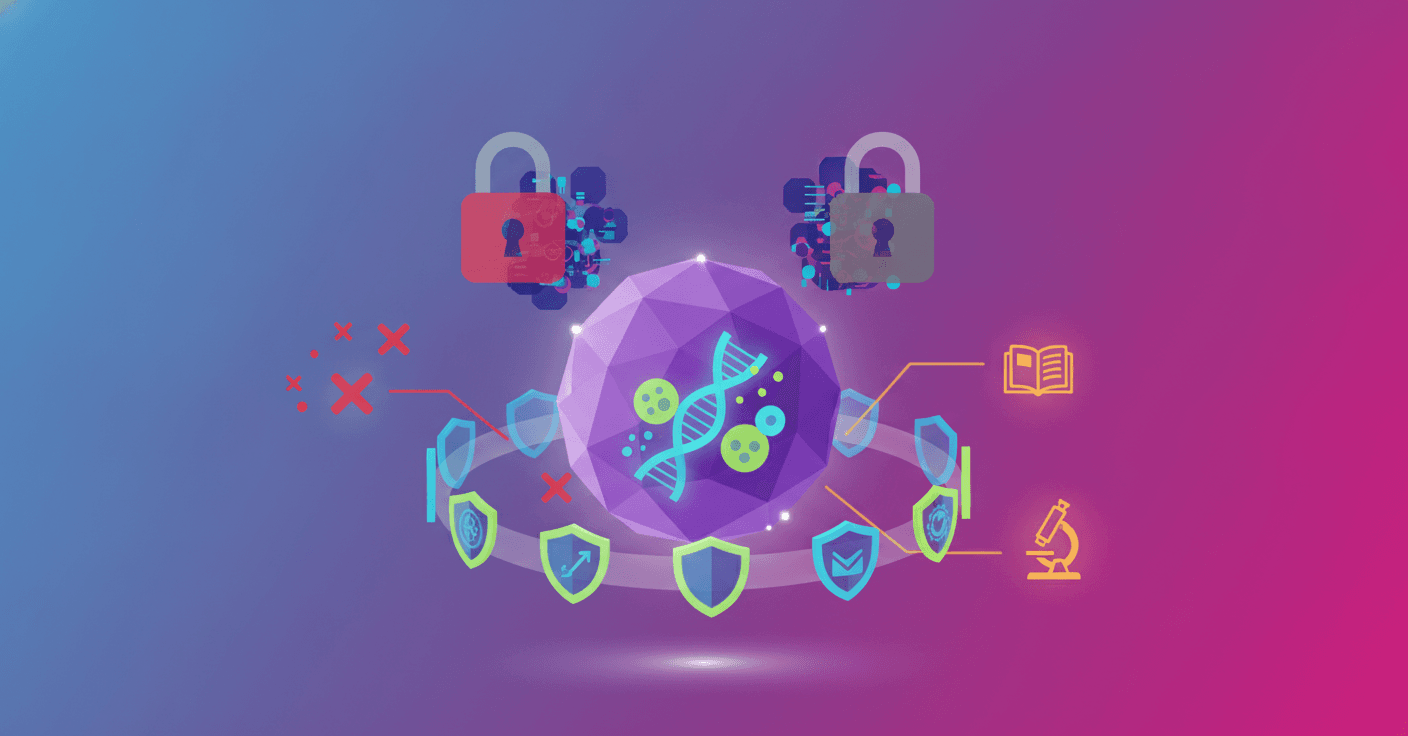
Anthropic announces changes to the biological safeguards of Fable 5 to reduce unnecessary blockages. What does this mean for you — as a student, a healthcare professional, or just a curious person? In practice, fewer interruptions and more useful answers for everyday questions about health and biology education.
What changed
The update focuses on the classifier that decides when a biological query is too risky for Fable 5 to answer. Previously, many harmless questions were routed to Opus 5 (a less capable model) out of caution. With the classifier's new version, Anthropic reports about an 85% reduction in those biology-related reroutes in their internal tests.
What concrete examples get better? Questions like interpreting lab results, understanding common symptoms, or learning biology in an educational context now fall far less often to a weaker model. For healthcare professionals, Fable 5 will be able to provide more support on routine clinical tasks.
Why there were so many restrictions
Biology is a dual-use field: what helps heal can also be misused to harm. Sometimes researching a treatment involves handling dangerous compounds or even culturing pathogens under controlled conditions. That makes it hard to tell benign intent from malicious intent.
Anthropic initially chose to block nearly all biological queries with Fable 5 to avoid risks that could be severe. That decision prioritized safety over convenience, even though it would frustrate legitimate users with false positives.
How the safeguards work now
- The core protection is a set of automated classifiers that detect risky biological content.
- When the classifier fires, the query is redirected to
Opus 5, limiting assistance for potentially dangerous tasks. - To reduce false positives, Anthropic rewrote the classifier’s “constitution,” solicited feedback from internal and external experts, generated updated training data, and retrained and re-verified the system.
The goal was to spell out and clearly exclude benign uses, while keeping the trigger for dual-use research like virology, toxicology, and molecular design.
As a result, the classifier now allows a wider range of innocuous questions without compromising its ability to catch real risks.
Limits and next steps
Not everything is solved. Anthropic keeps blocks for frontier biological queries and drug development because of dual-use risk. They say they will keep working on trusted-access paths for researchers who legitimately need more advanced capabilities.
They also expect some false positives will remain within a safety margin — queries that are low-risk but still trigger the classifier. The invitation is to give feedback so the system can be further refined.
Practical impact (numbers)
- Estimated reduction in biological fallbacks: ~85% in internal tests.
- Expected impact on total fallbacks: about 67% on Claude.ai, 55% on Cowork, 17% on Claude Code and 7% on the Claude Platform.
If you use these tools, you’ll notice fewer interruptions on educational and general health questions. If you’re a researcher in sensitive areas, the door remains closed for now, but work is underway to open safe paths.
Think of this like tuning a detector: removing noise without lowering vigilance. The real question is whether we can speed responsible access without opening the door to bad actors. Anthropic is betting on a gradual, supervised approach.
Original source
https://www.anthropic.com/news/improving-fable-5-s-biology-safeguards