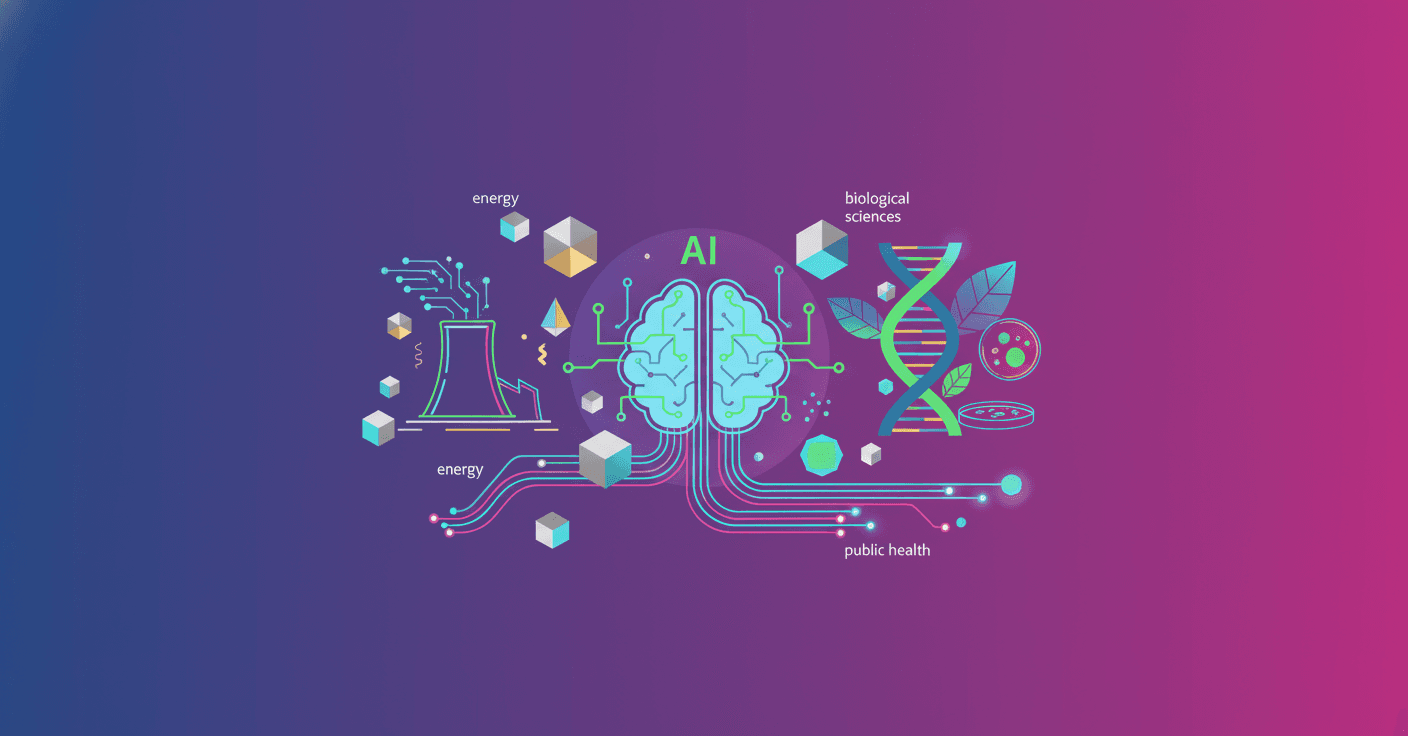
Anthropic and the United States Department of Energy (DOE) announced a multi‑year partnership within the Genesis Mission, the government initiative to use AI and keep the country’s scientific leadership. Why does this sound like a turning point? Because it combines supercomputers, decades of experimental data, and AI models that could help transform how science is done today.
What did Anthropic and the DOE announce
The collaboration focuses on three concrete domains: energy, biological sciences, and scientific productivity. According to Anthropic, the partnership could affect work across the DOE’s 17 national research facilities, from labs developing energy technologies to centers managing long‑term data.
Anthropic describes the Genesis Mission as an ambitious effort to test whether AI can accelerate scientific research and generate benefits for everyone.
Anthropic already participates in prior DOE projects, for example working on a nuclear risk classifier with the National Nuclear Security Administration and deploying Claude at the Lawrence Livermore National Laboratory. Company representatives were also present at the launch at the White House.
What Anthropic proposes: tools and roles
Anthropic offers access to its Claude model and engineers who will build custom tools. Among the announced items are:
- AI agents: models that not only respond, but can carry out actions assisted by systems and workflows.
- Servers for
Model Context Protocol: connectors that let Claude access scientific instruments and external tools with relevant context. - Claude Skills: specialized capabilities for specific scientific workflows.
If you’re wondering what this means in practice, think of a system that not only suggests hypotheses, but bridges huge archives of data, measurement instruments, and the human teams making decisions. Does that sound useful? It can be — if integrated well.
Practical impacts: concrete examples
-
Energy: Claude could help speed up permitting processes that delay projects, support research in nuclear technology, and strengthen domestic energy security. Imagine fewer administrative bottlenecks and faster deployment of infrastructure.
-
Biological sciences: AI can help build early‑warning systems for pandemics, improve detection of biological threats, and accelerate early stages of drug discovery.
-
Scientific productivity: Anthropic says Claude can leverage up to 50 years of DOE research to find forgotten patterns, propose testable ideas, and reduce trial‑and‑error cycles.
These are not empty promises; the key will be how models are integrated with real data, human teams, and safety controls.
Risks and important questions
Is all this automatic and unsupervised? No. There are questions worth asking from the start:
- Privacy and handling of sensitive data: who controls access to classified or personal data?
- Robustness and verification: how do we validate that the AI’s suggestions are correct and reproducible?
- Governance and responsibility: what legal and ethical frameworks will govern use in critical areas like nuclear energy or biosecurity?
It’s important to demand transparency, auditing, and public participation so these advances don’t become a black box with concentrated power.
Why it matters for you
Even if you don’t work in a national lab, this could affect you: faster energy projects can mean jobs and safer energy; better public‑health tools can speed responses to future health crises; and more productive science can move entire industries.
It’s also a call for society to get involved: technology advances, but its direction depends on policy decisions, public investment, and open debate.
The Anthropic‑DOE partnership doesn’t guarantee magic results, but it’s a bet on integrating AI and science at scale. If it works, we’ll see shorter research cycles and tools that amplify researchers. If risks aren’t managed, issues of control and equity could arise. That’s why public oversight and regulation matter as much as innovation.