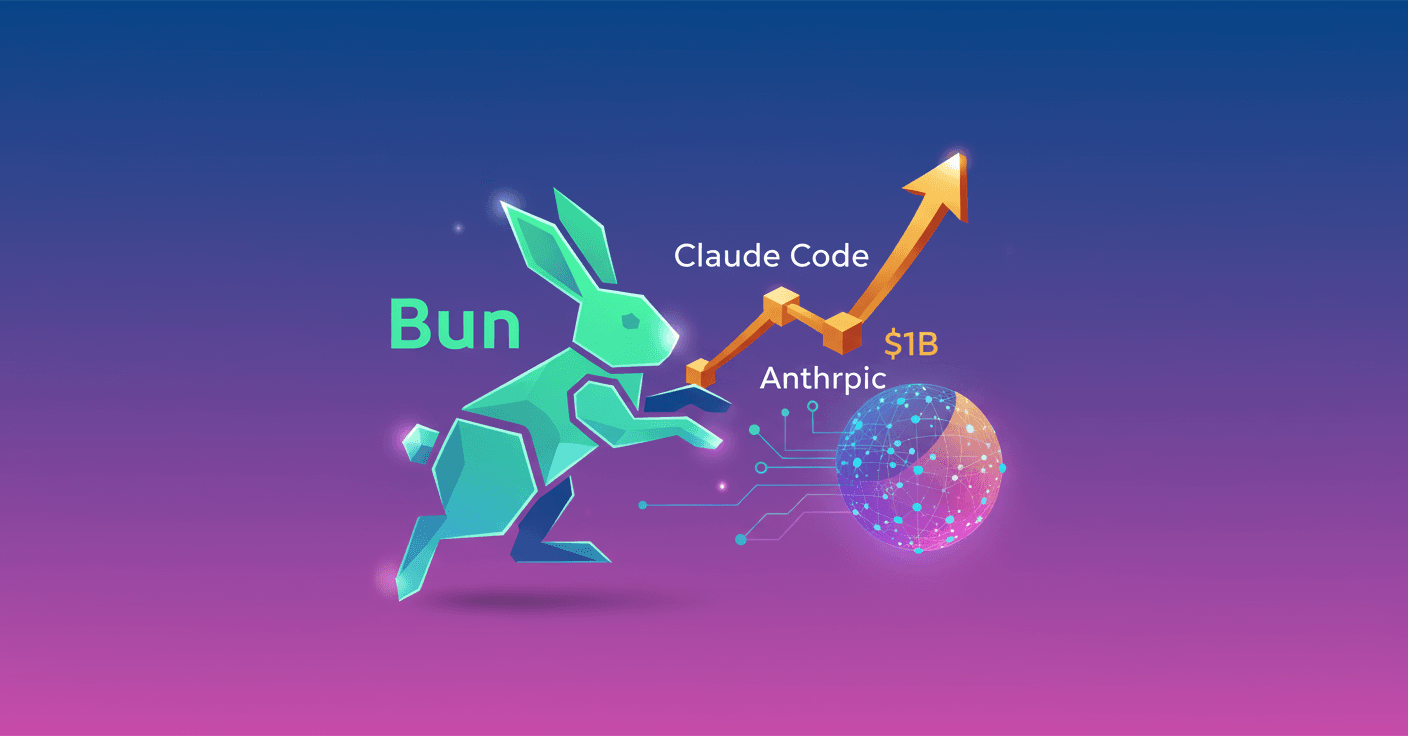
Anthropic announced the purchase of Bun just as Claude Code reached a revenue run-rate of $1B in only six months. Why does that matter? Because it combines an AI model already dominant with developers and a piece of infrastructure that speeds up modern web development.
What happened
Anthropic, the company behind Claude, reported that it is acquiring Bun, the JavaScript runtime created by Jarred Sumner in 2021. The acquisition comes after Claude Code, the Claude version focused on programming and automation, hit a notable milestone: $1B of run-rate revenue six months after becoming publicly available.
Claude Code presents a new era in agent-assisted coding: it’s not just smart autocompletion, but workflows that can execute, test, and deploy code. Combining that with Bun aims to speed those workflows from the technical foundation up.
"Bun represents exactly the kind of engineering excellence we want to integrate into Anthropic," said Mike Krieger, head of product at Anthropic.
Why Bun matters for AI engineering
Bun is more than a runtime. It’s an integrated set that includes runtime, package manager, bundler and test runner. Its promise: speed and confidence in the developer experience. In practice, that means faster cold starts, tests that run in less time, and quicker bundling.
And how does that connect to Claude Code? A lot. When a programming assistant generates and tests code, infrastructure latency and reliability matter. Integrating Bun helps make those cycles shorter and more predictable, with direct productivity gains.
Impact for developers and companies
-
Performance: Bun has stood out for being faster than established alternatives, which accelerates development and deployment pipelines.
-
Productivity: less time waiting for tests or builds means faster iterations when you’re working with AI-assisted tools.
-
Scalability: Claude Code is already used by companies like Netflix, Spotify, KPMG, L'Oreal and Salesforce; Bun has been part of stacks that scale infrastructure.
-
Access and trust: Anthropic confirmed Bun will remain open source under the MIT license, which reduces the fear that the acquisition will close the project to the community.
If you’re a developer, this can translate into smoother development experiences when using programming assistants. If you run tech at a company, it’s a sign that AI infrastructure is consolidating and maturing.
What changes and what stays the same
Bun will remain open source and Anthropic says it will keep investing in it as a runtime, bundler, package manager and test runner for JavaScript and TypeScript. At the same time, the integration with Claude opens the door to new capabilities: more polished native installers, tighter workflows, and improvements in stability and performance.
Not everything changes overnight. The open source codebase stays, and the acquisition appears aimed at strengthening the infrastructure behind AI tools in production, not closing the ecosystem.
Reflection
Is this just another acquisition in the AI era? It’s more than that. It recognizes that AI that writes, tests, and deploys software depends as much on the model as on the technical ground where it runs. For you as a developer or technical leader, the lesson is clear: infrastructure matters. When AI scales, the tools that used to run in the background become front and center.
Original source
https://www.anthropic.com/news/anthropic-acquires-bun-as-claude-code-reaches-usd1b-milestone