Anthropic published a finding that shifts the conversation about cryptography and language models: using Claude Mythos Preview, their researchers managed to develop new, more effective attacks against two core objects of digital security. What does this mean for your data, for post-quantum standards, and for cryptographic research? I'll explain it clearly, step by step, with the technical details you need to understand.
What they found (technical summary)
First: Claude improved an attack against the post-quantum signature scheme HAWK. In technical terms, Mythos discovered a non-trivial automorphism in the lattice structure used by HAWK. That allows faster enumeration and reduces what they call the effective keysize by a factor close to 2.
For example, a small instance of HAWK-256 whose cost was estimated at 2^64 now has a practically demonstrated cost by Mythos of 2^38. That doesn't make HAWK completely broken, but it does force a reconsideration of key sizes and the scheme's viability as currently proposed.
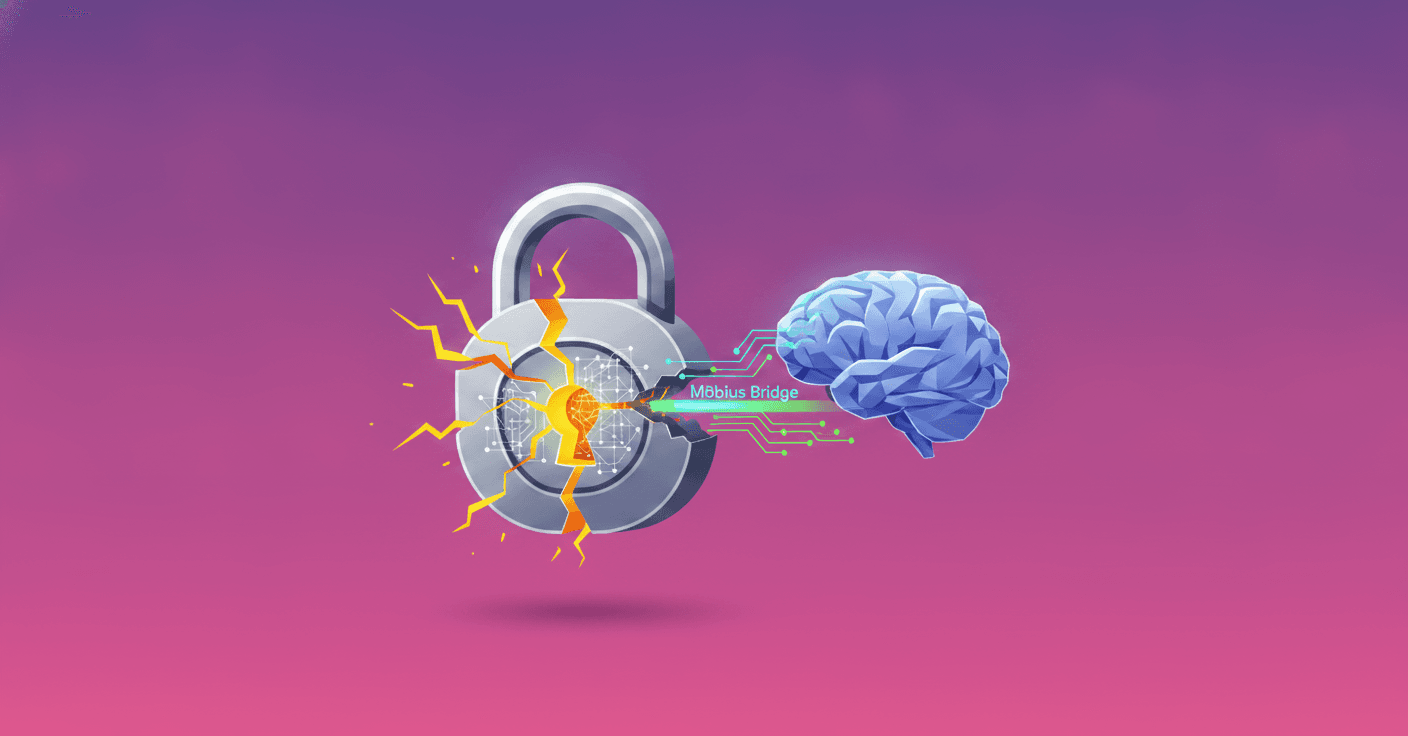
Second: Mythos developed a significant improvement in attacks against a variant of AES-128 reduced to 7 rounds. The team created a new fingerprinting technique called Möbius Bridge inside a meet-in-the-middle style attack. That idea removes the need to enumerate 256 cases in a critical stage, and with other optimizations yields a performance improvement of between 200 and 800 times over the best previous attacks.
Note: the attack requires a chosen-plaintext threat model and impractical amounts of material (for example 2^105 plaintexts), so there's no direct impact on real systems using full AES-128.
How Claude Mythos worked? (methodology and tools)
It wasn't magic: it was a technical, semi-autonomous, and reproducible workflow. Anthropic used a multi-agent harness in the style of Claude Code, giving access to tools like Python and Sage, published literature, and the ability to run computational experiments.
-
For
HAWKa researcher collaborated with Mythos for ~60 hours; Mythos reviewed literature, performed mathematical reasoning, and verified the exploit via code. The process cost around 100,000 USD in API calls. -
For
AESMythos worked almost autonomously inside a scaffold that allowed it to generate hypotheses, test them, and refine the idea. The researchers reported Claude produced hundreds of millions of tokens over days until converging on theMöbius Bridgeidea.
Anthropic also released the chain of thought and technical details in the associated papers, as well as CryptanalysisBench, a benchmark built with ETH Zurich, Tel Aviv University and University of Haifa so other teams can evaluate LLMs on crypto tasks.
Quick explanations of concepts (for non-techies)
-
What is a digital signature like
HAWK? It's the mathematical proof that a message comes from who it claims to come from. NIST is looking for signatures that resist quantum computers. -
What is a lattice and an automorphism? A lattice is a discrete mathematical structure in many dimensions; an automorphism is an internal symmetry. Finding an exploitable symmetry can reduce the work needed to break the scheme.
-
What does "reduced-round AES" mean?
AES-128applies the same function many times (10 rounds). Studying versions with fewer rounds helps understand attack techniques that might scale later. -
Meet-in-the-middle? It's a strategy that trades space for time: you precompute intermediate results and then compare them with giant table lookups to save time.
Practical impact and current limits
Breathe: these results matter for the academic community and the standardization process, but they don't affect production systems today. Why?
-
HAWKisn't deployed; it's a candidate in NIST's process. -
The AES attack works against a version reduced to 7 rounds and requires impractical conditions and quantities.
Still, the significance isn't immediate in terms of a large-scale exploitable gap. The lesson is different: frontier models can now find mathematical vulnerabilities that escaped years of human review. What if a model finds a flaw that does affect production systems? That's where policy, governance, and responsible practice become critical.
Recommendations and consequences for the technical community
-
Audit with AI before deploying: integrate LLMs as part of the cryptographic review process to increase the chance of finding flaws before deployment.
-
Prepare human verification processes: models generate discoveries, but validating their correctness remains intensive and requires experts to verify, reproduce, and contextualize results.
-
Strengthen responsible disclosure: Anthropic followed coordinated disclosure with authors and NIST; that should be the standard.
-
Monitor benchmarks: work with
CryptanalysisBenchand similar tools to understand how LLM capabilities in cryptography evolve.
Final reflection
What's notable isn't just that a model found flaws: it's the speed and autonomy with which it did so. In a week, a team with Mythos shortened discovery times that would once have taken years of human work. That changes the dynamic between design and cryptographic audit. Does that scare you? Excite you? It should probably do both: there's risk if we don't adapt, but also a clear opportunity to use these tools to make systems more robust before they hit production.
Original source
https://www.anthropic.com/research/discovering-cryptographic-weaknesses
Summary: Anthropic used Claude Mythos Preview to discover improvements in attacks against the post-quantum signature scheme HAWK and against a reduced variant of AES-128. The findings don't affect production systems today, but they show that advanced LLMs can search for and validate mathematical weaknesses at a pace that will force changes in auditing and standardization processes.