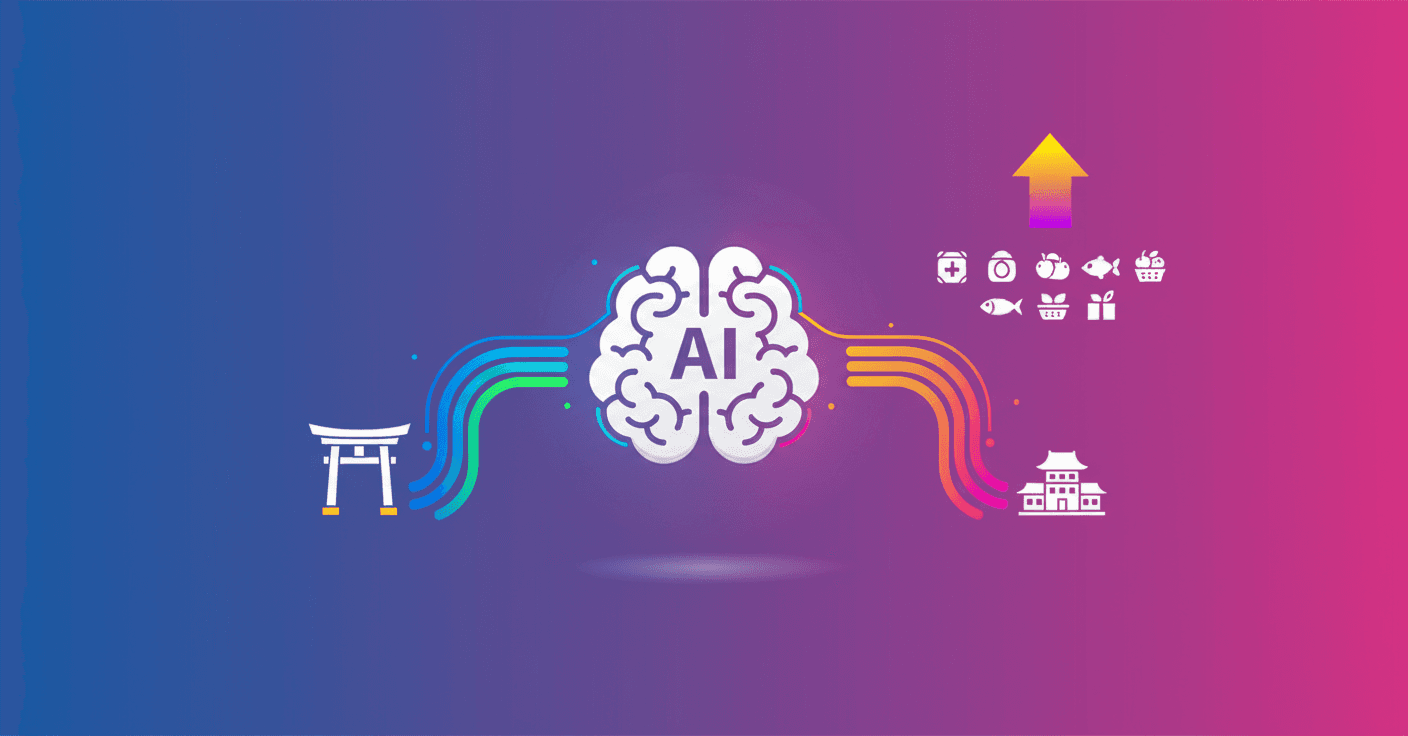
Japan has a curious and powerful program: Furusato Nozei, which lets taxpayers redirect part of their taxes to municipalities they want to support. It sounds simple, but between income-based limits, tax credits, and a catalog with hundreds of thousands of “thank-you gifts,” the experience can overwhelm you.
Can you imagine choosing among 760,000 products when you only want to support your favorite town? That’s where AI comes in to make the process more human and less chaotic.
What TRUSTBANK did with AI
TRUSTBANK, the company behind the Furusato Choice platform, added AI to help people find donations and gifts they actually care about. They didn’t have an in-house AI expert team, so they partnered with Recursive, now an official OpenAI partner, and used the OpenAI API to build Choice AI.
The idea is simple: instead of wandering aimlessly through thousands of options, you chat with the app and the AI recommends gifts based on your preferences, budget, and context. Looking for something for your parents? Want to support a specific town? Even a vague phrase can be enough for the AI to suggest relevant options.
TRUSTBANK wanted to reduce the confusion caused by the huge offering and increase visibility for small municipalities, not just the most popular ones.
How Choice AI works (explained without technical jargon)
The solution uses what they call a multi-agent architecture. Think of it as a team where each member has a task: one interprets your intent, another searches products, another builds recommendations, and another greets and guides the conversation. An initial model decides which agent should handle your request.
For the language engine they use the GPT-4.1 series. In practice, this means the app can understand natural requests, combine them with the gifts database, and return quick, personalized suggestions. They also adjust which model version to use depending on the speed and accuracy they need.
A practical detail: they combine information they already know about each user with what the user says in the conversation, and generate dynamic prompts (instructions) so the responses stay consistent with the personal context.
How it improves the donor experience
-
Reduction of confusion: the AI filters and suggests relevant options, preventing you from getting lost among hundreds of thousands of products.
-
Regional discovery: so the same municipalities don’t always appear, they add controlled variation to results. That way, small towns also show up.
-
Natural conversation: you don’t need perfect keywords. A “something for my parents that isn’t expensive” can be enough to get good recommendations.
-
Better conversions: internal data shows that people who use Choice AI convert more than those using traditional search. Why? Because the AI helps put into words needs that sometimes we can’t explain ourselves.
What they learned and what’s next
Analyzing real use, the team found many users interact with the app like it’s a search engine, giving a lot of product details and expecting immediate answers. That led them to adjust the flow: recommendations now appear faster and with more variety.
TRUSTBANK plans to bring AI to more parts of the service: personalize the whole user journey and build something like a concierge service that better connects donors and municipalities, focused on the genuine intention to support, not just financial benefits.
What this means for you
If you’ve ever gotten lost in endless catalogs, this is a practical example of how AI makes life easier. It’s not a machine that decides for you: it’s a tool that turns your wishes, however vague, into concrete options.
For people working in tech or product: it’s a useful case of integrating conversational AI with catalog databases. For citizens and donors: it’s a more accessible way to practice local solidarity without frustration.
Think of AI as a guide that helps you find what matters, while also helping small places get more visibility and support.