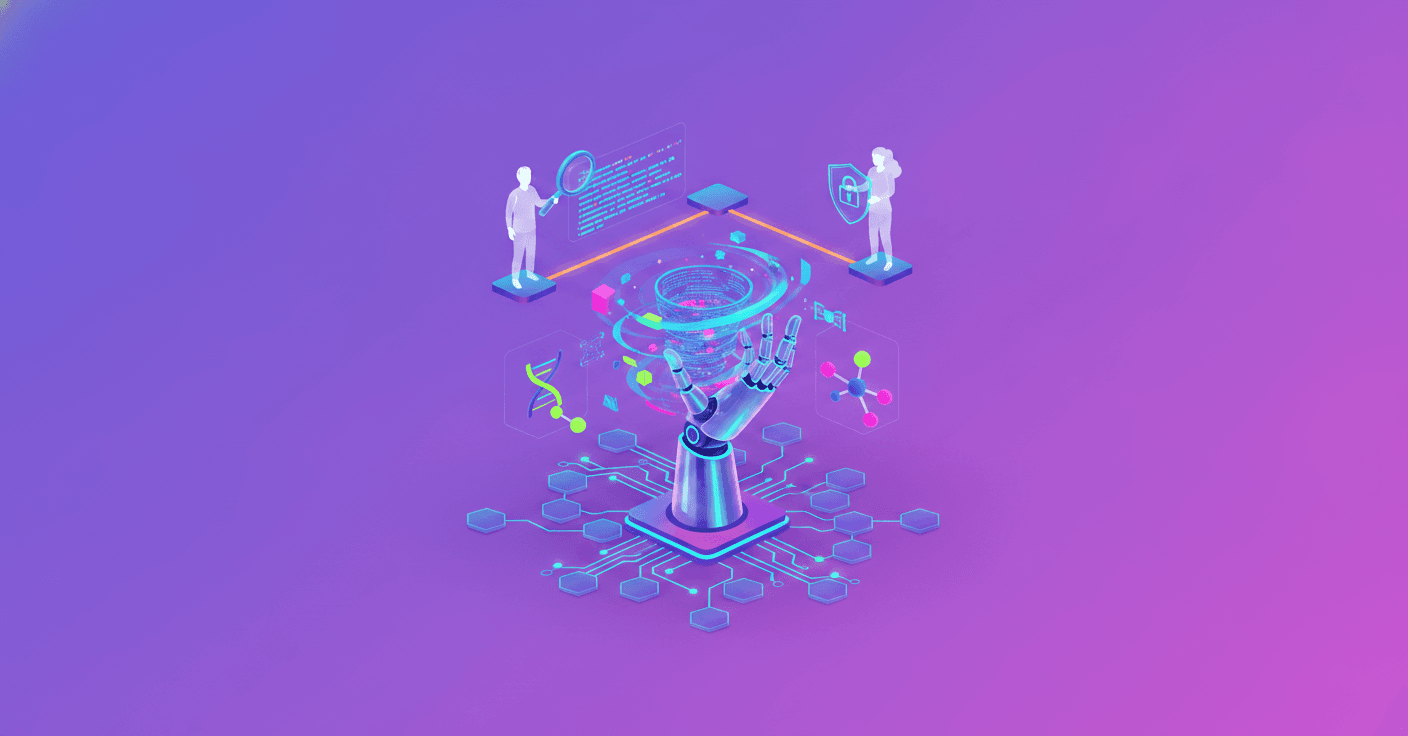
Scientific computing is changing pace. Where researchers used to spend hours debugging, packaging, and maintaining code, AI coding agents now speed up those repetitive tasks and enable major rewrites in data-rich fields like genomics.
What's happening
The problem isn't new: much scientific software starts as the auxiliary code for a paper, written by small teams without the time or resources to make it production-ready. The result is fragile tools that slow down research and reproducibility.
AI agents aim to lower the cost of routine engineering. They can update build systems, migrate code, optimize performance, and spin up prototypes very quickly. Does that mean they replace scientists? Not at all; they change the work: from implementing to verifying and orchestrating.
With agents, researchers define what needs to be built, how to measure whether it's good, and when it's ready to publish. Machines do the repetitive labor; people keep the scientific judgment.
What the report's projects did
OpenAI shared eight case studies in the life sciences. Five used Codex alone and three combined Codex with Claude Code. The results ranged from routine maintenance to language migrations and GPU-focused redesigns.
Concrete examples:
cyvcf2, a Python library for genomic variant files, received a modernization of its build and packaging system to make installation, testing, and releases easier.- Projects like MHCflurry and rustar-aligner showed two different routes: integrate changes into the original project, or move the implementation under new community stewardship when the base project was abandoned.
Teams agreed on one thing: agents speed up the early phase a lot, but the "last mile" of bug fixes, edge cases, and statistical validation still needs human time.
Limits and precautions
Agents are fast but not infallible. They often make changes with confidence even when there's a mistake. That's why human validation is indispensable. Good practices observed in the case studies:
- Define measurable acceptance criteria: exact output agreement, parity with existing tools, or expected statistical behavior.
- Use simulated data or external references to check results.
- Break big goals into small iterations with intermediate benchmarks.
An additional risk is fragmentation: if every team rewrites a tool without coordinating, the community splinters and the expert attention needed to maintain a single reliable codebase weakens. That's why governance and attribution are crucial.
What this means for you as a researcher or developer
If you work with scientific software, think of agents as assistants for repetitive engineering tasks. They let you test ideas faster and free up time to design experiments, interpret results, and make scientific decisions.
But don't forget to plan for sustainability: coordinate with original maintainers when possible, define who will own the new code, and create a clear testing and deployment strategy. Without that, a modern rewrite can become abandoned code tomorrow.
Where is scientific computing headed?
The studies show a practical shift: agents let people spend less time on infrastructure and more time on science. This isn't a futuristic promise; it's already happening. The real transformation isn't just producing more software, it's improving what people do with that freed time: validate, prioritize, and care for the tools that support research.
Human work remains central: judgment, taste, and responsibility. AI speeds things up, but science stays in the hands of those who decide which questions matter and how to answer them.