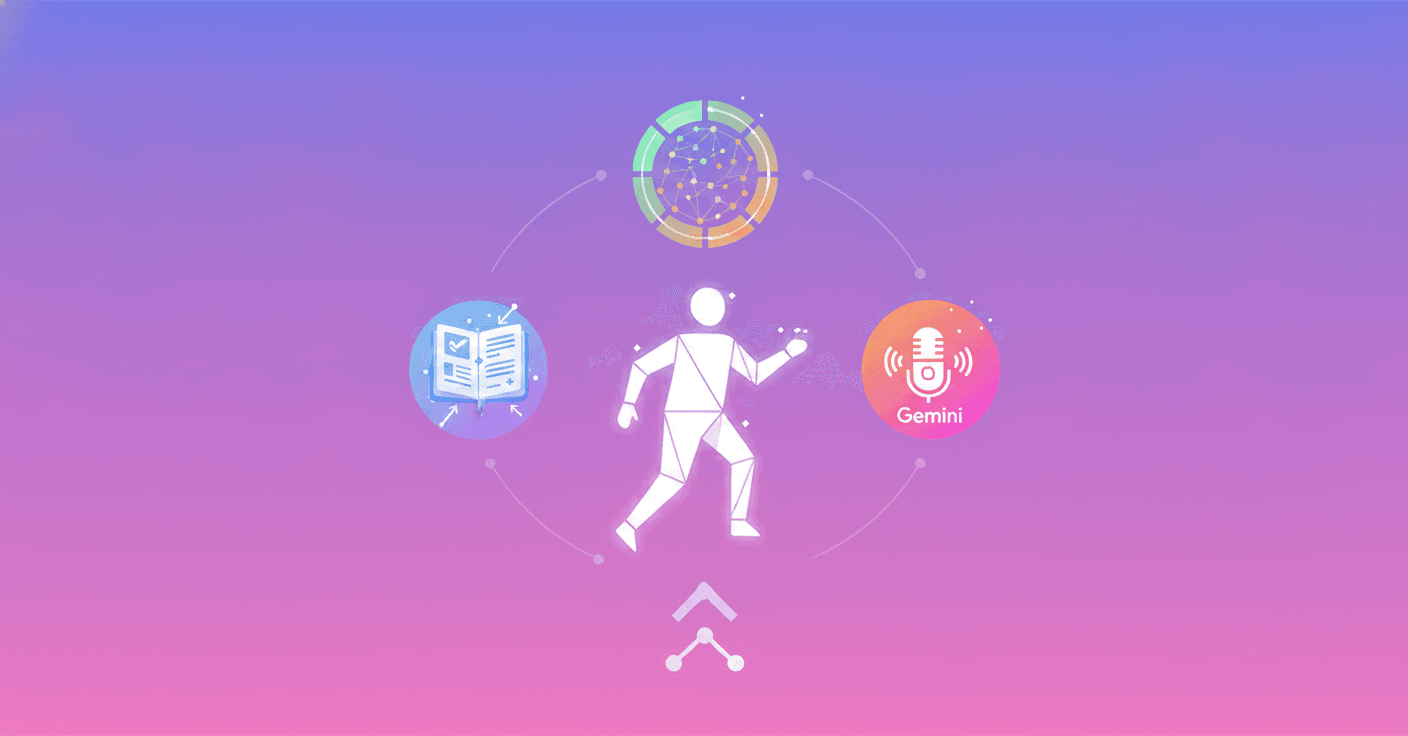
Changing jobs doesn’t always mean climbing a career ladder. Sometimes it looks more like navigating a network of paths: you discover skills you already have, explore new possibilities, and try to understand which opportunity fits you best.
A Google employee shared how she used three artificial intelligence tools to guide her transition into a new role. She didn’t use them to replace her mentors or make decisions for her, but as partners for analysis, preparation, and practice.
1. NotebookLM to find patterns in your experience
The first step was to gather different professional materials in a NotebookLM notebook: job postings, profiles of people in interesting roles, her résumé, performance reviews, feedback from colleagues, and assessments of her strengths.
With all that information as context, she was able to ask questions and identify patterns. For example, which skills appeared most often in the roles she was interested in, which ones she already mastered, and which gaps she needed to close.
The result? The tool helped her recognize common themes in her career: an interest in people, purposeful storytelling, and creating new projects. Those clues made it easier to decide what kinds of opportunities she wanted to pursue.
The lesson is simple: before looking for a new role, it can be useful to organize the evidence from your own journey. AI can help you notice connections that might go unnoticed when you review each document separately.
2. Career Dreamer to discover transferable skills
She then used Career Dreamer, a tool designed to connect the skills you already have with possible career paths. This can be especially useful if you want to change industries or apply for roles that don’t seem like an obvious continuation of your experience.
By rebuilding her résumé within the platform, the professional was able to put a name to abilities and interests she had left in the background. Sometimes you’re not lacking experience. What’s missing is identifying how to describe it in a different context.
One of the elements she valued most was creating a professional identity statement. This summary helped her turn a career with several twists and turns into a more coherent story about who she is, what she knows how to do, and the kind of impact she wants to make.
What are transferable skills?
They’re abilities that can be useful in more than one role or industry. Knowing how to communicate an idea, coordinate people, solve problems, or build relationships, for example, can be relevant in marketing as well as human resources, sales, or project management.
3. Gemini to compare opportunities and practice interviews
The third tool was Gemini. She didn’t limit its use to correcting her résumé or cover letters. She also used it to compare different roles against her strengths, goals, and possible long-term career paths.
Instead of asking only which position seemed better, she asked deeper questions. Which role could help her become a better professional mentor? Which one would strengthen her abilities as a writer? Which opportunity would give her useful skills for someday launching a brand focused on human connections?
That shift in perspective matters. A job offer shouldn’t be evaluated only by its salary or title. It’s also worth considering what you’ll learn, which relationships you’ll build, and what doors it might open later on.
When the interview stage arrived, she created a custom Gem to simulate questions and receive feedback on her answers. She also practiced with Gemini Live while walking, turning those walks into rehearsal sessions.
By the time of the real interview, she had practiced telling her professional stories several times. She didn’t memorize perfect answers, but she did arrive with more clarity and confidence to talk about her achievements and explain why she wanted the role.
AI can help you, but it doesn’t decide for you
These tools don’t guarantee a job or replace the experience of a mentor, manager, or friend who knows how you work. Their value lies in helping you organize information, ask better questions, and practice before an important conversation.
It’s also worth reviewing their suggestions with a critical eye. AI can identify patterns, but it doesn’t fully understand your circumstances, your limits, or what truly motivates you. The final decision is still human.
The best way to use AI during a career transition isn’t to ask it to choose your future, but to use it to better understand your options.
If you’re thinking about changing jobs, you could start with your own materials: résumé, performance reviews, projects, feedback you’ve received, and job postings that interest you. Organizing that information can be the first step toward leaving analysis paralysis behind and turning your doubts into a plan.
Original source
https://blog.google/innovation-and-ai/products/google-ai-career-tools